
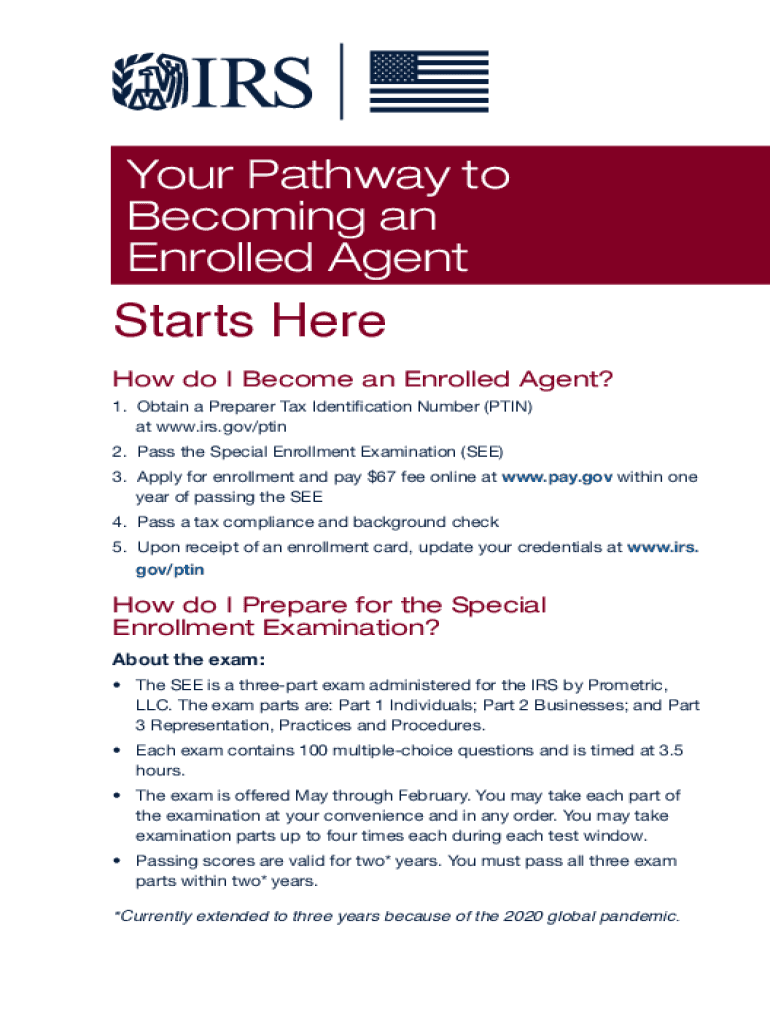







Definition and Purpose of Enrolled Agents FAQ
Enrolled Agents (EAs) are federally authorized tax practitioners with expertise in tax preparation and representation. The "Enrolled Agents - Frequently Asked Questions" document is an informational resource designed to address common inquiries about EAs' roles, qualifications, and services. It provides detailed explanations on how these professionals are distinguished from other tax professionals, emphasizing their ability to represent taxpayers before the Internal Revenue Service (IRS) for audits, collections, and appeals.
Key Features of an Enrolled Agent
- Tax Expertise: Enrolled Agents specialize in tax-related matters, ensuring their clients are compliant with all IRS regulations.
- Representation Rights: They have the authority to represent individuals and businesses in interactions with the IRS, akin to attorneys and certified public accountants (CPAs).
- Certification: EAs must pass the Special Enrollment Examination (SEE) covering individual and business tax laws and ethics.
- Continuing Education: To retain their status, EAs must complete ongoing education and adhere to ethical standards.
How to Use the FAQ Document
The FAQ document serves as a comprehensive guide for understanding what an Enrolled Agent can offer. It is applicable to taxpayers seeking assistance, other professionals wishing to learn about EAs, and individuals considering a career as an EA. The document provides insights into:
- Client Scenarios: Examples where EAs can intervene, including audit assistance, tax appeals, and advisory services.
- Comparison: Differentiates EAs from other tax professionals, highlighting their unique capabilities.
- Educational Path: Provides steps for those interested in becoming an EA, outlining the necessary exams and continuous education requirements.
Situational Examples
- Audit Representation: Illustrates how an EA can represent a taxpayer being audited, ensuring compliance and minimizing liabilities.
- Tax Resolution: Describes scenarios where an EA negotiates payment plans or settles tax debts on behalf of clients.
How to Obtain Information About EAs
The FAQ document can be accessed through various platforms, notably through IRS publications or professional organizations like the National Association of Enrolled Agents (NAEA). Key methods to obtain this resource include:
- Online Access: Direct download from the IRS website or relevant tax forums.
- Workshops and Seminars: Attendees can receive printed versions during professional tax events.
- Professional Consultations: Tax professionals often provide these FAQs as part of their onboarding materials for new clients.
Steps to Become an Enrolled Agent
Becoming an EA requires fulfilling specific steps that include registration, examination, and compliance checks. This section details the sequential process involved in becoming a certified EA and maintaining the credential:
- PTIN Registration: Obtain a Preparer Tax Identification Number (PTIN) from the IRS.
- SEE Exam: Pass all three parts of the Special Enrollment Examination, which cover comprehensive taxation topics.
- Application and Background Check: Apply for enrollment, including a review of tax compliance history.
- Ongoing Education: Complete required continuing education credits annually to remain active.
Importance of Hiring an Enrolled Agent
Enrolled Agents possess a unique blend of skills essential for navigating complex tax issues. This segment delves into why individuals and businesses might choose an EA over other tax professionals:
- Exclusive IRS Focus: EAs specialize exclusively in taxation matters, offering unparalleled expertise.
- Ethical Standards: Bound by stringent ethical guidelines to protect client interests.
- Comprehensive Services: Provide end-to-end tax services, from preparation to resolution and representation.
Legal and Advisory Role of Enrolled Agents
Under U.S. federal law, Enrolled Agents are authorized to provide legal representation for tax matters. This section outlines their legal capabilities:
- Representation Rights: Authority to represent clients in all dealings with the IRS.
- Tax Appeals: Expertise in preparing and filing formal appeals with the IRS.
- Confidentiality Obligation: Maintain strict confidentiality of client information, aligned with federal statutes.
Taxpayer Representation Scenarios
- Audit Defense: EAs can advocate during IRS audits, ensuring procedural fairness and accuracy.
- Settlement Negotiations: Skilled in negotiating with the IRS to achieve favorable outcomes, such as installment agreements or offers in compromise.
IRS Guidelines for Enrolled Agents
Adhering to IRS regulations is fundamental to the role of an EA. This block addresses the specific guidelines and practices EAs must follow:
- Compliance Requirements: Detailed overview of the annual filing and client representation obligations.
- Ethical Obligations: Commitment to ethical practices reinforced by mandatory adherence to Circular 230 standards.
Continuing Education Standards
- Courses and Certifications: EAs must enroll in IRS-approved courses to meet their education quotas, with a focus on emerging tax laws and ethical practices.
Digital vs. Paper Version of the FAQ Document
The availability of the FAQ in both digital and paper formats ensures accessibility for all users. Digital formats offer easy updates and searches, while paper copies are ideal for offline references. Each version fulfills distinct needs:
- Digital Benefits: Quick search functionality, updates with tax law changes, and environmentally friendly.
- Paper Advantages: Tangible reference material for clients and tax professionals, useful in areas with limited internet access.
Integration with Software
A detailed look at how FAQ documents can be integrated with tax software solutions like TurboTax and QuickBooks:
- Ease of Access: Facilitates quick retrieval of information during tax preparation.
- Software Updates: Digital FAQs can be easily synchronised with software updates to reflect current tax laws and procedures.




