
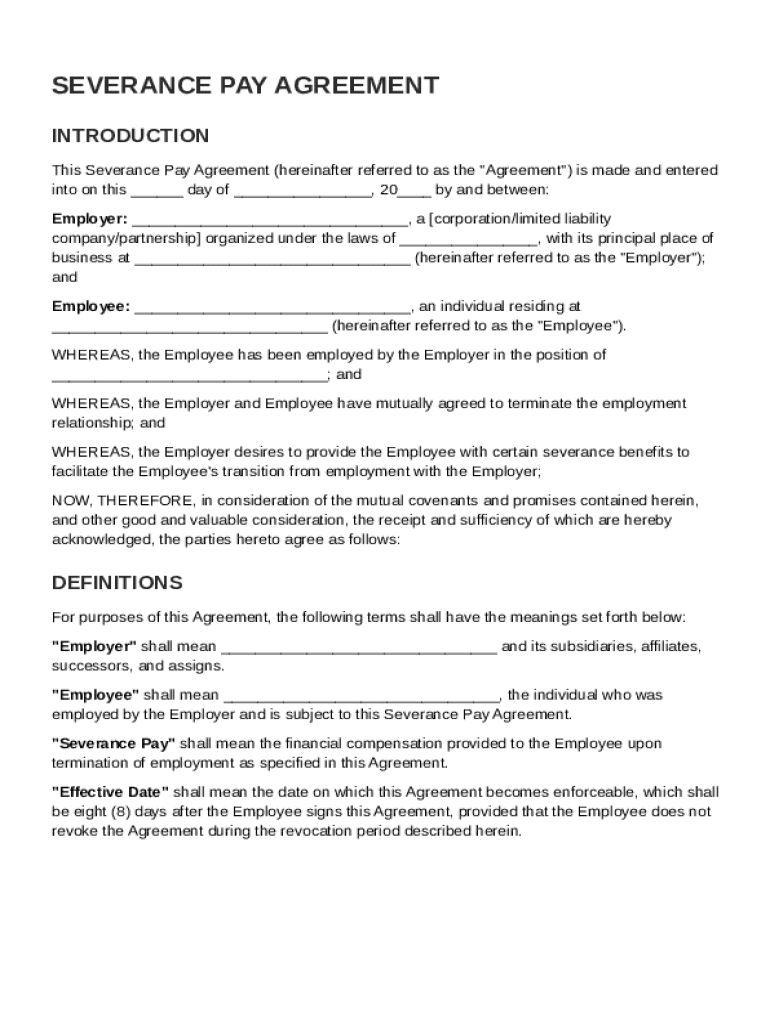







Definition and Meaning
A severance pay agreement template is a pre-structured document that outlines the conditions under which an employee will receive severance pay upon the termination of their employment. It serves as a mutual agreement between the employer and employee, detailing the amount of severance pay, terms of payment, and any additional benefits the employee may receive. This template also addresses legal considerations such as the release of claims, confidentiality obligations, and the continuation of benefits. By clearly defining these aspects, the agreement ensures a smoother transition for the employee while safeguarding both parties' interests.
How to Use the Severance Pay Agreement Template
Using a severance pay agreement template involves customizing the document to fit the specific needs of the employer and employee. Begin by reviewing the template to understand its structure and the information it requires. Input the employee's information, including their name, position, and duration of employment. Clearly specify the severance package details, highlighting the pay amount, payment schedule, and any additional benefits.
- Ensure all terms are clearly explained to avoid misunderstandings.
- Customize legal sections to reflect any confidentiality agreements or non-compete clauses.
- Get legal advice to ensure compliance with state and federal laws where necessary.
After customizing the template, both parties should review it carefully before signing, ensuring they have a common understanding of the terms included.
Key Elements of the Severance Pay Agreement Template
The severance pay agreement template comprises several critical sections essential for its legality and clarity. These include:
- Employee Information: Personal and employment details of the terminated employee.
- Severance Details: Specifics about the severance pay, including the amount, payment schedule, and method of payment.
- Benefits Continuation: Description of benefits that will continue post-termination, such as healthcare or accident insurance.
- Legal Clauses: Include confidentiality, non-disparagement, and non-compete agreements, as well as a release of claims.
- Governing Law: Specifies which jurisdiction's laws govern the agreement.
- Integration Clause: States that the severance agreement is the final document between the parties, disallowing adjustments unless both parties agree.
Legal Use of the Severance Pay Agreement Template
Employers use severance pay agreement templates to ensure legal compliance and protect both parties' interests when terminating an employee's contract. These agreements comply with state and federal laws, providing a framework to avoid potential disputes and litigation. By incorporating various legal terms such as confidentiality and non-compete clauses, the template helps employers maintain company integrity and protect sensitive information.
Employers are encouraged to seek legal counsel to customize these templates according to relevant state laws, ensuring they address every necessary legal aspect to fortify the agreement.
Who Typically Uses the Severance Pay Agreement Template
Severance pay agreement templates are predominantly used by employers across various industries including corporate sectors, governmental bodies, and non-profits to ensure transparent employee offboarding. Human resource managers and legal professionals may also be involved in drafting and overseeing the signing of these agreements. Additionally, employees being terminated may utilize this document to understand their rights and the severance terms being offered. It is an essential resource for maintaining a fair and equitable termination process, aligning with company policies and legal standards.


Steps to Complete the Severance Pay Agreement Template
Completing a severance pay agreement template may involve several key steps:
- Gather Information: Collect necessary information such as employee details and severance terms.
- Customize the Template: Enter the required data into the template, adjusting sections such as severance amount, confidentiality agreements, and legal clauses.
- Review and Revise: Both parties should review the terms, seeking legal advice if necessary, to ensure all points are understood and agreed upon.
- Signing: Once both parties are satisfied, proceed with signing the agreement.
- Distribution: Provide copies to all relevant parties for their records.
This structured approach ensures the document is completed accurately and comprehensively.
Important Terms Related to Severance Pay Agreement Template
Familiarity with important terms is essential for understanding a severance pay agreement:
- Release of Claims: A provision where the employee agrees not to pursue any legal claims against the employer post-termination.
- Non-Compete Clause: Restricts the employee from working with competitors for a set period.
- Confidentiality Agreement: Ensures the employee does not disclose proprietary information.
- Severance Package: The total compensation and benefits awarded upon termination.
- Governing Law: The jurisdiction whose laws are applied to interpret the agreement.
Understanding these terms helps in accurately interpreting the agreement's scope and stipulations.
State-Specific Rules for the Severance Pay Agreement Template
State-specific rules may influence the use and structure of severance pay agreements. For instance, certain states enforce specific guidelines regarding non-compete clauses, while others might have distinct laws on severance pay eligibility. Employers should consider:
- Non-Compete Enforceability: Variations in enforceability and duration.
- Minimum Severance Guidelines: Some states may mandate a minimum severance package.
- Tax Implications: State-specific taxes applicable to severance payouts.
Employers are recommended to review state laws or consult legal counsel to tailor agreements accordingly, ensuring compliance and validity within their jurisdiction.




