
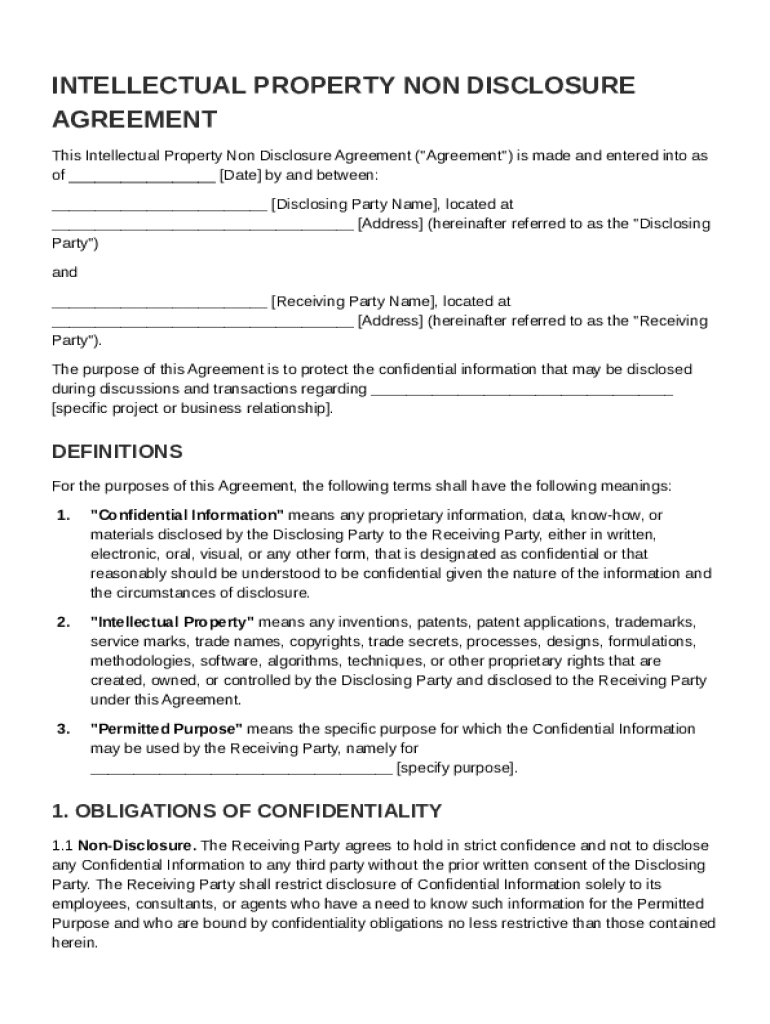







Definition & Meaning
An Intellectual Property Non Disclosure Agreement (NDA) is a legal contract between a Disclosing Party and a Receiving Party designed to protect confidential information shared during discussions about specific projects or business relationships. This agreement helps ensure that sensitive information, deemed as intellectual property, remains protected and undisclosed to unauthorized parties. Intellectual property within this context includes any proprietary information, trade secrets, or unique ideas that could potentially benefit competitors if leaked. By specifically outlining what constitutes confidential information, such agreements safeguard the interests of the disclosing party and provide a clear legal framework for resolving any breaches.
Key Elements of the Intellectual Property Non Disclosure Agreement Template
This template includes several critical components that define its structure and purpose. These elements typically encompass:
- Definition of Confidential Information: Clearly delineates what information is considered confidential, such as business plans, customer lists, or technical data.
- Obligations of the Receiving Party: Specifies the duties and responsibilities of the receiving party in maintaining confidentiality and the manner in which they must handle sensitive information.
- Exclusions from Confidentiality: Lists specific scenarios or types of information that are not subject to confidentiality, such as information already public or disclosed through legal compulsion.
- Duration of Confidentiality: Establishes the timeframe for which the confidentiality obligations apply, often extending beyond the termination of the business relationship.
- Intellectual Property Ownership: Asserts that all intellectual property remains the property of the disclosing party, prohibiting the receiving party from claiming ownership or rights.
Steps to Complete the Intellectual Property Non Disclosure Agreement Template
Creating a robust Intellectual Property NDA requires careful attention to detail. Here is a step-by-step guide to completing the form:
- Identify the Parties Involved: Clearly state the names and contact information of both the disclosing and receiving parties.
- Define the Confidential Information: Specify what constitutes confidential information, using precise language to avoid any ambiguity.
- Outline Obligations and Exclusions: Detail the receiving party's obligations for maintaining confidentiality and any exclusions to these obligations.
- Determine Duration and Terms: Establish how long the confidentiality agreement will remain in effect and any termination clauses.
- Review Ownership Clauses: Confirm that all intellectual property outlined remains the sole property of the disclosing party.
- Include Governing Law Clauses: Specify which state laws will govern the agreement to ensure clarity and enforceability.
- Sign and Date the Agreement: Both parties must sign and date the agreement to make it legally binding, with witness signatures as needed.
Important Terms Related to Intellectual Property Non Disclosure Agreement Template
Understanding the terminology within the Intellectual Property NDA template is crucial for effective use:
- Disclosing Party: The individual or entity sharing confidential information.
- Receiving Party: The individual or entity receiving confidential information with the obligation to protect it.
- Trade Secrets: A type of confidential information that provides economic value by virtue of its secrecy.
- Non-disclosure Obligations: Responsibilities of the receiving party to keep information confidential.
- Governing Law: The legal jurisdiction governing the terms and enforceability of the agreement.
Legal Use of the Intellectual Property Non Disclosure Agreement Template
In the U.S., NDAs are commonly used across industries to legally protect intellectual property rights. The agreement must adhere to state-specific laws where applicable, so parties should consult legal counsel to ensure compliance with local regulations. Failure to comply can lead to potential legal disputes, making it essential for parties to understand their obligations thoroughly. Furthermore, if a breach occurs, the NDA outlines possible remedies, including monetary damages or injunctive relief, providing a legal recourse to address any violations.
Examples of Using the Intellectual Property Non Disclosure Agreement Template
Examples of when an Intellectual Property NDA might be used include:
- Collaboration on a New Product: Two companies working together to develop a new product share proprietary designs and plans under an NDA to prevent ideas from being stolen or publicly shared.
- Startup Discussions with Investors: A startup presents confidential business strategies to potential investors, ensuring these strategies do not reach competitors.
- Employee Agreements: Employees, particularly in technology or innovative sectors, sign NDAs to protect sensitive company information, such as source code or proprietary algorithms.
Who Typically Uses the Intellectual Property Non Disclosure Agreement Template
Various entities benefit from using an NDA to protect their interests:
- Tech Companies: Protect development processes and patents.
- Manufacturers: Secure information about new products or production methods.
- Entrepreneurs and Startups: Safeguard business plans and funding strategies when engaging with investors.
- Service Providers: Protect client confidentiality and proprietary methodologies.
- Legal and Consulting Firms: Ensure client data confidentiality.


State-by-State Differences
Nondisclosure agreements must adhere to state laws, which can vary significantly across the United States. Some states may have strict rules on enforceability or specific requirements for what constitutes confidential information. For example:
- California: Strong protections for employees against overly broad NDAs, focusing on employee mobility and innovation.
- New York: Detailed requirements for precise definition and necessity of confidentiality.
- Florida: Allows for enforcement of NDAs with reasonable scope and time limitations.
Reviewing state-specific nuances is crucial to ensuring the NDA's enforceability and legal compliance in the jurisdiction relevant to the agreement's parties and context.







