






Definition & Overview of the Cloud Hosting Agreement Template
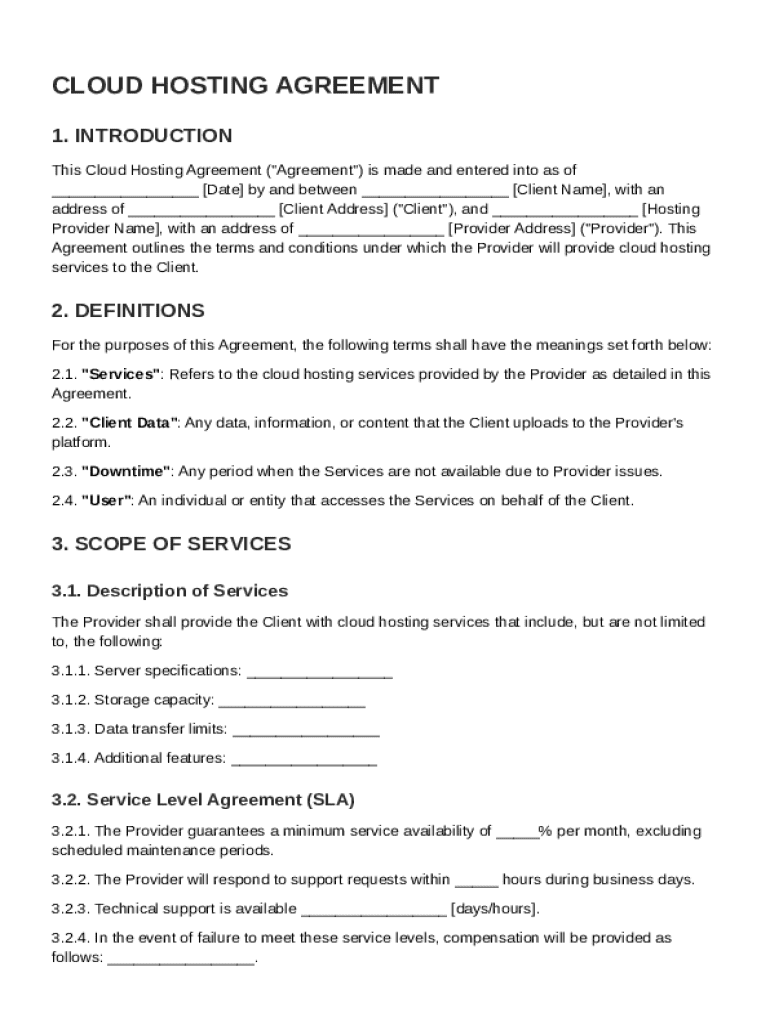
The Cloud Hosting Agreement Template is a foundational document that outlines the relationship between a client and a hosting provider regarding cloud hosting services. It establishes the terms and conditions under which services are provided, detailing key definitions, the scope of services, and the roles and responsibilities of both parties. The agreement is crucial for setting clear expectations on data ownership, security, payment terms, and confidentiality obligations.
- Scope of Services: The template specifies the cloud services provided, including server resources, storage capacities, and any additional services the provider agrees to deliver.
- Roles and Responsibilities: It defines the obligations of both the client and provider, covering aspects like data management, technical support, and service availability.
- Security Measures: The agreement addresses security protocols, ensuring both parties understand their roles in protecting data integrity and confidentiality.
How to Use the Cloud Hosting Agreement Template
Utilizing the Cloud Hosting Agreement Template effectively involves understanding the specific cloud hosting needs and ensuring that these are clearly articulated within the contract. The template serves as a customizable guide, allowing parties to tailor sections to their particular requirements.
- Customization: Start by reviewing the template to identify which sections need modification to reflect the specific services and terms negotiated between the parties.
- Consultation: Engage with legal counsel to ensure that all legal ramifications are considered and that the contract abides by applicable laws and regulations.
- Finalization: Once all necessary modifications are made, both parties should review the agreement thoroughly before signing to ensure mutual understanding and consent.
Steps to Complete the Cloud Hosting Agreement Template
Completing the Cloud Hosting Agreement Template involves a strategic approach to ensure that all necessary information is captured and agreed upon.
- Header Information: Enter the names and contact details of the client and hosting provider, including any pertinent legal entity information.
- Service Details: Clearly outline the services to be provided, including the specifics of hardware, software, and network capabilities.
- Financial Terms: Specify payment schedules, invoicing procedures, and any penalties for late payments.
- Security Protocols: Detail the security measures and data protection practices to be adhered to by both parties.
- Review and Sign Off: Conduct a thorough review to confirm accuracy, both parties should sign to formalize the agreement.
Key Elements of the Cloud Hosting Agreement Template
The Cloud Hosting Agreement Template encompasses several critical components that collectively define the relationship between the two parties.
- Service Description: A comprehensive description of the cloud services to be delivered.
- Uptime Guarantees: Service level agreements (SLAs) that specify expected uptime and penalties for non-compliance.
- Data Handling: Provisions regarding data storage, transfer, and backup protocols, including compliance with data protection regulations.
- Termination Clause: Terms under which the agreement can be terminated by either party, including notice periods and any applicable fees.
Important Terms Related to Cloud Hosting Agreement Template
Understanding key terms within a Cloud Hosting Agreement Template is crucial for effective implementation and compliance.
- SLA (Service Level Agreement): Defines the expected level of service, including uptime and performance standards.
- Indemnification: Legal provisions that protect parties from bearing financial losses due to claims related to the contract.
- Confidentiality: Obligations regarding the protection of sensitive information exchanged under the agreement.
- Data Ownership: Clarifies who owns the data stored and processed under the cloud services.
Legal Use of the Cloud Hosting Agreement Template
The template is designed to provide a legally binding framework for cloud hosting services, ensuring that all parties are protected under the law. Compliance with U.S.-specific legal requirements is critical to avoid disputes and potential litigation.
- Governance: Ensure the agreement specifies the governing law, often based on where the provider or client is located.
- Dispute Resolution: Includes mechanisms for resolving disagreements, such as arbitration or mediation clauses.
Examples of Using the Cloud Hosting Agreement Template
Real-life applications of the Cloud Hosting Agreement Template demonstrate its utility in various business scenarios.
- Small Businesses: A startup may use the template to formalize its hosting needs, ensuring cost-effective scalability.
- Enterprises: A large corporation might customize extensive SLAs to cover comprehensive security and support services.
- SaaS Providers: Companies offering Software as a Service frequently rely on these agreements to define parameters for service delivery and client support.
Business Types That Benefit Most from Cloud Hosting Agreement Template
The Cloud Hosting Agreement Template is particularly advantageous for a variety of business types, each with unique needs and considerations.
- E-commerce Businesses: Rely on cloud services for high-traffic management and secure payment processing.
- Tech Firms: Require robust data storage and application hosting solutions.
- Healthcare Providers: Must comply with stringent data protection regulations while ensuring seamless access to patient records.
State-by-State Differences
While cloud hosting agreements have a general framework, understanding state-specific regulations can be critical, particularly concerning data protection laws and consumer protection legislation.
- California: Compliance with the California Consumer Privacy Act (CCPA) is essential for any agreements involving California residents.
- New York: Adherence to the SHIELD Act for data security standards is crucial.
- Texas: Familiarity with the Texas Privacy Protection Act (TPPA) can influence data handling provisions.
By considering these elements and carefully customizing the Cloud Hosting Agreement Template, businesses can create a solid foundation for their cloud hosting services, ensuring compliance, security, and clarity in all interactions.