






Definition & Meaning
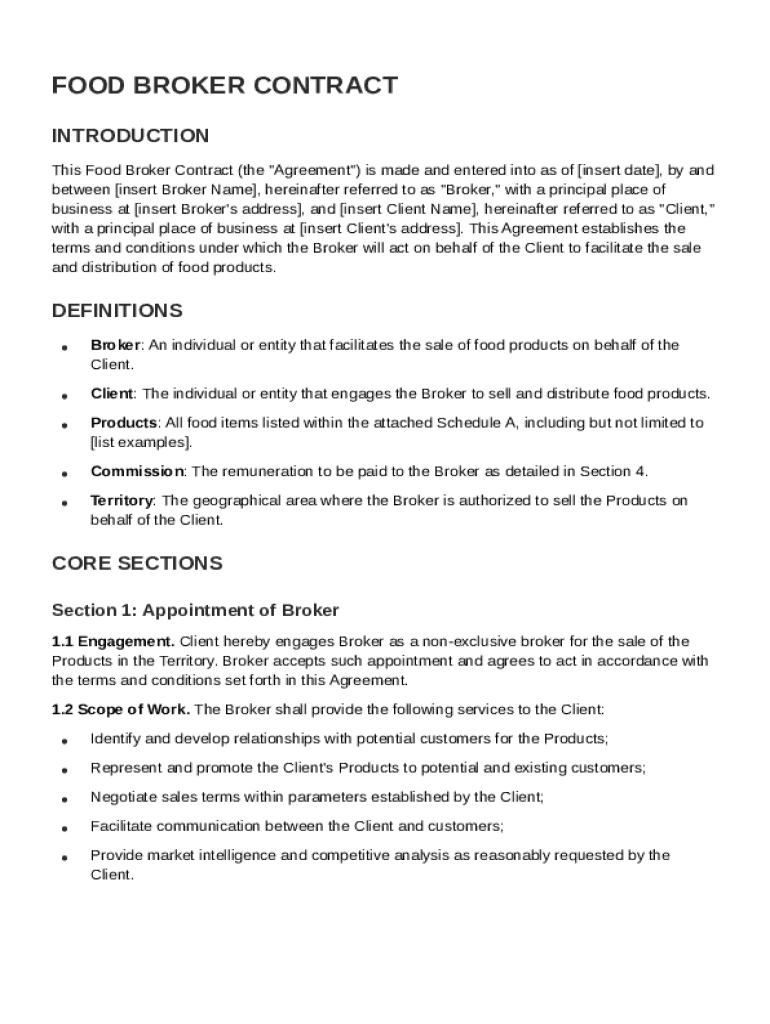
A Food Broker Contract Template is an essential document used to formalize the relationship between a food broker and their client. This template captures the critical elements of their agreement, including the roles, responsibilities, and compensations agreed upon by both parties. It also outlines the terms of engagement which encompass sales targets, distribution methods, and compliance with regulatory standards. By establishing clear expectations for both the broker and the client, this template helps facilitate a smoother working relationship focused on effectively marketing and selling food products.
Key Elements of the Food Broker Contract Template
The Food Broker Contract Template encompasses several vital components. Among these are:
- Roles and Responsibilities: Clearly define who is involved and their specific duties, which helps prevent misunderstandings.
- Compensation Structure: Details on how the broker will be paid, such as commission rates or fixed fees.
- Sales Targets and Reporting: Outline expectations for sales volume and the reporting mechanisms required to track progress.
- Regulatory Compliance: Ensures adherence to industry regulations to prevent legal and financial issues.
- Confidentiality Clauses: Protects sensitive information shared between parties from being disclosed without consent.
- Termination Conditions: Lists circumstances under which the contract may be dissolved.
Steps to Complete the Food Broker Contract Template
- Identify the Parties Involved: Clearly state the names and roles of the broker and the client.
- Outline the Responsibilities: Specify tasks each party is expected to complete, which could include product promotion, order processing, etc.
- Define Compensation Arrangements: Detail how the broker will be compensated, whether through commission, salary, or other methods.
- Set Performance Targets: Establish specific sales goals and reporting requirements to measure success.
- Include Legal Provisions: Add confidentiality, indemnification, and liability clauses to protect both parties.
- Review and Agree: Both parties should review and agree to each section, confirming alignment before signing.
Legal Use of the Food Broker Contract Template
To ensure legal compliance, the Food Broker Contract Template should be used in accordance with applicable laws and regulations. This includes adherence to both federal and state laws governing sales and distribution practices, confidentiality, and contract execution. Consider consulting a legal professional to validate that the terms meet all necessary legal criteria before the agreement is finalized.
Important Terms Related to the Food Broker Contract Template
- Broker: An individual or firm who markets and sells products on behalf of another entity.
- Client: The entity that engages the broker to handle sales and distribution.
- Commission: A percentage of sales revenue paid to the broker as compensation.
- Indemnification: A provision that holds one party harmless from certain legal liabilities.
- Termination Clause: Conditions under which the contract can be terminated by either party.
State-Specific Rules for the Food Broker Contract Template
In the United States, regulations can vary significantly from state to state. Some states may have specific licensing requirements for brokers, while others might dictate distinct clauses for contract termination. It is crucial to adjust the template to meet any state-specific legal criteria, ensuring full compliance and avoiding potential legal conflicts.
Who Typically Uses the Food Broker Contract Template
- Small Food Producers: Often lack the resources to manage sales operations internally and thus rely on brokers.
- Large Manufacturers: Use brokers to penetrate new markets or segments.
- Distributors: Engage brokers to efficiently manage relationships with retailers.
- Retail Chains: Work with brokers to ensure a steady supply chain for diverse products.


Versions or Alternatives to the Food Broker Contract Template
While the basic Food Broker Contract Template is a standard starting point, businesses may require customized versions to meet their unique needs. There are also regional variations or specific templates tailored to different types of products, such as perishable goods or beverages, which might have additional regulatory requirements.
Software Compatibility for Modifying the Template
Technological advances have made it easier to edit and manage contracts digitally. Platforms like DocHub, with integration options for Google Workspace, allow users to edit templates directly in compatible formats such as PDF, DOC, and TXT. This compatibility ensures that users can make necessary adjustments efficiently, aligning with advanced document management processes.