







Definition and Purpose of Student Medical Information
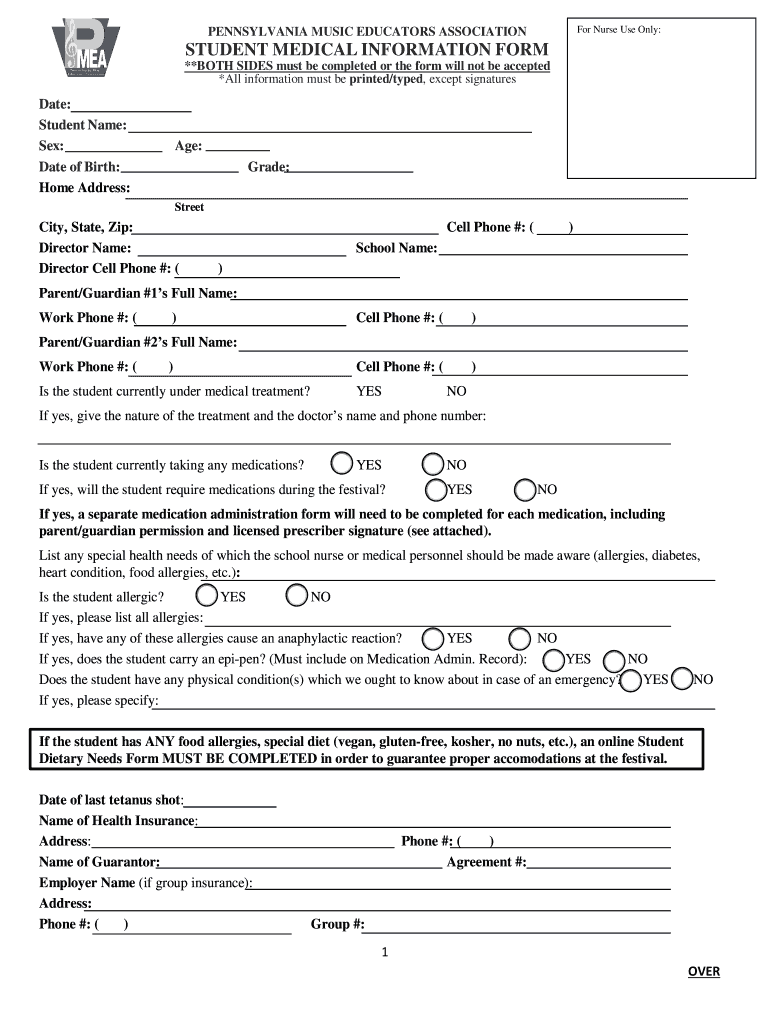
Student medical information forms are essential documents used to collect comprehensive health details about students who are participating in specific activities, such as the Pennsylvania Music Educators Association festival. These forms are designed to gather critical medical and emergency information that ensures the safety and well-being of student participants. The form typically includes sections for medical treatment instructions, allergies, dietary needs, and emergency contacts, enabling event organizers to respond effectively in case of health-related incidents.
- Common Sections: Include personal identification, medical history, medication requirements, and emergency contacts.
- Purpose: Aids event staff and medical professionals in understanding a student's health needs.
- Use Case: Essential for school trips, extracurricular activities, and events requiring close participant management.
Completing the Student Medical Information Form
Completing a student medical information form involves several steps to ensure all necessary data is accurately captured. It is crucial that both sides of the form are filled out where applicable to be accepted by the organizing body.
- Personal Information: Start by filling in the student's full name, date of birth, and contact information.
- Medical History: Include any relevant medical conditions, previous surgeries, and ongoing treatments.
- Medications and Allergies: List all current medications, dosages, and any known allergies, including food and drug allergies.
- Emergency Contacts: Provide contact details for guardians or parents and an additional emergency contact.
- Authorization for Treatment: Ensure the form includes an authorization section for emergency medical treatment by healthcare providers.
Importance of Student Medical Information
Having a student medical information form filed and readily available during events is crucial for several reasons. It ensures prompt and effective medical response, safeguards the student's health, and reduces liabilities for organizers.
- Emergency Response: Quick access to essential health information accelerates response times in emergencies.
- Legal Protection: Provides documentation of informed consent for medical treatments.
- Health Management: Facilitates proper dietary and medical preparations for individuals with special needs.
Who Uses Student Medical Information Forms
These forms are typically used by educational institutions, event organizers, and program coordinators who manage activities involving groups of students. Teachers, activity leaders, and healthcare personnel use the data provided to prepare adequately for the needs and safety of each student.
- Educational Institutions: Schools and universities use these forms for field trips and extracurriculars.
- Event Organizers: Required for events like sports tournaments, music festivals, and other gatherings.
- Healthcare Providers: Doctors and nurses use this information for reference in case of medical emergencies.
Key Elements of a Complete Medical Information Form
A well-prepared student medical information form contains several critical elements that enable effective communication between students’ guardians, organizers, and healthcare providers.
- Personal Identifiers: Name, age, student ID, and school or organization.
- Medical Details: Complete medical history, including conditions, medications, and allergies.
- Guardian Information: Contact details and written consent for treatment.
- Insurance Information: Health insurance details to assist in medical emergencies.
- Signatures and Dates: To verify the accuracy and timing of the information provided.
Examples of Use in Real-World Scenarios
Student medical information forms are indispensable in various scenarios where preparedness is paramount to student safety. Below are some common situations where these forms are utilized:
- Field Trips: Providing necessary health information for teachers supervising off-campus activities.
- Sports Events: Ensuring coaches and medical teams are aware of any health conditions that may affect performance or safety.
- Residential Camps: Used by camp counselors to manage health needs in overnight settings, including managing allergies and medication schedules.
Legal and Compliance Considerations
Using student medical information forms requires adherence to privacy laws and regulations, such as the Health Insurance Portability and Accountability Act (HIPAA) in the United States, to protect student data.
- Data Protection: Ensure that all medical and personal information is stored securely and access is limited to authorized personnel.
- Informed Consent: All treatments require prior written consent from guardians or parents.
- Confidentiality: Comply with federal and state laws regarding medical file confidentiality and student privacy.
State-Specific Considerations
There could be variations in how student medical information forms are handled, based on state-specific regulations and requirements.
- Pennsylvania Protocols: May require specific fields or formats for the Pennsylvania Music Educators Association festival.
- State Variances: Some states have additional forms or requirements when managing youth events.
- Guidelines Compliance: Be aware of regional guidelines that might alter the collection or use of medical data.




