Definition & Meaning
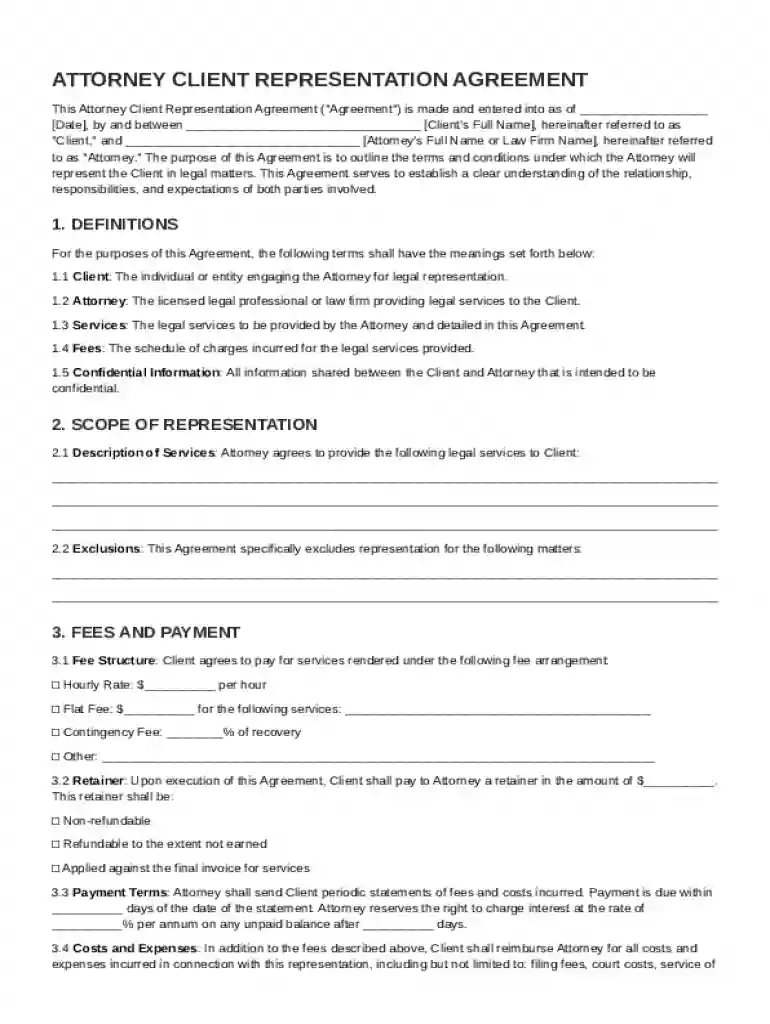
The Attorney Client Representation Agreement Template is a formal document outlining the legal relationship between a client and an attorney. This agreement sets forth the terms, roles, and responsibilities of both parties involved. Key aspects covered include:
- Services Provided: The document specifies the type of legal services the attorney will offer and any limitations.
- Fee Structure: It describes the payment terms, including hourly rates, retainer fees, and other related costs.
- Confidentiality: Both parties agree on the confidentiality of shared information, adhering to attorney-client privilege.
- Termination Conditions: The agreement outlines the situations under which either party can terminate the relationship.
This template is crucial for ensuring mutual understanding and setting clear expectations from the outset.
Key Elements of the Attorney Client Representation Agreement Template
The template encompasses several critical components to ensure comprehensive coverage of legal representation. Important elements include:
- Scope of Representation: Clearly defines the legal matters the attorney will handle.
- Client Obligations: Details the client’s responsibilities, such as providing truthful information and timely cooperation.
- Dispute Resolution: Specifies the method for resolving disputes, often through mediation or arbitration.
- Amendments: Outlines how changes to the agreement must be made, usually requiring written consent from both parties.
- Governing Law: Indicates which state’s law will govern the agreement.
Including these elements ensures that the agreement is thorough and legally sound.
How to Use the Attorney Client Representation Agreement Template
Utilizing this template involves several key steps to ensure it fits the specific needs of both the client and the attorney:
- Customize the Template: Adjust the template to reflect the specific services and terms agreed upon by both parties.
- Review Key Clauses: Pay special attention to clauses regarding fees, confidentiality, and dispute resolution to ensure they align with both parties’ expectations.
- Consult with Legal Experts: It may be beneficial to have the draft reviewed by a legal expert to ensure its completeness and legality.
- Client and Attorney Signatures: Both parties must sign the document to make it legally binding.
Following these steps helps in creating a tailored and effective agreement.
Steps to Complete the Attorney Client Representation Agreement Template
Finalizing the template involves meticulously completing each section to accurately reflect the engagement terms:
- Fill In Party Details: Include detailed information about both the client and the attorney, such as names, addresses, and contact details.
- Define Legal Services: Clearly specify the scope of legal services to be rendered.
- Set Payment Terms: Outline the payment structure, including hourly rates and any retainer fees.
- Detail Confidentiality Terms: Ensure confidentiality clauses are specific and robust, maintaining client privacy.
- Establish Termination Procedures: State the conditions and procedures for termination of the agreement.
- Include Signatures: Conclude with spaces for signatures, ensuring both parties formally agree to the terms.
Careful completion of these steps ensures the agreement is enforceable and comprehensive.
Legal Use of the Attorney Client Representation Agreement Template
This template serves critical legal functions and ensures compliance with U.S. laws. Essential legal uses include:
- Formalizing Professional Relationships: Establishes clear parameters for the attorney-client relationship, protecting both parties.
- Client Protection: Outlines the client’s rights and remedies in case of attorney breaches.
- Enabling Dispute Resolutions: Provides mechanisms for resolving disputes without litigation.
By clearly documenting expectations and responsibilities, the agreement helps prevent misunderstandings and legal disputes.
State-Specific Rules for the Attorney Client Representation Agreement Template
While the template is broadly applicable, it must be customized to comply with state-specific legal requirements:
- Fee Regulations: Some states have specific rules about contingency fees and other payment terms.
- Confidentiality Provisions: Variations may exist regarding privacy laws and client rights.
- Governing Law Clauses: The template should specify which state’s laws will apply in legal disputes.
Adjusting for state-specific nuances ensures the agreement’s enforceability and relevance in the specified jurisdiction.
Important Terms Related to Attorney Client Representation Agreement Template
Understanding critical terms is vital for both the attorney and the client:
- Retainer: An advance payment made by the client to retain the attorney’s services.
- Privilege: The client’s right to confidentiality in communications with the attorney.
- Breach: A violation of any terms within the agreement, allowing for remedies.
- Amendments: Modifications to the agreement that require mutual consent.
Familiarity with these terms aids in understanding the agreement’s implications and structure.
Examples of Using the Attorney Client Representation Agreement Template
Practical applications of this agreement highlight its importance:
- Family Law: Used when hiring a divorce attorney, with terms specific to custody arrangements.
- Criminal Defense: Ensures representation in legal proceedings, outlining confidentiality and defense strategy.
- Corporate Law: Engages lawyers for mergers or acquisitions, detailing service scope and confidentiality.
These examples illustrate the template’s versatility across multiple law domains, emphasizing its broad utility.