01. Edit your form online
Type text, add images, blackout confidential details, add comments, highlights and more.

Type text, add images, blackout confidential details, add comments, highlights and more.

Draw your signature, type it, upload its image, or use your mobile device as a signature pad.

Send it via email, link, or fax. You can also download it, export it or print it out.
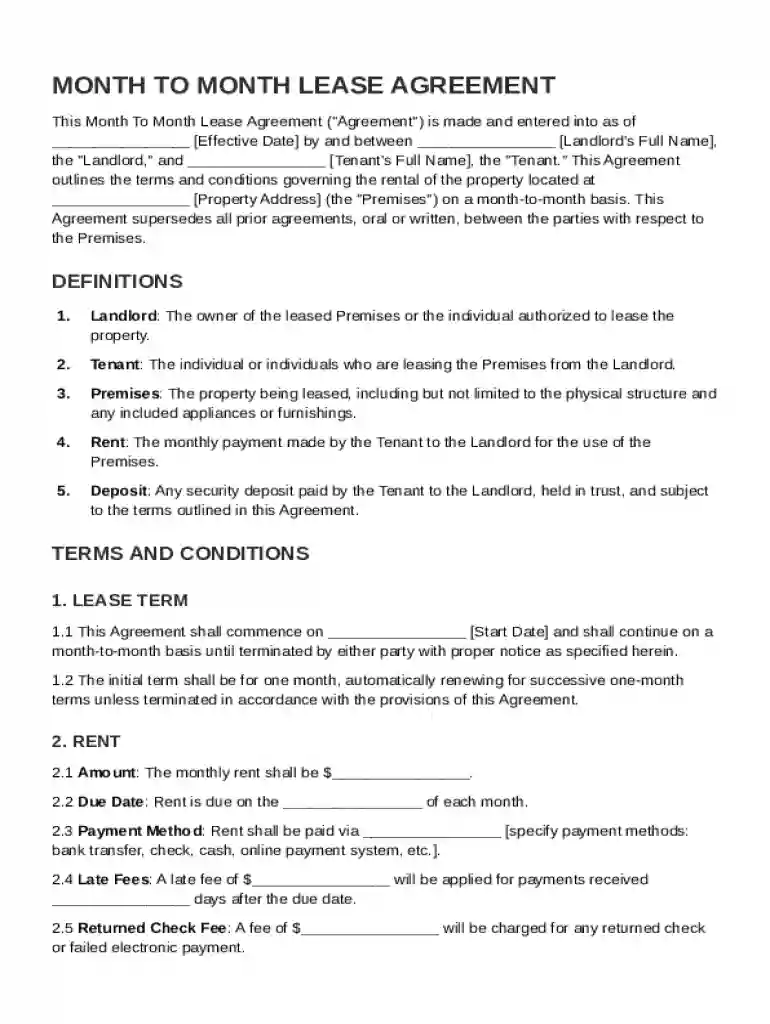
The "Month to Month Lease Contract Template" is a legal document outlining the terms of rental agreements that continue on a monthly basis indefinitely. Unlike fixed-term leases, this type offers flexibility for both landlords and tenants, enabling either party to terminate or modify lease terms with minimal notice, typically 30 days. Suitable for individuals favoring short-term rental arrangements, the contract covers essential lease components like rent payment, security deposit details, and responsibilities related to property maintenance and violations. Understanding the template's role is critical as it regulates the temporary nature while protecting both parties' rights.
A practical scenario involves a tenant who needs temporary housing due to work assignments. A month-to-month lease allows them to extend their stay as needed or vacate without breaching a longer-term contract. Similarly, landlords can adjust rent conditions or tenant compliance standards with changing market conditions, making this template ideal for dynamic rental situations.
Identifying Parties: Start by clearly listing the names and contact details of both the landlord and tenant. Ensure all parties' legal names are used to prevent potential disputes.
Property Description: Provide a detailed description of the rental property, including its address and any specific features like parking spots or storage areas that are included in the lease.
Term Details: Specify the lease's starting date and articulate its month-to-month nature. Highlight the required notice period for terminating the lease, ensuring compliance with state legislation.
Rent Payment: Clearly define the monthly rent amount, due date, acceptable payment methods, and any penalties for late payments. Mention any prorated rent considerations for mid-month move-ins or departures.
Security Deposit: Outline the security deposit amount, the conditions under which it will be held, returned, or deducted for repairs/cleaning. Compliance with state laws regarding deposit handling is essential.
Tenant Obligations: Describe tenant responsibilities, such as maintaining cleanliness, adhering to noise ordinances, and promptly reporting maintenance issues. Specify any restrictions on property alterations or subletting.
Termination Conditions: Establish the procedures for lease termination, including requisite notice periods and documentation. Include allowances for immediate terminations resulting from lease violations.
Pet Policy: Specify any restrictions related to pets, including the types of pets allowed, associated pet deposits, and potential fees for damages.
Maintenance and Repairs: Detail landlord and tenant responsibilities regarding property upkeep, routine maintenance, and emergency repairs. Describe procedures for reporting issues and timelines for repairs completion.
Access Rights: Outline landlord rights to access the rental property for inspections, repairs, or showings. Clarify required notice periods barring emergencies, aligning with local legal standards.
Modifications and Addendums: Address the process for modifying lease terms or adding contractual addendums, emphasizing the need for written agreements signed by all parties.
The lease template ensures legal compliance by incorporating relevant state statutes governing tenant-landlord relationships. It embodies clauses mandated by law, such as anti-discrimination policies and rights to habitability. When executed correctly, the contract serves as a legally enforceable agreement, offering recourse through small claims courts or mediation for unresolved disputes.
Each U.S. state may have unique regulations concerning eviction procedures, rent control ordinances, and landlord access protocols. Customizing the lease template in accordance with state-specific rules ensures enforceability.
Certain states impose specific requirements for month-to-month leases that alter standard contractual obligations. For example, in California, written notice is mandatory for initiating any rent changes or eviction processes. Washington State mandates a minimum 20-day notice for lease termination, deviating from the general 30-day norm.
In New York, landlords can only increase the rent once within any 12-month period unless otherwise stated in the every-month agreement. Including these local requirements during template customization helps maintain legal validity.
The lease contract template's flexibility extends to its compatibility with various digital formats, essential for both drafting and signing purposes. Supported file types like DOC, PDF, and TXT enable seamless editing across document editor platforms such as Microsoft Word or Google Docs. Digital signing tools ensure that contracts remain enforceable without the need for physical signatures, streamlining the leasing process.
Using tools like DocHub not only allows modifications to the template but also facilitates collaborative reviews amongst stakeholders. Importing templates from services like Google Drive and Dropbox is supported, offering further convenience.
Consider a real estate investor with multiple rental properties. This individual may favor month-to-month leases during off-peak seasons to maintain occupancy rates and adjust leasing strategies in response to market trends. Documentation through a standard lease contract minimizes administrative burden while allowing strategic flexibility.
An international student rents an apartment for the duration of their academic program. A month-to-month lease fits their schedule, providing peace of mind knowing that they can extend the lease to stay with minimal hassle if their plans change.
While the month-to-month lease is versatile, it may not suit all rental circumstances. Alternatives such as fixed-term leases, usually ranging from six to twelve months, offer stability for tenants and predictable income for landlords. Selecting an appropriate lease type should consider tenant stability, property location, and economic factors influencing market conditions.
For high-demand areas, introducing seasonal lease adjustments or using hybrid agreements combining fixed and monthly terms can optimize returns while providing tenant flexibility.
At DocHub, your data security is our priority. We follow HIPAA, SOC2, GDPR, and other standards, so you can work on your documents with confidence.