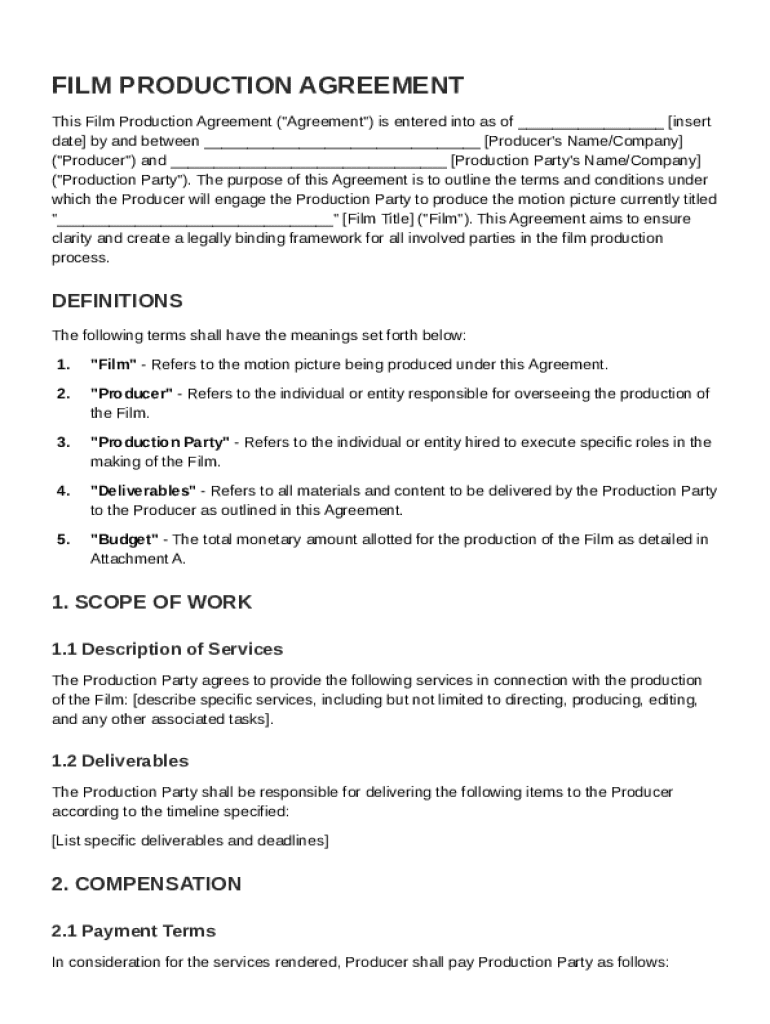







Definition & Purpose of a Film Production Agreement Template
A Film Production Agreement Template serves as a standardized document that outlines the responsibilities and obligations between a producer and a production party involved in the creation of a motion picture. This template is designed to facilitate the legal and business relationship during film production. It covers essential elements such as roles, compensation, timelines, and deliverables, ensuring that all parties understand their duties and rights. The template acts as a contractual framework to prevent disputes and promote a smooth production process.
Key Components
- Roles and Responsibilities: Clarifies each party's duties.
- Compensation: Details monetary agreements.
- Production Schedule: Sets timelines for deliverables.
- Intellectual Property: Addresses ownership of creative content.
- Confidentiality: Ensures protection of sensitive information.
How to Use the Film Production Agreement Template
Using a Film Production Agreement Template involves customizing the document to fit the specific production needs and legal requirements of your project. Begin by reviewing the template to understand its structure and key components.
Steps to Customize
- Identify Roles: Clearly define all parties involved, including producers, directors, and financiers.
- Outline Deliverables: Specify the production phases and what is expected at each stage.
- Set Financial Terms: Include details about funding, profit distribution, and expense management.
- Include Legal Provisions: Tailor sections on indemnification, dispute resolution, and applicable law.
Practical Example
Consider a small independent film with a limited budget. The template can be adjusted to include clauses specific to financing challenges common in indie productions, such as deferred payments or profit-sharing incentives.
Steps to Complete the Film Production Agreement Template
Completing a Film Production Agreement Template requires careful attention to detail and legal accuracy. Follow these structured steps for a comprehensive agreement:
- Gather Information: Collect details about the film project, including a synopsis, production timeline, and key personnel.
- Review Terms: Go through each section of the template to ensure it aligns with the project’s requirements.
- Fill in Details: Enter specific data into placeholder sections, such as names, contact information, and financial figures.
- Consult Legal Counsel: Before finalizing, have an attorney review the document to ensure compliance with industry standards and legal requirements.
Important Considerations
- Ensure all parties have reviewed and agreed upon terms before signing.
- Keep a record of all communications and revisions during the drafting process.
Legal Use of the Film Production Agreement Template
The legal use of a Film Production Agreement Template involves adhering to relevant laws and regulations in the jurisdiction where the production takes place. The agreement serves as a legally binding document once all parties have signed it.
Compliance Checkpoints
- Regulatory Requirements: Ensure conformity with state and federal laws.
- Intellectual Property Rights: Confirm correct attribution and ownership clauses.
- Dispute Resolution: Include arbitration or mediation clauses as alternatives to litigation.
Example Scenario
When producing a film in California, be mindful of state-specific employment laws and intellectual property regulations. The agreement should include clauses that reflect compliance with localized industry standards.
Important Terms in the Film Production Agreement Template
Understanding key terms in the Film Production Agreement Template is crucial for all parties involved. These terms dictate the structure and enforceability of the agreement.
Core Terms
- Producer: The individual or company responsible for the production's overall success.
- Option Agreement: A clause allowing a producer to purchase rights to a script within a specified period.
- Merchandising Rights: Details on how revenue from merchandise related to the film is divided.
- Force Majeure: A clause exempting parties from liability due to unforeseeable events impacting the production.
Detailed Context
For example, the merchandising rights term is essential for big-budget productions where additional revenue streams significantly impact financial planning. Clearly defining these rights can prevent future conflicts over profits from merchandise sales.
State-Specific Rules for the Film Production Agreement Template
Film production agreements must adhere to state-specific rules to be valid and enforceable. Depending on where the production is based, different legal standards and tax incentives may apply, influencing the agreement's terms.
Practical Application
- California: Known for specific labor laws impacting crew working conditions and pay structures.
- Georgia: Offers tax credits for productions, which should be reflected in the agreement’s financial planning.
- New York: Requires compliance with union regulations more stringently than some other states.
Considerations
- Assess potential tax benefits and legal constraints specific to the state.
- Include language in the agreement that references applicable state laws and regulations.
Who Typically Uses the Film Production Agreement Template
This template is commonly used by various parties involved in film production, each benefiting from the clarity and structure it provides.


Typical Users
- Independent Filmmakers: To secure financing and outline creative control.
- Production Companies: To manage multiple projects efficiently.
- Legal Professionals: To ensure all parties comply with contractual obligations.
Benefits
- Provides a clear legal foundation for new filmmakers unfamiliar with complex contract language.
- Assists production companies in maintaining consistency across projects.
Software Compatibility for a Film Production Agreement Template
Compatibility with document management software is crucial for efficient creation and management of a Film Production Agreement Template. This ensures easy editing, sharing, and storage across multiple devices and platforms.
Supported Platforms
- DocHub: Offers seamless editing and signing capabilities, ideal for online collaboration.
- Adobe Acrobat: Widely used for creating and editing PDF documents.
- Microsoft Word: Useful for drafting agreements and converting them into easily shareable formats.
Integration Examples
Using DocHub allows for direct import from Google Drive, enabling users to work on the document collaboratively in real-time and export the finalized version to cloud storage, facilitating easy access and sharing.
Advantages
- Ensures that all parties can review and sign the document electronically.
- Reduces time spent on downloading, editing, and uploading files manually, streamlining the production process.