




01. Edit your form online
Type text, add images, blackout confidential details, add comments, highlights and more.

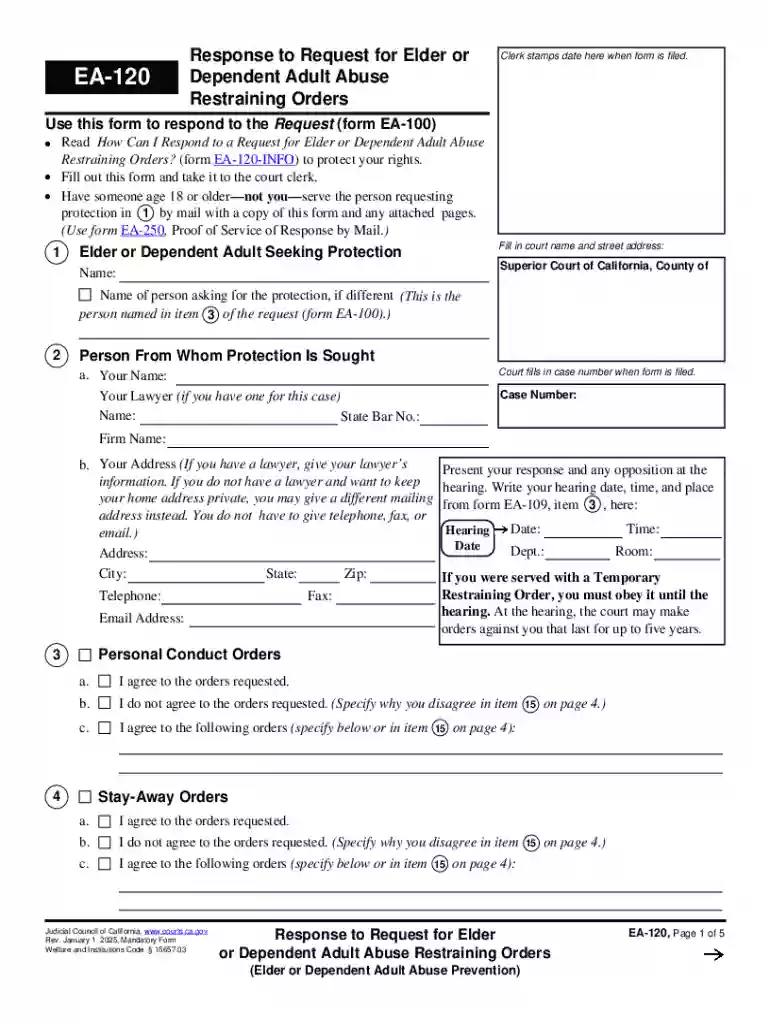
Type text, add images, blackout confidential details, add comments, highlights and more.

Draw your signature, type it, upload its image, or use your mobile device as a signature pad.

Send it via email, link, or fax. You can also download it, export it or print it out.
The EA-120 Response to Request for Elder or Dependent Adult Abuse Restraining Orders is a legal document used in the United States to formally respond to restraining orders pertaining to elder or dependent adult abuse. This form allows individuals to address and contest accusations, agree or disagree with protective measures, and present their side in legal proceedings. By completing this form, respondents can express their viewpoints, detail their circumstances, and outline any objections to proposed terms.
Completing the EA-120 Response requires careful attention to detail. The following steps provide a structured approach to filling out the form:
Personal Information: Begin by entering your full legal name, address, and contact information. Ensure that these details match official records to avoid complications in the review process.
Response to Orders: Indicate whether you agree or disagree with each specified restraining order. Provide clear, concise explanations or reasons for any disagreements to strengthen your case.
Firearms and Ammunition: Declare any possession of firearms or ammunition and describe steps taken to comply with protective orders if applicable.
Counseling and Fees: Respond to requests for counseling or legal fees. Detail your ability or inability to comply based on personal circumstances.
Provide Additional Information: Use designated sections to add explanations or other pertinent information that supports your position or provides context.
Review and Sign: Carefully review your completed form for accuracy, then sign and date it. Consider having a legal professional review your response to ensure completeness.
The EA-120 Response serves a critical role in the legal process by protecting the rights of respondents while ensuring that the courts receive necessary information to make an informed decision. It is crucial to adhere to legal standards when completing this form, as inaccuracies or omissions can impact the outcome of the case.
This form is commonly utilized by individuals who have been served with a request for elder or dependent adult abuse restraining orders. Respondents typically include:


Respondents bear the responsibility of presenting clear, factual responses that align with legal requirements. They must provide all requested information and support their claims with evidence when available.
Acquiring the EA-120 Response form can be done through several methods:
Online Access: Visit court websites or legal resources platforms to download a digital copy of the form. Ensure you select the version applicable to your state or jurisdiction.
Clerk's Office: Paper copies can often be obtained directly from the clerk's office in the courthouse where the original order was filed.
Legal Assistance Providers: Contact legal aid organizations for assistance in obtaining and completing the form if resources allow.
Understanding key terms is essential for correctly interpreting the EA-120 form:
Meeting filing deadlines is crucial for the EA-120 Response to be considered valid. Familiarize yourself with the following timing aspects:
Response Deadline: Typically specified in the notice received with the original restraining order request. It is critical to meet this deadline to avoid default judgments.
Hearing Dates: Information about scheduled court hearings will accompany the restraining order request. Attending these hearings is necessary for presenting your case.
Respondents can choose between various methods for submitting their EA-120 form:
In-Person Submission: Deliver the completed form to the court in person. This method allows for immediate acknowledgment of receipt and addressing any submission issues on the spot.
Mail Submission: Send the form via certified mail to ensure verifiable delivery. Include a self-addressed stamped envelope if return confirmation is required.
Electronic Submission: Depending on jurisdiction, electronic filing systems may be available. Ensure compliance with electronic submission guidelines and retain electronic receipts for records.
We've got more versions of the EA-120 Response to Request for Elder or Dependent Adult Abuse Restraining Orders form. Select the right EA-120 Response to Request for Elder or Dependent Adult Abuse Restraining Orders version from the list and start editing it straight away!
At DocHub, your data security is our priority. We follow HIPAA, SOC2, GDPR, and other standards, so you can work on your documents with confidence.




Tell the court and other side if you agree or disagree with a restraining order. This form is filled out by the person responding to a restraining order.Read more
Those who study elder abuse/maltreatment and neglect acknowledge the language used to describe the phenomenon is overwhelmingly inconsistent. From discrepanciesRead more


