






Understanding the Navy Counseling Chit
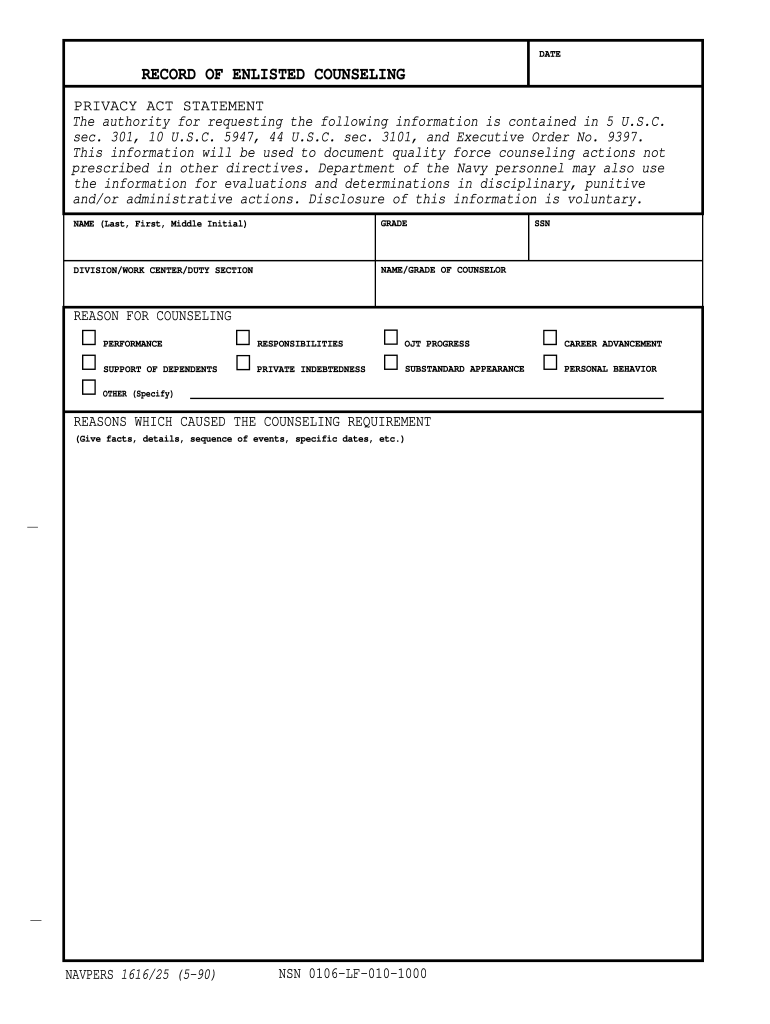
The navy counseling chit, often referred to as the NAVPERS 1616/25, is a pivotal form used by the Department of the Navy to document counseling actions related to personnel performance, responsibilities, and behavior. It serves to create a formal record that can clarify expectations and provide a roadmap for improvement.
Structure of the Navy Counseling Chit
The navy counseling chit consists of several critical sections that allow for comprehensive documentation:
-
Personal Information: This section captures essential details about the service member being counseled, including name, rank, and service number. Accurate information here ensures that the counseling record is correctly attributed.
-
Reasons for Counseling: Counselors outline the specific issues that prompted the meeting. Common reasons can include performance deficiencies, behavioral concerns, or a failure to meet established standards.
-
Incident Details: This block provides a detailed account of incidents leading to the counseling session. Counselors should aim to include dates, times, and specific examples to substantiate the reasoning behind the counseling.
-
Plans for Improvement: A key component of the navy counseling chit is the development of an action plan. This outlines what steps the service member will take to improve performance or behavior. It should be specific, measurable, attainable, relevant, and time-bound (SMART).
Completion Process for the Navy Counseling Chit
Completing the navy counseling chit involves a multi-step process:
-
Initiate Counseling: The counselor (often a supervisor or senior officer) should schedule a meeting, ensuring a private and supportive environment.
-
Document Interaction: During the meeting, the counselor should complete each section of the chit, noting personal information, reasons for counseling, and incident details comprehensively.
-
Establish Improvement Goals: Collaboratively, the counselor and the service member should agree on realistic and achievable improvement goals, recorded in the plans for improvement section.
-
Signature Confirmation: Both the counselor and the service member should sign the chit, indicating mutual understanding and agreement of the documented counseling session.
-
File and Follow Up: The completed form should be placed in the service member's personnel file. The counselor should schedule follow-up sessions to assess progress toward the improvement goals.
Examples of Situations Requiring a Navy Counseling Chit
A variety of situations may lead to the completion of a navy counseling chit, such as:
-
Performance Issues: A sailor consistently failing to meet the standards of their role, leading to a formal record of counseling aimed at improving performance.
-
Behavioral Problems: Instances of inappropriate behavior that require documentation to ensure the service member understands the expectations and the potential consequences of their actions.
-
Financial Mismanagement: A counseling chit may be used when a service member is struggling with financial issues that could affect their performance or conduct.
Importance of the Navy Counseling Chit
The navy counseling chit serves multiple functions:
-
Documentation: It provides a formal record of counseling sessions, which can be referenced in future evaluations or disciplinary actions.
-
Guidance and Support: The chit is designed to help service members understand their shortcomings and provide a structured approach to overcoming them.
-
Accountability: By outlining expectations and signs of progress, it holds both the counselor and the service member accountable for addressing the documented issues.
Legal and Regulatory Compliance
The use of the navy counseling chit must adhere to established Navy regulations and directives. Proper documentation practices ensure that counseling is conducted fairly and consistently, promoting a culture of continuous improvement within the Navy.
Variants and Versions of the Navy Counseling Chit
Although the NAVPERS 1616/25 is the standard form, variations may exist for different contexts or specific needs. It's essential for users to be aware of these variations and ensure they are using the most current version required for their circumstances.
In summary, the navy counseling chit is a vital tool within the Navy for managing personnel performance and behavior effectively. Its structured format allows for clear documentation, while the collaborative nature of the counseling process fosters improvement and accountability.