






Definition & Meaning
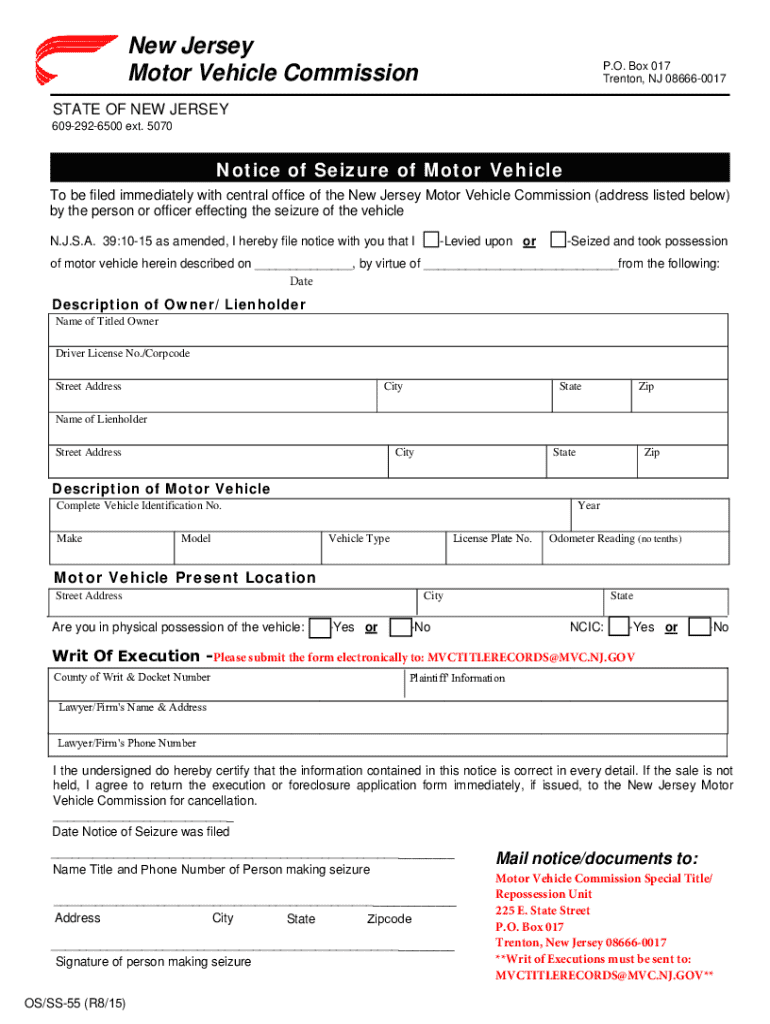
The "Notice of Seizure of Motor Vehicle" is a formal document issued by the New Jersey Motor Vehicle Commission. This document notifies the relevant parties about the legal seizure of a motor vehicle, typically due to unpaid loans, parking violations, or other legal reasons. It serves as an official record that a vehicle has been taken under the given circumstances and outlines the necessary procedures that follow the seizure, including the rights and responsibilities of the vehicle owner or lienholder.
Key Elements of the Notice of Seizure of Motor Vehicle
The notice comprises several critical components that provide detailed information about the seizure. The primary elements include:
- Owner Information: Details about the vehicle's owner, such as name and address, to identify who is responsible for the vehicle.
- Lienholder Information: If there is a lien on the vehicle, details of the lienholder are included, such as contact information and lien amount.
- Vehicle Description: Information about the vehicle, including make, model, year, VIN, and license plate number, to ensure accurate identification.
- Seizure Details: The reason for the seizure, location, and date of the action, which clarifies the circumstances and timing of the event.
How to Obtain the Notice of Seizure of Motor Vehicle
To obtain a "Notice of Seizure of Motor Vehicle," individuals must follow specific steps depending on their association with the vehicle. Usually, the notice is sent directly to the registered owner and any lienholders upon seizure. However, for parties who need a copy, they can:
- Contact the New Jersey Motor Vehicle Commission: Reach out to the agency to request a copy.
- Verify Identity: Provide appropriate identification and proof of interest in the vehicle, such as an ownership title or lienholder agreement.
- Complete Required Forms: Fill out any necessary documentation to process the request.
Steps to Complete the Notice of Seizure of Motor Vehicle
Completing the "Notice of Seizure of Motor Vehicle" involves a series of steps to ensure accuracy and compliance:
- Review the Notice: Carefully read the document to understand the seizure's details and any required actions.
- Verify Information: Cross-check owner and vehicle details for accuracy.
- Provide Additional Information: Include any omitted or updated details, such as changes in address or lienholder information.
- Submit Corrections: Return corrected documents to the New Jersey Motor Vehicle Commission if discrepancies are found.
Legal Use of the Notice of Seizure of Motor Vehicle
In a legal context, the notice functions as an essential document that justifies and formalizes the seizure of a vehicle. It provides:
- Proof of Seizure: Official documentation that the vehicle was legally taken.
- Legal Compliance: Ensures that the seizure was conducted according to state laws and regulations.
- Owner Notification: Direct notification to the owner about their vehicle's status and the steps to reclaim it, if possible.
Penalties for Non-Compliance
Failure to respond to the "Notice of Seizure of Motor Vehicle" or to comply with its requirements may lead to:
- Permanent Loss of Vehicle: The vehicle could be sold or scrapped if it is not reclaimed within the designated timeframe.
- Legal Ramifications: Potential additional legal action, including fines or damaged credit, depending on the seizure's cause.
- Missed Deadlines: Potential forfeiture of any rights to contest the seizure.
State-Specific Rules for the Notice of Seizure of Motor Vehicle
The application and impact of the notice can vary by state, with New Jersey adhering to specific guidelines that may differ from other states. Key considerations include:
- Timelines for Response: Varying deadlines for contesting or appealing a seizure.
- Required Documentation: Differences in paperwork needed to address or appeal the seizure.
- Fees or Costs: Potential charges associated with recovering the vehicle or resolving legal issues surrounding its seizure.
Required Documents
Gathering and submitting the correct documentation is vital when dealing with a motor vehicle seizure notice. Essential documents include:
- Proof of Ownership: Title or registration to confirm the identity of the vehicle owner.
- Lienholder Statement: If applicable, documentation from the lienholder acknowledging the seizure.
- Personal Identification: Valid photo ID such as a driver’s license or state-issued identification to verify identity.
This comprehensive breakdown serves to clarify the processes and implications surrounding the "Notice of Seizure of Motor Vehicle," providing essential guidance to those affected by such situations in New Jersey.