






Definition & Meaning
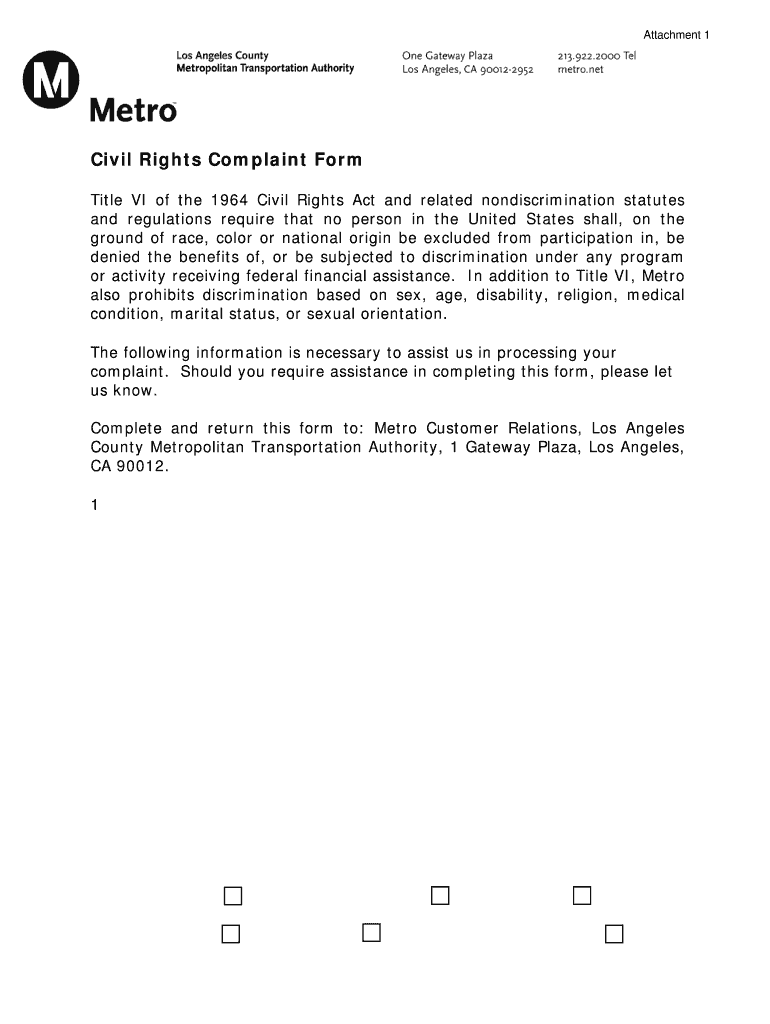
The "Metro Civil Rights Policy and Civil Rights Complaint Form" is a crucial document instrumental in ensuring that civil rights are upheld within metropolitan transportation settings. It serves both as a policy framework and a complaint form, emphasizing non-discrimination and equal access in services provided by metropolitan authorities. Key civil rights considerations include protection against discrimination based on race, color, national origin, and other federally recognized classes. This document is essential for maintaining an environment of fairness and justice within public transportation systems.
Core Principles
- Non-Discrimination: Ensures services are provided without bias against protected classes.
- Equal Access: Commits to providing all individuals with the same opportunities and resources.
- Environmental Justice: Recognizes the need to address and mitigate the impact of services on disadvantaged communities.
How to Use the Metro Civil Rights Policy and Civil Rights Complaint Form
Using this form involves several steps to ensure that complaints related to civil rights violations are lodged correctly and promptly addressed. Here's how you can make use of the form effectively:
- Identify the Issue: Clearly define the nature of the discrimination or civil rights violation you are experiencing or witnessing.
- Gather Information: Collect all relevant information and evidence related to the incident. This may include dates, times, location, and involved parties.
- Complete the Form: Fill in all mandatory sections of the complaint form accurately, ensuring that the details provided are precise and comprehensive.
- Submit the Form: The completed form can usually be submitted through various channels, such as online submissions, mailing, or in-person delivery at designated locations.
Example Scenario
Suppose you are a daily commuter who feels their rights under the policy have been violated due to unequal treatment based on race. You would document the incidents, gather witness statements if possible, and complete the form to lodge a complaint with the respective authority.
Steps To Complete the Form
Completing the Metro Civil Rights Policy and Complaint Form requires attention to detail to ensure that your complaint is processed without delays. Follow these steps:
- Read Instructions Thoroughly: Before filling out the form, read all instructions carefully to understand all required fields and necessary information.
- Provide Personal Information: Enter your name, contact details, and any identifying information accurately.
- Describe the Incident: Offer a detailed description of the incident, including timing, location, and any witnesses present.
- List Supporting Evidence: Attach any documents or evidence substantiating your claim, such as emails, photos, or witness testimonies.
- Double-check Entries: Review all entries for accuracy and completeness.
- Sign and Date: Provide your signature and date the form to affirm the authenticity of the provided information.
Who Typically Uses the Form
The complaint form is designed for anyone involved with metropolitan transportation services who may face discrimination. Typical users include:
- Passengers and Commuters: Individuals using public transportation who experience or observe rights violations.
- Employees and Contractors: Staff members who may face workplace discrimination have access to this form.
- Vendors or Partners: Third parties working with transportation authorities who encounter unfair treatment.


Real-World Application
An employee working for a metro service might use the form to report discriminatory workplace practices that contravene established civil rights policies.
Legal Use of the Form
The form is entrenched within a legal framework to ensure compliance with both local and federal civil rights laws. Filing a complaint through this form initiates an investigation that must adhere to established legal protocols.
- Compliance with Federal Law: Aligns with the Civil Rights Act to promote non-discrimination.
- Legal Investigation: Submissions trigger an investigation process led by legal experts within the transportation authority.
Edge Cases
Occasionally, disputes may arise over the interpretation of what constitutes a breach of civil rights. In such instances, legal counsel may be sought to guarantee rightful interpretation and enforcement.
Key Elements of the Policy & Form
Understanding the components of the policy and form is vital:
- Policy Statement: Declaration of the commitment to civil rights and equality.
- Complaint Registration: Mechanism for documenting and lodging complaints.
- Investigation Protocols: Outline investigative procedures to resolve complaints.
- Resolution Mechanisms: Details the pathways for settlement or correction of the identified issues.
Detailed Breakdown
- Policy Statement: Affirmation of non-discriminatory practices.
- Data Collection: Criteria on how data related to complaints are collected and utilized.
Important Terms Related to the Form
Familiarity with specific terms enhances comprehension and effective utilization of the form:
- Discrimination: Unjust treatment based on personal characteristics such as race or gender.
- Complainant: Individual lodging the complaint.
- Respondent: Entity or individual against whom the complaint is filed.
Variations
Terms may vary based on jurisdiction but remain consistent in representing parties involved and actions taken regarding discrimination issues.
Examples of Using the Form
Practical examples illustrate the application and utility of the form in real-world contexts:
-
Example 1: A commuter files a complaint after witnessing a staff member deny service to an individual based on their national origin.
-
Example 2: An employee alleges discriminatory hiring practices within their department and submits the form to initiate a formal inquiry.
Case Studies
- Case Study A: Documented case where comprehensive data collection via the form led to policy changes within a metropolitan authority to better address racial discrimination.
Understanding and efficiently utilizing the Metro Civil Rights Policy and Complaint Form ensures that all related parties are equipped to address, resolve, and learn from incidents of discrimination effectively.