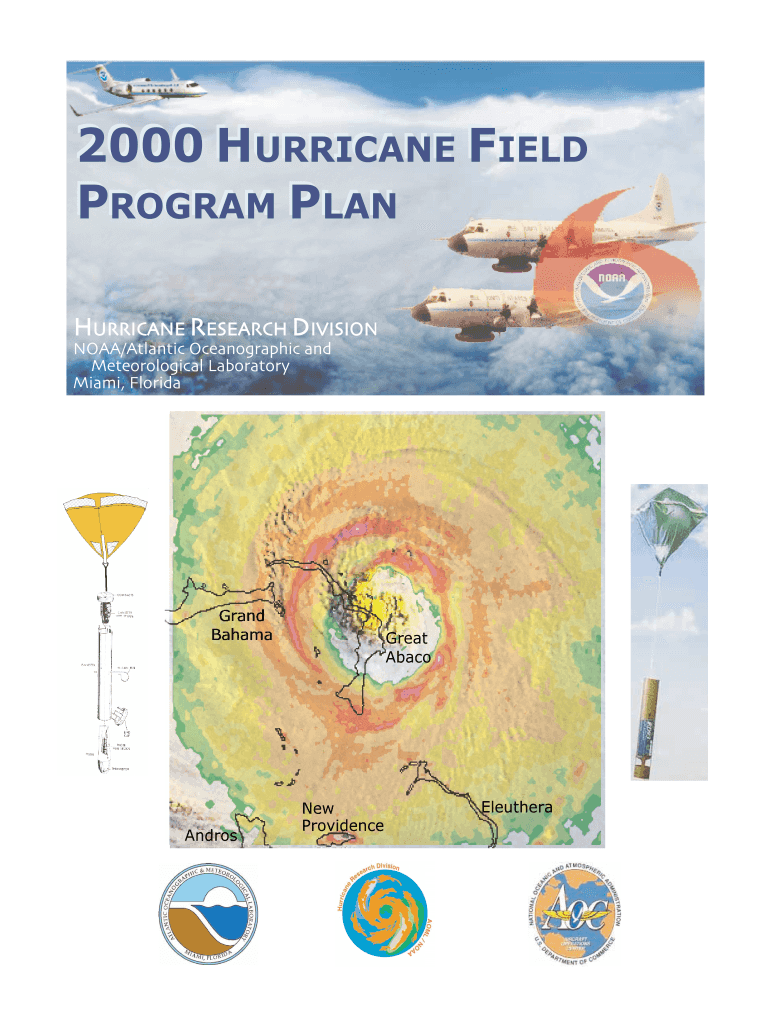







Definition and Purpose of the 2000 Hurricane Field Program Plan
The 2000 Hurricane Field Program Plan, developed by NOAA's Atlantic Oceanographic and Meteorological Laboratory (AOML), is an organized initiative focused on improving the scientific community's understanding and prediction of hurricanes. Primarily, it outlines the strategic objectives and operational details for various experiments conducted during the hurricane season. These include the Hurricane Synoptic-Flow Experiment, the Extended Cyclone Dynamics Experiment, the Tropical Cyclone Wind Fields Near Landfall Experiment, and the Tropical Cyclone Air-Sea Interaction Experiment. Each experiment is tailored to study different hurricane dynamics, contributing to advancements in forecasting and strategic preparedness.
Components of the Plan
- Scientific Personnel Roles: The plan specifies the roles and responsibilities of scientific personnel, ranging from data collection to analysis, ensuring tasks are effectively and efficiently distributed.
- Aircraft Operations: Details on the use of NOAA's aircraft fleet for data gathering, including flight plans, objectives, and expected outcomes from these operations.
- Data Management: Strategies for storing, processing, and analyzing data collected during the field program, ensuring accessibility and usability for scientific studies.
- Communication Protocols: Guidelines for communication among team members and with external stakeholders to ensure a coherent operational approach during the duration of the field program.
How to Use the 2000 Hurricane Field Program Plan
Utilization of the 2000 Hurricane Field Program Plan is a structured process intended for organized and effective application in the field. Typically used by meteorologists and operational teams within NOAA, its outlined procedures guide the deployment of resources and personnel.
Understanding the Process
- Review Objectives: Each team or individual involved should familiarize themselves with the plan's overarching and specific objectives.
- Assign Personnel: Roles must be distributed based on expertise, ensuring all necessary positions are covered for effective data gathering and analysis.
- Prepare Equipment: All equipment, particularly observational tools and aircraft, should be checked for functionality and prepared according to the plan's specifications.
- Execute and Monitor: Conduct operations in line with the plan, while continually monitoring progress and adhering to communication protocols.
Steps to Complete the 2000 Hurricane Field Program Plan
Completing the requirements of the 2000 Hurricane Field Program Plan necessitates close adherence to its guidelines. Each step in the plan needs to be meticulously followed to ensure accurate data collection and overall success.
Key Steps
- Pre-Operational Preparation: Assemble the team, prepare equipment, and assign clear operational roles.
- Data Collection Execution: Implement the experiments as detailed, according to pre-specified methodologies and timelines.
- Data Analysis and Reporting: Compile, analyze, and report findings as per the methodologies indicated in the plan.
Key Elements of the 2000 Hurricane Field Program Plan
The plan details several core elements essential for its comprehensive execution. Each element serves a specific purpose in fostering a deeper understanding of hurricanes.
Essential Components
- Experiment Designs: Detailed descriptions of the four major experiments, including their scientific rationales and expected outcomes.
- Resource Allocation: Guidelines on how resources such as personnel, aircraft, and technological tools should be allocated.
- Safety Protocols: Instructions to ensure the safety of personnel and equipment during operations.
Who Typically Uses the 2000 Hurricane Field Program Plan
The primary users of the 2000 Hurricane Field Program Plan include meteorologists, researchers, and operational teams associated with NOAA's hurricane research initiatives.

User Profiles
- Meteorologists: Engage with the plan for the application of data collection and analysis techniques.
- Research Teams: Conduct studies based on data captured as per the plan to improve forecasting models.
- Operational Staff: Manage logistical aspects and ensure the smooth functioning of field operations.
Examples of Using the 2000 Hurricane Field Program Plan
Practical application scenarios of the 2000 Hurricane Field Program Plan demonstrate its impact on hurricane research and forecasting improvements.
Real-World Scenarios
- During Hurricane Season: Researchers utilize the plan to gather real-time data, which is then used to adjust forecasting models.
- Post-Hurricane Analysis: Data collected through the plan’s framework provides insights into the hurricane's behavior, enhancing predictive capabilities for future events.
Legal and Compliance Considerations of the 2000 Hurricane Field Program Plan
Implementing the plan requires adherence to legal and regulatory standards to ensure compliance during operations.
Compliance Areas
- Environmental Regulations: Ensure all activities align with legal requirements to protect environmental interests.
- Data Privacy: Follow protocols for data management to safeguard sensitive information collected during the program.
Digital vs. Paper Version
The 2000 Hurricane Field Program Plan is available both digitally and in paper form, each with its specific advantages and scenarios for use.
Version Comparison
- Digital Version: Offers easy updates, efficient data access, and the ability to facilitate electronic communication.
- Paper Version: Useful for field operations in remote areas where electronic access may be limited.