







Understanding the Lifting Plan Template in Excel
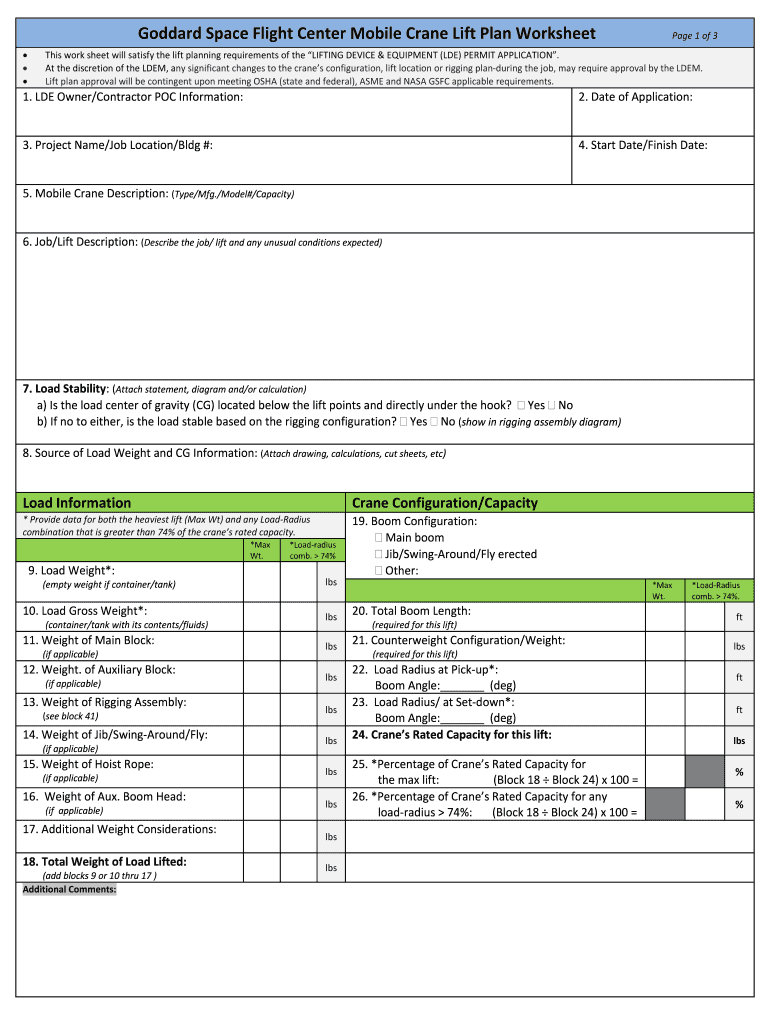
A lifting plan template in Excel is essential for professionals involved in crane operations, providing a structured approach to planning and executing lifts safely. The template facilitates the organization of critical information such as project details, crane specifications, and load assessments, ensuring compliance with safety regulations like OSHA and ASME.
Key Components of a Lifting Plan Template
- Project Details: Essential information including the project name, location, and date of the lift.
- Crane Specifications: Details about the crane being utilized, including type, capacity, and configuration.
- Load Information: The weight and dimensions of the load being lifted, as well as its center of gravity.
- Rigging Components: A list of rigging equipment used, such as slings, shackles, and hooks, with their respective specifications.
- Lift Procedure: Step-by-step instructions outlining the lifting process, including safety measures and communication protocols.
How to Use the Lifting Plan Template in Excel
To utilize a lifting plan template effectively, follow these steps:
- Input Project Information: Start by entering the name, location, and date of the lift in the designated cells to maintain organized documentation.
- Detail Crane Specifications: Provide the necessary crane specifications, including the model and lifting capacity. This ensures the right equipment is selected for the job.
- Calculate Load Details: Enter the load information, then use pre-defined formulas to calculate the center of gravity. This is important to prevent tipping during the lift.
- Specify Rigging Equipment: List all rigging components needed for the lift. This part of the template can be expanded with drop-down lists for easy selection.
- Document Lift Procedures: Outline clear steps for lifting operations, including roles and responsibilities for each team member involved in the process.
Advantages of Using an Excel Template for Lifting Plans
Utilizing an Excel template provides numerous advantages, including:
- Customization: Users can modify the template according to specific project requirements, ensuring all necessary information is captured.
- Automation: Excel’s capabilities allow for automatic calculations for load assessments, reducing the risk of human error.
- Easy Collaboration: The template can be easily shared and collaborated on, allowing multiple users to input data and make edits in real-time.
- Compatibility: The Excel format is widely compatible with other software and platforms, facilitating integration into broader project management systems.
Ensuring Compliance with Safety Standards
A well-constructed lifting plan template should align with industry safety standards and regulations. Key compliance measures to incorporate include:
- OSHA Regulations: Ensure all lifting procedures adhere to Occupational Safety and Health Administration guidelines.
- ASME Standards: Reference the American Society of Mechanical Engineers standards for rigging practices and load assessments.
- Site-Specific Safety Protocols: Include any specific safety protocols relevant to the job site that may impact lifting operations.
Utilizing Lifting Plan Examples
Reviewing lifting plan examples can provide valuable insights into structuring an effective lifting plan. Consider examining case studies from similar projects, which illustrate successful lift operations and highlight best practices. This practice can aid in refining your template and ensuring all necessary factors are considered.
Common Challenges and Solutions
When utilizing lifting plan templates, some common challenges may arise, such as:
- Incomplete Data: Ensure all required information is captured to avoid delays during operations. Regular checklists can be beneficial to maintain thoroughness.
- Changing Project Variables: Be prepared for adjustments by incorporating flexible fields to accommodate changing loads or equipment specifications.
- Communication Barriers: Establish clear guidelines for team communication to facilitate seamless coordination among all parties involved in the lift.
A lifting plan template in Excel serves as a comprehensive tool to ensure that all aspects of crane operations are planned and executed safely, effectively mitigating risks associated with lifting operations. By adhering to structured formats and thorough documentation, organizations can enhance safety and efficiency in their lifting processes.




