01. Edit your form online
Type text, add images, blackout confidential details, add comments, highlights and more.

Type text, add images, blackout confidential details, add comments, highlights and more.

Draw your signature, type it, upload its image, or use your mobile device as a signature pad.

Send it via email, link, or fax. You can also download it, export it or print it out.
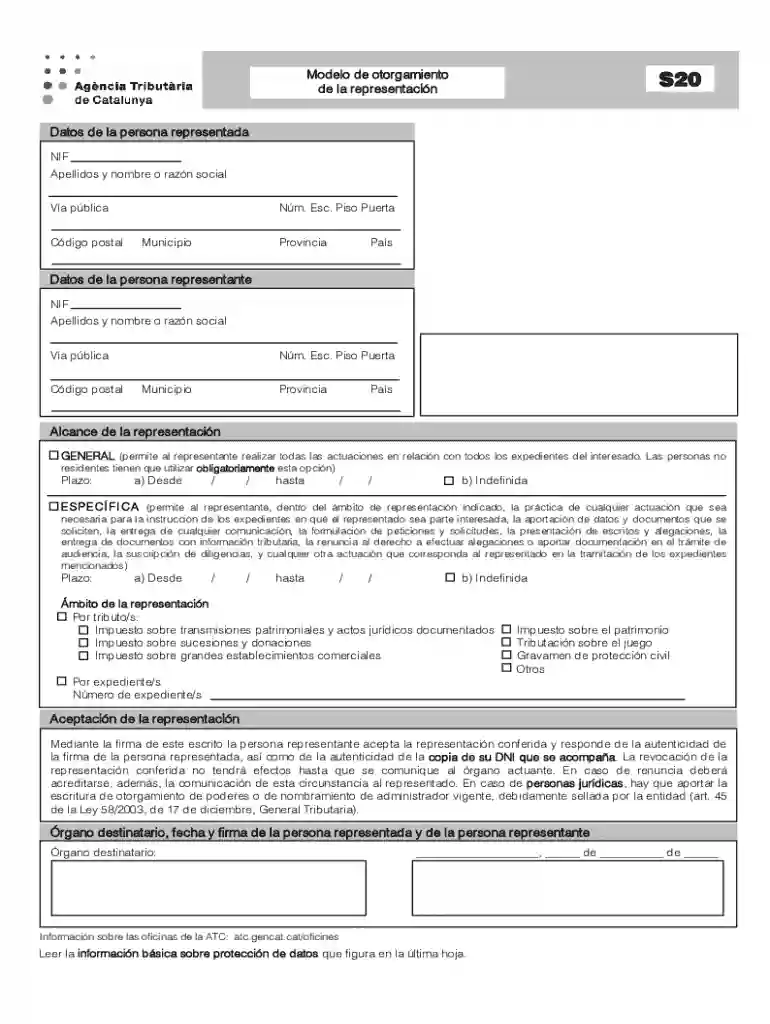
"Modelo De Otorgamiento De La Representación" refers to a formal document used to grant an individual or entity the authority to represent another party in various matters, including legal and tax-related situations. This form specifies the scope, duration, and limitations of the granted representation, ensuring transparency and mutual understanding between the parties involved. Typically, it includes sections for personal details like name, contact information, and identification numbers of both the representor and the representative, laying out clear terms of engagement.
In the context of U.S. applications similar to this form, such documents are crucial for designating power of attorney or assigning representation rights in legal proceedings. They serve as legally binding agreements, holding significance in both private and corporate settings. The document is structured to comply with regional laws and often features clauses concerning data protection and rights, ensuring secure handling of personal information.
The "Modelo De Otorgamiento De La Representación" encompasses several critical elements that contribute to its functionality and legal standing:
Personal Data Section: This section collects the detailed personal information of both parties involved. It typically includes full names, addresses, and contact information. In some instances, national identification or social security numbers may also be required.
Scope of Representation: One of the core elements is the specification of the representation’s scope. This includes defining the areas or duties the representative is authorized to handle on behalf of the representor, such as managing financial accounts, executing contracts, or filing tax returns.
Duration of Representation: This segment outlines the time period during which the representation is valid. It may specify a fixed term or remain valid until a particular event or condition is met, providing clear temporal boundaries to the representation.
Acceptance by the Representative: The form usually includes a section where the representative formally accepts the responsibilities and terms outlined. This acceptance is crucial for the document’s enforceability, marking the representative’s consent to the stipulated conditions.
Data Protection Clauses: With increasing focus on data privacy, the form often contains clauses regarding the protection of personal data shared within the document. It states the rights of individuals related to their data, ensuring compliance with relevant privacy laws.
Filling out the "Modelo De Otorgamiento De La Representación" requires attention to detail to ensure all necessary information is accurately represented. Here is a step-by-step guide:
Gather Personal Information: Collect personal details of both the represented and the representative. Ensure all information is current and accurate to prevent any legal complications.
Define the Scope: Clearly outline the duties and responsibilities the representative is authorized to perform. Specificity in this section will help manage obligations and expectations.
Determine the Duration: Establish a start and end date for the representation. If applicable, specify conditions that would terminate the representation prematurely.
Obtain Consent: The representative must review the form and provide their acceptance, often through a signature, acknowledging full comprehension and agreement with the terms.
Include Data Protection Information: Insert any required clauses related to data protection, ensuring conformity with privacy laws.
Review and Sign: Both parties should carefully review the completed document for accuracy and completeness before signing. This step validates the agreement and its conditions.
Submit: Determine the appropriate submission method, which could vary depending on legal requirements – options may include in-person delivery, mailing the document, or using online platforms if available.
The form holds significant legal weight and should be treated with due diligence:
Authorization in Legal Matters: This document can be pivotal in authorizing representation during legal proceedings, including court appearances or negotiations on behalf of the original party.
Financial Decisions: In financial contexts, this form might be used to allow representatives to make banking decisions, manage investments, or handle tax-related matters.
Compliance with U.S. Legislation: While primarily used in Catalonia, similar forms in the U.S. must comply with federal and state-specific laws to be enforceable. It's vital to ensure any regional or state-specific adjustments are accurately made for legal efficacy.
Multiple entities and individuals utilize this form to streamline representation:
Individuals: Private citizens may use the form to grant representation in personal financial or legal affairs, including deploying it for estate planning or healthcare decisions.
Businesses: Corporations and smaller businesses utilize such forms to appoint legal or financial representatives who can negotiate deals or resolve disputes.
Legal Entities: Law firms and legal representatives often facilitate the use of this document to officially formalize authority in representing a client in conformance with legal procedures.


Understanding key terminology is crucial for effective utilization:
Grantor: The individual or entity that is granting authority and representation to another party.
Agent or Representative: The individual or entity receiving the authority to act on behalf of the grantor.
Scope: Defined responsibilities and boundaries within which the representative can operate.
Duration: The specified time frame during which this authority is valid and enforceable.
Revocation: The act of withdrawing the representation rights, which should be considered in advance for potential reinterpretation of the terms.
At DocHub, your data security is our priority. We follow HIPAA, SOC2, GDPR, and other standards, so you can work on your documents with confidence.