




01. Edit your rational drug therapy wv online
Type text, add images, blackout confidential details, add comments, highlights and more.

Type text, add images, blackout confidential details, add comments, highlights and more.

Draw your signature, type it, upload its image, or use your mobile device as a signature pad.

Send rational drug therapy prior auth form via email, link, or fax. You can also download it, export it or print it out.
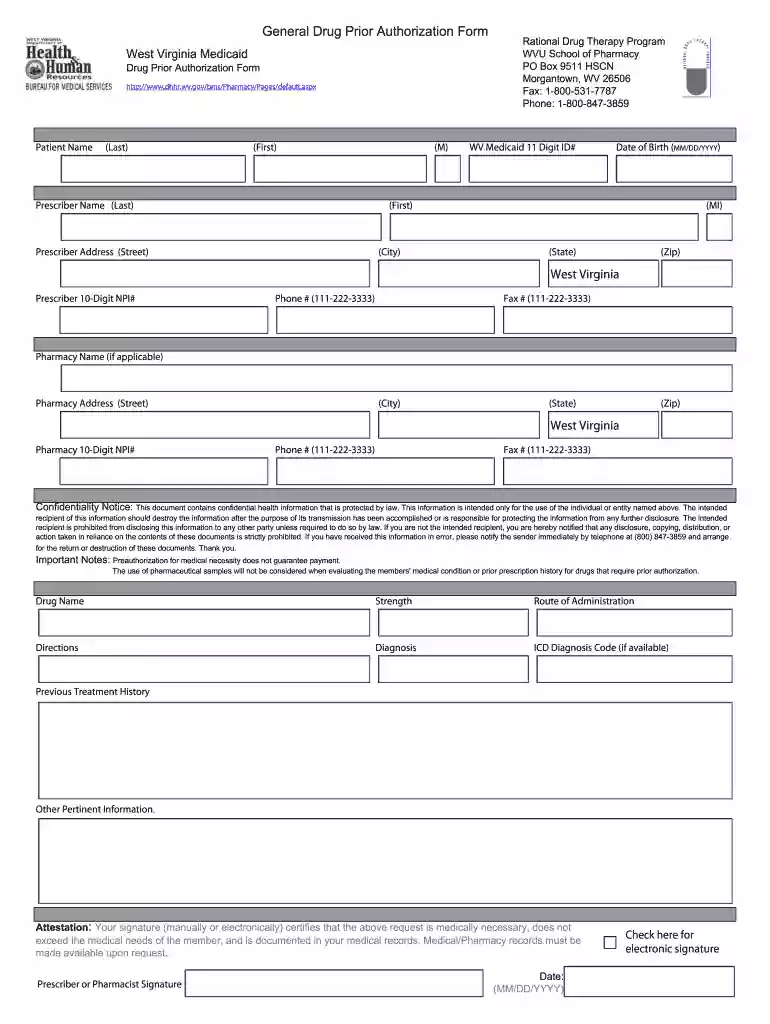
The Rational Drug Therapy Prior Authorization Form is essential for healthcare providers aiming to secure approval for specific medications for their patients. This form acts as a comprehensive request to the insurer, detailing the clinical justification for the medication prescribed.
Patient Information: This section captures the patient's details, including full name, date of birth, and insurance policy number. Ensuring accurate patient data is crucial for the authorization process.
Prescriber Information: The prescriber must provide their contact information, including their full name, practice address, and national provider identification (NPI) number. This helps in verifying the legitimacy of the request.
Medication Details: Details about the prescribed medication must be included, such as the drug name, dosage, and frequency of administration. Specificity in this section assists in justifying the necessity of the drug therapy.
Diagnosis Codes: Accurate coding is essential for insurance processing. This includes ICD-10 codes correlating to the patient's diagnosis, emphasizing the clinical rationale behind the treatment plan.
Gather Necessary Information: Before starting the form, collect all relevant patient and prescriber information. This ensures a smoother completion process.
Complete the Form: Fill out each section with the required details accurately. A misstep in data entry can lead to delays in processing or denials.
Attach Supporting Documents: Include any supporting clinical documentation that validates the need for the medication, such as past treatment history or lab results.
Submission Methods: Depending on the insurer, submission may be possible via fax, online portal, or postal service. Confirm the preferred method to avoid delays.
Tracking Submission: After submission, it's advisable to follow up with the insurer to confirm receipt and inquire about the expected timeline for approval.
Completing the Rational Drug Therapy Prior Authorization Form ensures that medications prescribed to patients are covered under their insurance plans. This form is not only a tool for securing medication, but it also plays a role in the cost management of healthcare.
Incomplete Forms: One of the most frequent issues encountered is submitting incomplete forms. Using checklists can help ensure all required fields are filled.
Denied Requests: If a request is denied, healthcare providers should carefully review the reasons for denial and gather additional supporting documentation or clarification before resubmitting.
The Rational Drug Therapy Prior Authorization Form is primarily used by:
Healthcare Providers: Prescribers who need to ensure their prescribed medications are approved for patient use under insurance.
Pharmacists: In some cases, pharmacists may be involved in initiating the prior authorization process for certain medications.
Familiarity with specific state requirements for prior authorizations, such as those in West Virginia (WV), can enhance the effectiveness of the submission. Each state may have unique rules regarding documentation and submission processes, making it critical for prescribers to remain updated.
Understanding and correctly utilizing the Rational Drug Therapy Prior Authorization Form is vital for healthcare providers looking to ensure their patients receive the necessary medications. By following thorough procedures for completion and submission, providers can facilitate a smoother authorization process.
At DocHub, your data security is our priority. We follow HIPAA, SOC2, GDPR, and other standards, so you can work on your documents with confidence.
The DECUS Program Library is a clearing house only; it does not sell, generate or test programs. All programs and information are provided AS IS.Read more
The forms below can be completed, printed and faxed to the Rational Drug Therapy Program or downloaded for completion and submission.Read more
General Drug Prior Authorization Form. Rational Drug Therapy Program. WVU School of Pharmacy. PO Box 9511 HSCN. Morgantown, WV 26506. Fax: 1-800-531-7787. PhoneRead more


