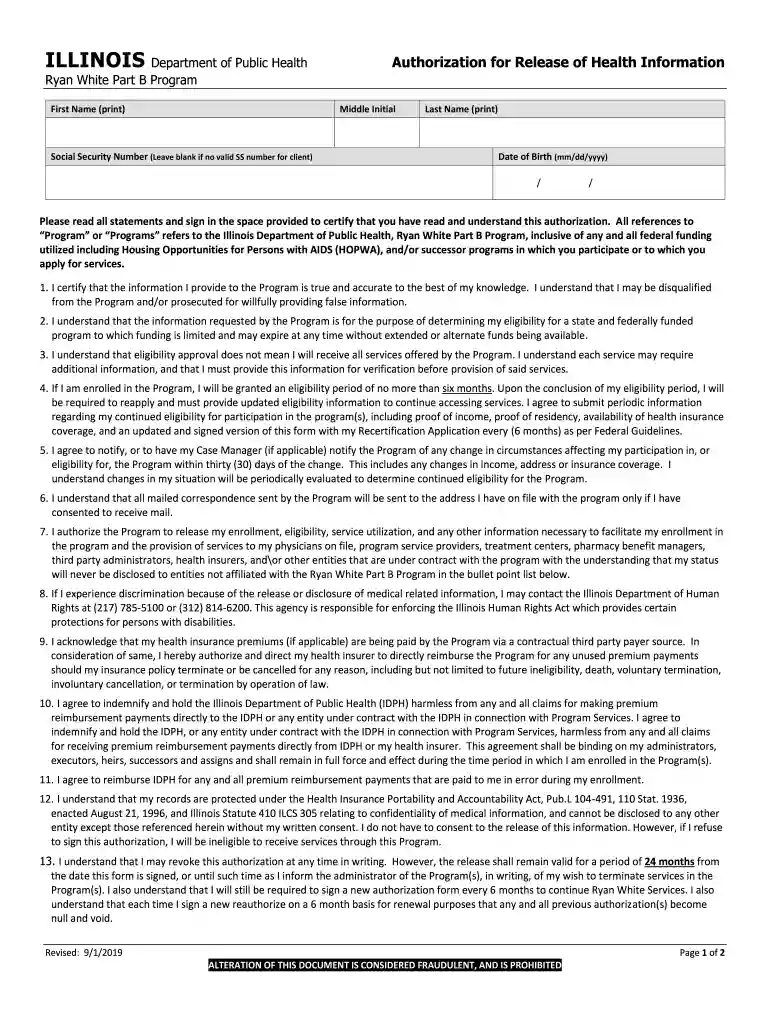
Licensing and Certification - IDPHProtecting health 2026

Get Form
Licensing and Certification - IDPHProtecting health Preview on Page 1

Here's how it works

01. Edit your form online
Type text, add images, blackout confidential details, add comments, highlights and more.

02. Sign it in a few clicks
Draw your signature, type it, upload its image, or use your mobile device as a signature pad.

03. Share your form with others
Send it via email, link, or fax. You can also download it, export it or print it out.

Understanding Licensing and Certification - IDPHProtecting Health

Licensing and certification under the Illinois Department of Public Health (IDPH) are essential components for ensuring the quality and safety of health services. They serve as official recognitions that an entity meets specific standards and regulations required by law. In the context of "IDPHProtecting health," these processes focus on safeguarding public health by regulating healthcare providers, facilities, and services within Illinois.

Core Functions and Objectives

  • Quality Assurance: Ensures healthcare services meet established standards.
  • Compliance Monitoring: Verifies adherence to state and federal regulations.
  • Public Health Protection: Reduces risks associated with substandard healthcare practices.

How to Use the Licensing and Certification

Health organizations and professionals can utilize these credentials to demonstrate their commitment to high-quality care. Once licensed or certified, entities should prominently display their credentials to assure patients and stakeholders of their compliance and capabilities.

  • Marketing Advantage: Use credentials in promotional materials.
  • Operational Benchmark: Align internal procedures with compliance standards.
  • Credential Verification: Facilitate easy verification processes for patients and partners.

Steps to Obtain Licensing and Certification

  1. Review Eligibility: Ensure compliance with the IDPH eligibility criteria.
  2. Prepare Documentation: Assemble necessary records, including educational qualifications, operational policies, and past compliance history.
  3. Submit Application: Apply through IDPH’s online portal or by mail, providing all requested information.
  4. Undergo Evaluation: Participate in audits or inspections as required.
  5. Receive Decision: Await the issuance of certification or license, subject to meeting all requirements.

Documentation and Evaluation

  • Educational Credentials: Required for individual licensure.
  • Operational Policies: Demonstrates adherence to procedural standards.
  • Inspection Reports: Necessary for facilities seeking certification.

Why Licensing and Certification Are Essential

Licensing and certification are vital for ensuring that only qualified entities provide healthcare services, thereby safeguarding public health. These credentials also facilitate trust between healthcare providers and the public.

Benefits

  • Enhances Credibility: Increases public trust in service quality.
  • Regulatory Compliance: Minimizes legal risks and penalties.
  • Market Access: Meets requirements for contracts and participation in health programs.

Who Typically Uses Licensing and Certification

The process primarily targets health professionals, healthcare facilities, and organizations within Illinois. From medical practitioners requiring individual licenses to hospitals and clinics seeking operational certification, varied entities engage with IDPHProtecting health.

  • Medical Practitioners: Doctors, nurses, and other solo practitioners.
  • Healthcare Facilities: Clinics, hospitals, and specialty care centers.
  • Allied Health Services: Laboratories, dental practices, and rehabilitation centers.

Legal Implications and Compliance

Adherence to licensing and certification requirements is not just best practice but a legal necessity. Non-compliance can result in penalties or restrictions on practice.

Key Legal Considerations

  • Regulatory Adherence: Comply with both state-level and federal health regulations.
  • Record-Keeping: Maintain accurate records to provide evidence of compliance.
  • Timely Renewals: Avoid lapses by renewing certifications or licenses punctually.

Important Terms Related to Licensing and Certification

  • Eligibility Criteria: Conditions that must be met to qualify for a license or certification.
  • Inspection Report: Outcomes of evaluations conducted by regulatory bodies.
  • Compliance Audit: Review of practices to ensure adherence to standards.

Further Terminology

  • Credential Verification: Process of confirming the authenticity of a license or certification.
  • Regulatory Framework: The set of rules governing licensing and certification.

Key Elements of the Licensing and Certification Process

Understanding the crucial components of the licensing and certification process is vital for successful application and maintenance of credentials.

  • Application Procedure: Steps required to initiate the licensing process.
  • Inspection and Verification: Ensures continued compliance post-certification.
  • Renewal Requirements: Necessary actions for maintaining an active certification status.

Detailed Elements

  • Initial Evaluation: Comprehensive assessment conducted upon initial application.
  • Continuous Compliance: Obligations that must be met consistently to uphold certification.

By examining these aspects thoroughly, healthcare professionals and organizations can effectively navigate the IDPHProtecting health licensing and certification landscape, ensuring both compliance and exemplary service delivery.

be ready to get more

Complete this form in 5 minutes or less

Get form

Got questions?

We have answers to the most popular questions from our customers. If you can't find an answer to your question, please contact us.
Contact us
7 emerging public health careers Medical and health services manager. Biostatistician. Health care consultant. Epidemiologist. Occupational health and safety specialist. Social and community service manager. Health education specialist.
A license is a formal verification from a state government agency confirming that you are a professional in a specific healthcare occupation.
Todays Guide to Public Health Certifications Certified in Public Health (CPH) Certified Health Education Specialist (CHES) Master Certified Health Education Specialist (MCHES) Registered Environmental Health Specialist/Registered Sanitarian (REHS/RS) Certified Physical Activity in Public Health Specialist (CPAPHS)
Which Healthcare Certifications Pay the Most? A Guide to Higher-Earning Medical Jobs Through Certification Medical Coding Specialist (CCS-P) 10-14 months* Patient Care Technician (CPCT) Phlebotomy Technician (CPT) 12 months* Dental Assistant (NELDA) 3-7 months*
Most in-demand professional certifications Certified Financial Planner (CFP) Certified Information System Security Professional (CISSP) Certified Management Accountant (CMA) Chartered Financial Analyst (CFA) CompTIA A+ Project Management Institute (PMI) certifications.

Security and compliance

At DocHub, your data security is our priority. We follow HIPAA, SOC2, GDPR, and other standards, so you can work on your documents with confidence.
Learn more
ccpa2
pci-dss
gdpr-compliance
hipaa
soc-compliance
be ready to get more

Complete this form in 5 minutes or less

Get form

People also ask

Public Health Specializations and Concentrations Biostatistics Degrees and Programs. Child Maternal Health Degrees and Programs. Community Health Degrees and Programs. Environmental Health Degrees and Programs. Epidemiology Degrees and Programs. Generalist Public Health Degrees and Programs.
Purpose: Licensure confirms that nurses meet universal standards to practice and provide quality patient care. It is legally mandated in all states. Certification, on the other hand, is meant to enhance a nurses knowledge in one or more specialties. Certification is voluntary for nurses at every level.

Related links