






Definition and Meaning
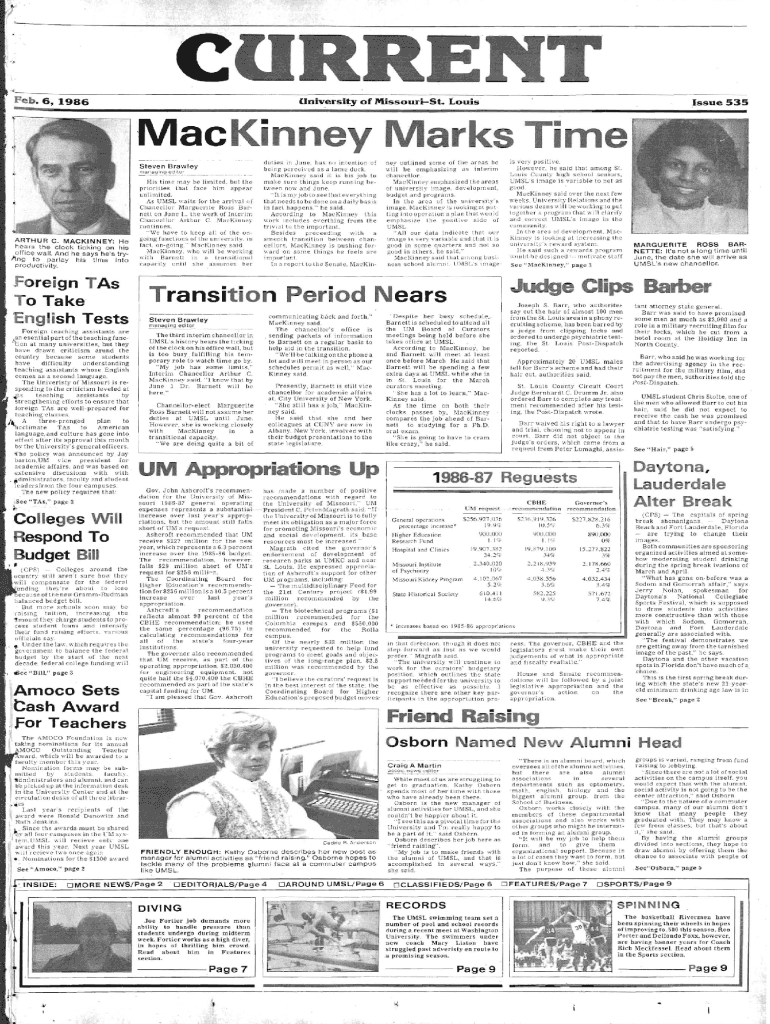
The "MacK-nney Marks Time" is a form related to the University of Missouri-St. Louis (UMSL) and highlights the transition period as interim Chancellor Arthur C. MacKinney prepares for the arrival of Chancellor Marguerite Ross Barnett. This transition marks a significant change in leadership and could impact various administrative and operational processes within the university.
Contextual Background
- Transition Leadership: Arthur C. MacKinney’s interim role as Chancellor plays a vital role in maintaining continuity and preparing for the incoming leadership of Chancellor Marguerite Ross Barnett.
- Institutional Changes: Such transitions often signal potential changes in university policies, budget re-allocations, and administrative structures.
How to Use the MacK-nney Marks Time
The form is primarily used to document and facilitate the transition process at UMSL. It is important for stakeholders involved in the administrative functions to understand how to utilize this document effectively.
Steps for Effective Use
- Identify Stakeholders: Determine who needs access to the form, including administrative staff, faculty, and other key university personnel.
- Coordinate Transition Activities: Use the form to outline key activities and responsibilities during the transition phase.
- Document Key Decisions: Ensure all significant decisions and changes are recorded in the form to ensure transparency and accountability.
Steps to Complete the MacK-nney Marks Time
Completing the "MacK-nney Marks Time" form involves several critical steps to ensure all necessary information is collected accurately and efficiently.
Detailed Process
- Gather Required Information: Collect details regarding the current administrative setup, including roles and responsibilities.
- Outline Transition Timeline: Detail the expected timeline for the transitional activities, including key milestones.
- Provide Contact Information: Include contact details of individuals responsible for various aspects of the transition.
Key Elements of the MacK-nney Marks Time
Understanding the core elements of this form is crucial for effective use. These components ensure that the document serves its intended purpose comprehensively.
Essential Components
- Administrative Roles and Responsibilities: Clearly define who is responsible for what during the transition.
- Timeline of Events: Include a chronological order of events to provide clear direction.
- Communication Plan: Outline how information will be disseminated across the university during the transition.
Important Terms Related to MacK-nney Marks Time
Understanding key terminology is essential for interpreting and utilizing the form effectively.
Key Terms
- Interim Chancellor: Refers to a temporary leader appointed to manage the university during the transition.
- Chancellor Transition: The process of preparing for and implementing changes associated with new leadership.
Examples of Using the MacK-nney Marks Time
Examples can help users understand how the form has been used in similar scenarios to achieve effective transition management.
Practical Applications
- Transition Plans at UMSL: Analyzing past transition plans at the University of Missouri-St. Louis may provide insights and best practices.
- Case Study of Administrative Shift: Reviewing documented cases of leadership changes in comparable institutions.
Legal Use of the MacK-nney Marks Time
It is essential to understand the legal parameters when using the form, particularly in an educational setting like UMSL.
Legal Considerations
- Compliance with University Policies: Ensure all activities documented in the form comply with existing university policies and regulations.
- Confidentiality Requirements: Maintain confidentiality of sensitive information as required by law and university guidelines.
Form Submission Methods (Online / Mail / In-Person)
The form can be submitted through various methods depending on what is most convenient and effective for the users involved.
Submission Options
- Online Submission: Facilitates quick processing and is often more efficient for all involved parties.
- Mail Submission: Provides a formal method of documentation but may be slower than digital alternatives.
- In-Person Submission: Allows for immediate feedback and discussion but requires coordination of schedules.
Choosing the Right Method
- University Policy Compliance: Consider the recommended submission method based on university guidelines.
- Practicality and Access: Choose a method that aligns with the resources and capabilities of those submitting the form.