
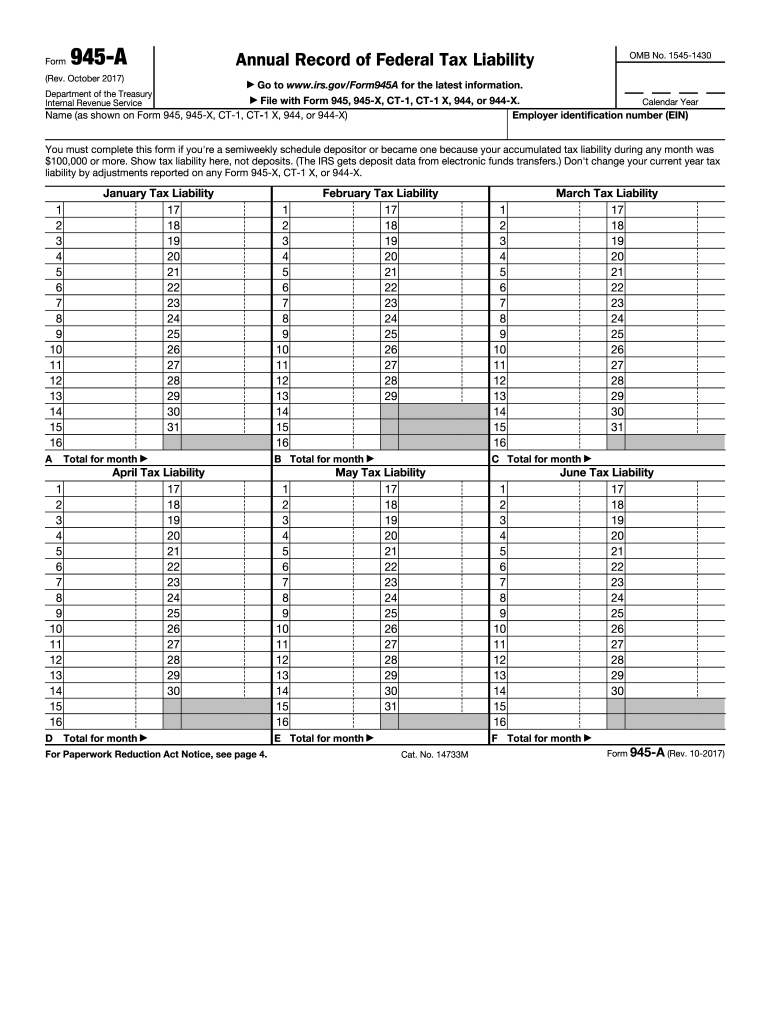







Definition and Purpose of the 2020 Form 945
Form 945 is an IRS tax form used by businesses to report withheld federal income tax on non-payroll payments. These payments can include pensions, annuities, individual retirement arrangements (IRAs), military retirement, gambling winnings, Indian gaming profits, and other non-wage income. This form plays a crucial role in ensuring proper tax compliance, as it separates non-payroll tax withholdings from payroll tax withholdings, which are reported on other forms like the Form 941.
Businesses must submit Form 945 annually, even if they only withhold taxes from a small portion of their transactions. This form ensures that the payer is accountable to the IRS for tax amounts withheld from non-wage income, rather than relying on the recipient to report these withholdings themselves. It acts as a safeguard that facilitates accurate tax reporting and helps prevent potential discrepancies in the recipients' expected tax liabilities.
Steps to Complete the 2020 Form 945
-
Enter Business Information: Begin by entering your business's employer identification number (EIN), name, trade name, and address in the designated boxes. Ensure accuracy, as discrepancies could delay processing.
-
Enter Tax Liabilities: Compute the total federal income tax withheld from each category of non-payroll payments. Enter these totals in the relevant sections. Be meticulous in the calculation to ensure compliance with IRS regulations.
-
Adjustments to Previously Reported Taxes: If applicable, use the form to adjust any underreported or overreported tax liabilities from previous years. This section requires documentation of the originally reported amounts and the corrected figures.
-
Deposit Requirements: Depending on your total tax liability, you may need to make a one-time annual deposit or quarterly deposits. If the total annual liability is less than $2,500, you may pay the entire amount when filing the return. For larger amounts, follow the IRS guidelines regarding required deposit schedules.
-
Signature and Submission: Conclude by reviewing your entries for accuracy, then sign and date the form. If filing by mail, send it to the IRS address specified for your state or region. Electronic filing is encouraged for quicker processing.
How to Obtain the 2020 Form 945
-
Online: The 2020 Form 945 can be downloaded directly from the official IRS website for free. It is available in PDF format, making it easy to print and fill out.
-
Mail: You can request a physical copy from the IRS by contacting their support center. They'll mail the form to your registered business address.
-
Tax Software: Many tax preparation software solutions, like TurboTax and QuickBooks, offer direct downloads of IRS forms, including the Form 945. This option often includes digital completion capabilities, simplifying the filing process.
IRS Guidelines on Filing Form 945
The IRS provides specific guidelines on the filing of Form 945 to ensure accurate and compliant submissions. Key instructions include:
-
Filing Deadline: The form is typically due by January 31st of the year following the calendar year in which the taxes were withheld.
-
Electronic Filing Options: Businesses can file Form 945 electronically through the IRS e-file system if they meet certain criteria. This option is encouraged for its efficiency and prompt confirmation of receipt.
-
Payment Options: Payments accompanying mail submissions can be made via check or money order. Electronic payments are accepted through the Electronic Federal Tax Payment System (EFTPS).
Failure to adhere to these guidelines can result in penalties, delayed processing, or miscommunication with the IRS. Businesses should regularly consult the IRS website or their financial advisors for the most current instructions.
Who Typically Uses the 2020 Form 945
This form is primarily used by:
-
Corporations and Businesses: Both small and large entities using non-payroll-related services and payments that require federal income tax withholding.
-
Non-Profit Organizations: Organizations disbursing non-wage payments as part of their operation that meet IRS criteria for tax withholding.
-
Government Agencies: Agencies disbursing pensions or annuities subject to federal income tax withholdings.
These entities benefit from Form 945 by maintaining accurate tax records and compliance with federal tax laws concerning non-payroll payments.


Filing Deadlines and Important Dates
Understanding and adhering to the relevant filing deadlines is crucial for compliance:
-
Annual Deadline: For non-electronic filers, Form 945 is due January 31 following the reporting year. If deposited on time, you have until February 10 to file.
-
Quarterly Deposits: Deposits related to withholdings may be monthly, semi-monthly, or quarterly based on the accumulated liability throughout the year. These schedules are crucial for businesses with significant withholding responsibilities.
-
Late Filing Penalties: Failure to file on time may lead to penalties, which can include a percentage of the unpaid tax, increasing over time with further delay. Ensure timely filing to avoid substantial financial penalties.
Key Elements of the 2020 Form 945
Form 945 features several critical sections that need careful completion:
-
Reporting Withholdings: Ensure accurate reporting of withheld federal income taxes on non-payroll payments, reflecting the amounts withheld for each payment type.
-
Adjustments: If necessary, make adjustments for previously reported amounts to correct any errors from past filings.
-
Detailed Identification: Include precise company details and tax identification numbers to ensure proper IRS processing and tracking of the submission.
-
Signature Requirement: Provides legal attestation of the entity's representative, ensuring accountability and authenticity of the reporting.
Penalties for Non-Compliance
Non-compliance with Form 945 filing requirements can result in several penalties, including:
-
Late Filing Penalties: A penalty assessed for each month a report is late, based on the percentage of the tax due.
-
Under-reporting Penalties: Applying when the total amount reported is less than the amount acceptable by IRS standards.
-
Failure to Deposite Penalties: Additional penalties for failing to make timely tax deposits. These penalties increment with the duration of the delay.
These penalties emphasize the importance of diligent tax reporting and adherence to IRS guidelines when filing Form 945. Proper understanding and compliance ensure that your business minimizes risks associated with tax inaccuracies and non-payment.




