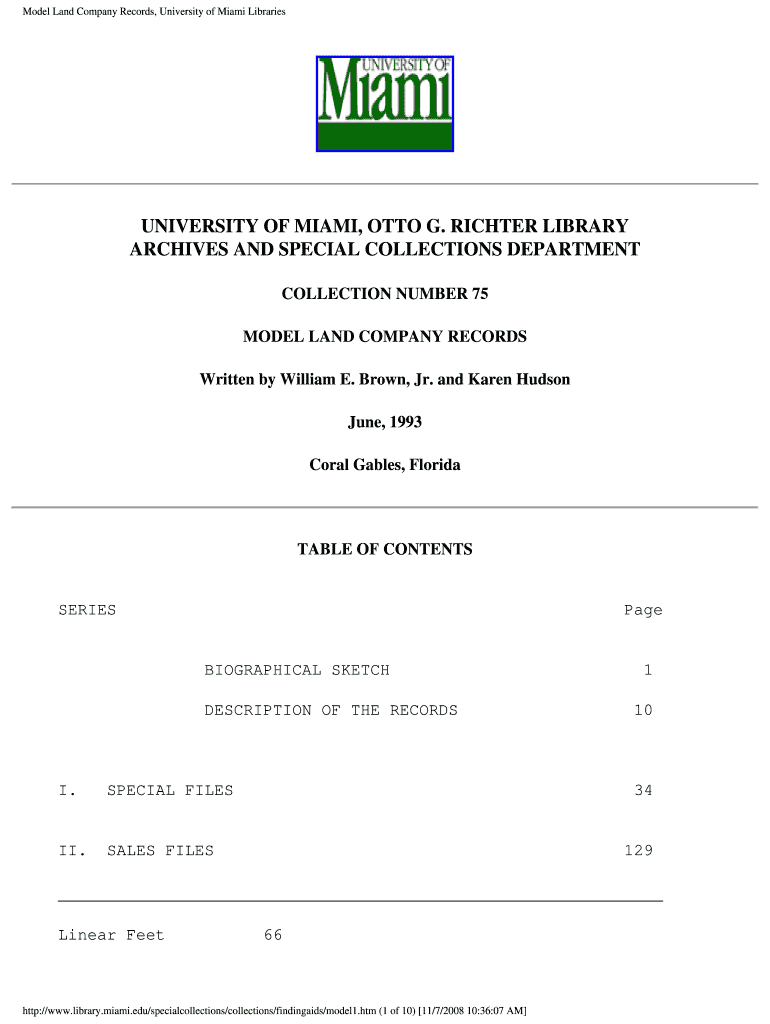







Definition and Meaning of Model Land Company Records
The "Model Land Company Records, University of Miami Libraries" encompass a comprehensive collection that documents the historical operations and impacts of the Model Land Company (MLC). Established by Henry Flagler in 1896, MLC managed real estate across Florida, playing a crucial role in land sales, agricultural development, and local politics until its dissolution in 1967. The records include a variety of administrative and financial documents such as real estate transactions, correspondence, and reports that provide insight into the socio-economic growth of South Florida.
- Real Estate Transactions: Detailed documentation of land sales and purchases, showcasing how MLC influenced the region's real estate market.
- Administrative Records: Includes meeting minutes, company memos, and financial statements that give insight into the company's operations.
- Correspondence: Letters and communications between company executives, stakeholders, and local government officials that reveal the interactions and strategies employed by MLC.
How to Use the Model Land Company Records
Using the Model Land Company Records involves navigating through various historical documents to extract information. Researchers can examine records to understand MLC's influence on economic development in Florida or study specific land transactions.
- Research Focus: Identify specific areas of interest, whether it's economic impact, specific land deals, or political engagements.
- Document Analysis: Review different categories of documents like financial statements for budgetary insights or correspondence for strategic approaches.
- Compilation of Data: Gather and synthesize information from multiple documents to formulate a comprehensive understanding of MLC's operations.
How to Obtain the Model Land Company Records
Access to the Model Land Company Records is typically obtained through the University of Miami Libraries. Interested parties should contact the library's archives or special collections department.
- Library Visit: Schedule a visit to the University of Miami Libraries' archives to access the records in person.
- Online Database: Check if the records are digitized and available in an online database for remote access.
- Inter-Library Loan: Request an inter-library loan if direct access is not feasible, allowing temporary access to the documents.
Steps to Complete the Examination of Records
To thoroughly examine the Model Land Company Records, follow a structured approach:
- Define Objectives: Determine what information you seek from the records.
- Gather Resources: Assemble necessary tools such as a computer, notepad, and possibly a camera for documentation.
- Organize Access: Ensure you have access permissions and understand the archives' protocols.
- Record Examination: Systematically examine documents, keeping meticulous notes.
- Synthesize Findings: Compile and analyze data to draw meaningful conclusions.
Importance of Model Land Company Records
The significance of these records lies in the detailed historical insight they offer into South Florida's development. They provide context to the region's growth, depicting MLC's pivotal role in shaping the economic and social landscapes.
- Historical Insight: Offers a window into the economic strategies of the late 19th and early 20th centuries.
- Cultural Impact: Highlights MLC's influence on local communities and cultural landscapes.
- Policy Development: Inform current urban planners and policymakers through historical precedence.
Typical Users of the Model Land Company Records
This set of records is invaluable to a wide range of users, each benefiting distinctively from the insights it provides:
- Historians: Use the records to understand significant historical shifts in Florida's economic landscape.
- Economists: Analyze the economic strategies employed by the MLC.
- Urban Planners: Study past land use patterns to inform future planning.
Key Elements within the Records
The MLC records are comprised of various elements that serve specific investigative purposes:
- Administrative Documents: Provide an overview of the internal workings of the company.
- Financial Records: Supply detailed accounts of financial dealings and economic strategies.
- Land Transactions: Essential for those tracing historical property developments or ownership.
Legal Use and Restrictions of the Records
Using the Model Land Company Records ethically and legally is crucial.
- Usage Rights: Ensure compliance with the University of Miami Libraries' terms of use for archival materials.
- Reproduction Limitations: Understand restrictions on copying or publishing the records.
- Citations: Properly attribute any information or direct quotes extracted from the records in any academic or professional work.