



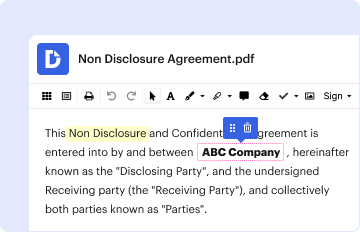
01. Edit your d and c procedure online
Type text, add images, blackout confidential details, add comments, highlights and more.

Type text, add images, blackout confidential details, add comments, highlights and more.
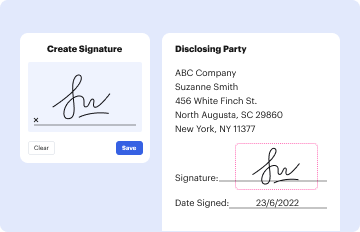
Draw your signature, type it, upload its image, or use your mobile device as a signature pad.
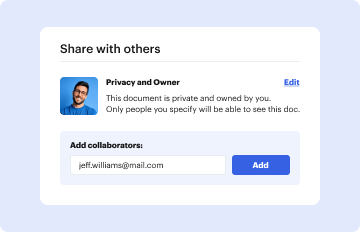
Send d c procedure via email, link, or fax. You can also download it, export it or print it out.
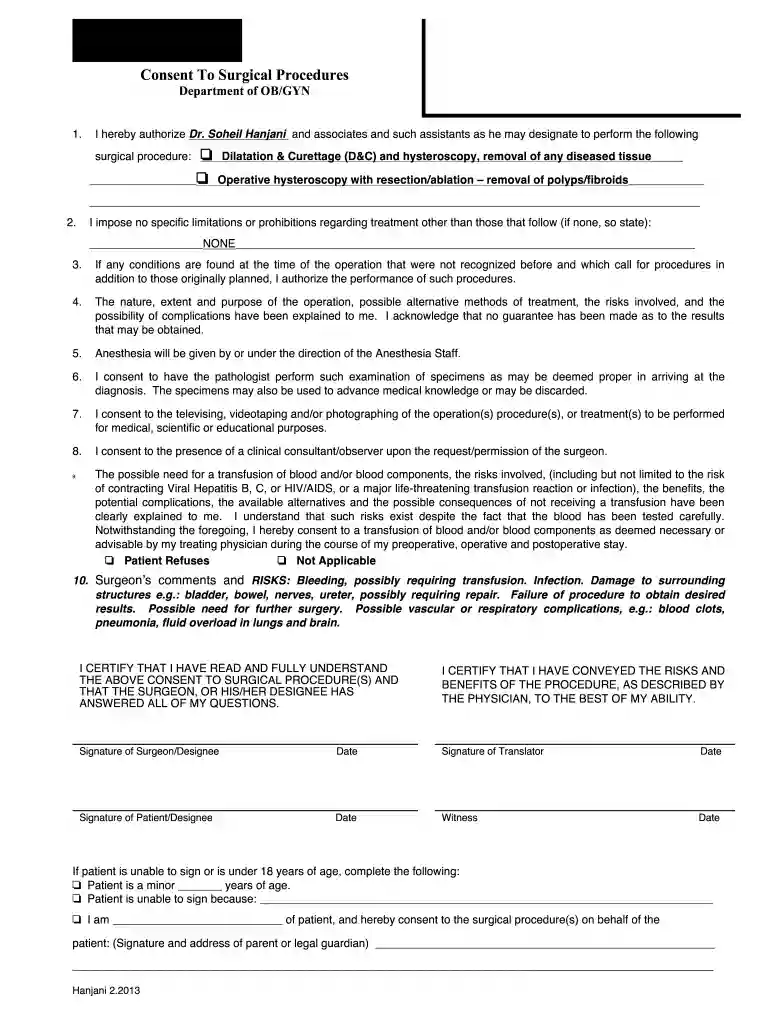
Surgical consent forms are essential documents that ensure patients are informed about the procedures they are undergoing, including a dilation and curettage (D&C) and hysteroscopy. This section will break down the key elements involved in surgical consent for these specific procedures, focusing on what patients need to know and how to navigate the consent process.
A D&C is a surgical procedure involving the scraping of the uterine lining to remove abnormal tissue. It is typically performed to investigate causes of heavy bleeding, remove molar pregnancies, or as part of miscarriage management. A hysteroscopy, on the other hand, involves the use of a thin, lighted tube inserted through the cervix to examine the inside of the uterus. This procedure allows for both diagnostic evaluation and therapeutic interventions.
The surgical consent form for D&C and hysteroscopy must include specific components to ensure patients understand the nature, risks, and benefits of the procedures. These components generally encompass:
Patients have specific rights when it comes to signing surgical consent forms. These rights include the ability to ask questions and receive satisfactory answers regarding the procedure, risks, and alternatives. It is essential that patients feel comfortable and informed before consenting.
The consent form should also include a section where patients and healthcare providers can certify their understanding and agreement. This includes an acknowledgement that the patient has had the opportunity to discuss the procedure and has had their concerns addressed.
Consent forms are important legal documents and must be accurately filled out and retained in the patient's medical record. Follow-up discussions post-surgery should also include reviewing the procedure outcomes and any further steps needed for recovery.
By familiarizing themselves with the surgical consent process for D&C and hysteroscopy, patients can engage more confidently with their healthcare providers, ensuring a clearer understanding of their medical care.
We've got more versions of the d and c procedure form. Select the right d and c procedure version from the list and start editing it straight away!
| Versions | Form popularity | Fillable & printable |
|---|---|---|
| 2013 | 4 Satisfied (24 Votes) |
Managing your documentation with DocHub this way is very easy after you have downloaded its extension for Google Chrome. Go to the Chrome Web Store and set up DocHub - Sign PDF from Gmail to obtain it. Give our tool access to your Google account, and then open an email with the hysteroscopy d c attached and point to the file with your cursor - the DocHub extension button will automatically show up there. Click on it to open your form in our editor. Make any necessary modifications, fill out the blanks, and click Sign to create your legally-binding eSignature.
You can find the latest and most relevant version of the d c consent form in our DocHub forms collection. Search it by categories or use the search field to get the exact template that suits your situation. You can open this form for editing after you find it.
At DocHub, your data security is our priority. We follow HIPAA, SOC2, GDPR, and other standards, so you can work on your documents with confidence.


