






Definition and Meaning of Manuscript (PDF) - Division of Physical and Biological Sciences
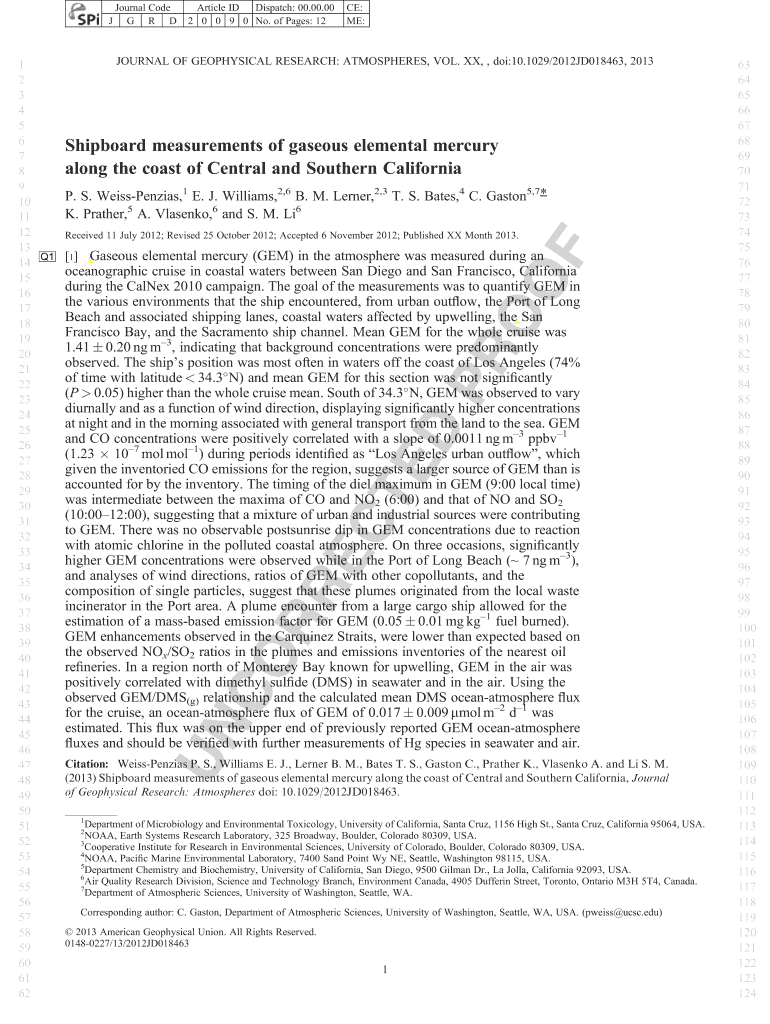
The "Manuscript (PDF) - Division of Physical and Biological Sciences" refers to a document format specifically designed to present research findings or scholarly work within the disciplines of physical and biological sciences. This manuscript serves as a comprehensive presentation of a study, detailing methodology, results, discussions, and conclusions. It typically follows a standardized structure which includes elements such as the title, abstract, introduction, methods, results, discussion, and references. The PDF format ensures that the document retains its intended layout and formatting across different devices and platforms, providing a consistent reading experience.
Key Elements of the Manuscript (PDF)
The manuscript typically includes several core sections:
- Title and Abstract: These provide a concise summary of the research topic and findings, allowing readers to quickly ascertain the study's focus.
- Introduction: Outlines the research question, objectives, and significance of the study within the broader field.
- Methods: Describes the experimental design, materials, and procedures used in conducting the research, enabling reproducibility of results.
- Results: Presents the findings in a clear and organized manner, often using tables, figures, and charts for illustration.
- Discussion: Interprets the results, examining their implications and how they compare with existing studies.
- Conclusion: Summarizes the main findings and suggests potential areas for further research.
- References: Lists the scholarly sources and literature cited throughout the manuscript.
How to Use the Manuscript (PDF) - Division of Physical and Biological Sciences
Utilizing the manuscript involves several steps:
- Download and Open: Acquire the PDF file from a trusted source within the academic or scientific community.
- Navigate the Document: Use the built-in table of contents or bookmarks in the PDF to jump to specific sections quickly.
- Review and Annotate: Leverage PDF tools to highlight text or make notes, which can be useful for research discussions or reviews.
- Cite Appropriately: When referencing the research, ensure to cite it correctly in your work, adhering to relevant academic citation standards such as APA or MLA.
Steps to Complete a Manuscript (PDF)
Creating a manuscript requires careful planning and execution:
- Define the Research Objectives: Clearly outline what you aim to discover or demonstrate.
- Conduct Thorough Research: Utilize appropriate methodologies and maintain detailed records of all data and observations.
- Draft Each Section: Follow the standardized structure for scientific manuscripts, ensuring clarity and coherence in your writing.
- Edit and Review: Seek feedback from peers or mentors, and revise the manuscript to enhance clarity and accuracy.
- Format and Convert to PDF: Ensure that the document's formatting adheres to the guidelines specified by the publishing entity and convert the final version into PDF format for submission.
Who Typically Uses the Manuscript (PDF)
This manuscript is predominantly used by:
- Researchers and Academics: For submitting findings to scholarly journals or conferences.
- Students and Educators: As a learning resource or for evaluating semester projects and theses.
- Scientific Associations: To compile reports and disseminate updates to the scientific community.


Legal Use of the Manuscript (PDF)
Manuscripts in this context are subject to various legal considerations:
- Copyright Infringement: Ensure that all data and sources are correctly credited to avoid plagiarism.
- Publication Rights: Understand the rights you assign to publishers upon submission, as this can impact your ability to share or reproduce the work.
- Data Confidentiality: Maintain confidentiality of sensitive data, especially if it pertains to unpublished findings or private partnerships.
Software Compatibility
The PDF version of the manuscript offers broad compatibility across software platforms:
- PDF Readers: Compatible with any standard PDF reader like Adobe Acrobat, ensuring accessibility on desktops and mobile devices.
- Document Editing Tools: Can be annotated or edited using PDF editing tools like DocHub, allowing easy addition of comments or highlights.
- Reference Management Software: Integrates with tools like EndNote or Mendeley for managing citations and references efficiently.
Examples of Using the Manuscript (PDF)
Consider these practical scenarios:
- Academic Publishing: A university researcher submits the manuscript as part of an application for funding by detailing prior findings and proposed studies.
- Educational Resource: A biology professor uses the document as a teaching tool in advanced undergraduate or graduate classes.
- Peer Review: As part of the peer review process, experts and academics review and comment on the manuscript before it is published in a scientific journal.
Application Process and Approval Time
In an academic context, the application process for manuscript submission involves:
- Preparing Submission Materials: Compile an abstract, manuscript, cover letter, and any supplementary materials.
- Submitting to Journals or Conferences: Follow the submission guidelines outlined by the publishing platform or conference organizer.
- Peer Review and Feedback: Await peer review comments which may prompt revisions or updates to the manuscript.
- Revisions: Make necessary adjustments based on feedback before resubmitting for final approval.
- Approval and Publication: Once approved, the manuscript is published, contributing to the wider body of scientific literature. Approval time can vary significantly depending on the journal's review process and any revisions needed.