




01. Edit your subject to contract template online
Type text, add images, blackout confidential details, add comments, highlights and more.

Type text, add images, blackout confidential details, add comments, highlights and more.

Draw your signature, type it, upload its image, or use your mobile device as a signature pad.

Send subject to real estate contract template via email, link, or fax. You can also download it, export it or print it out.
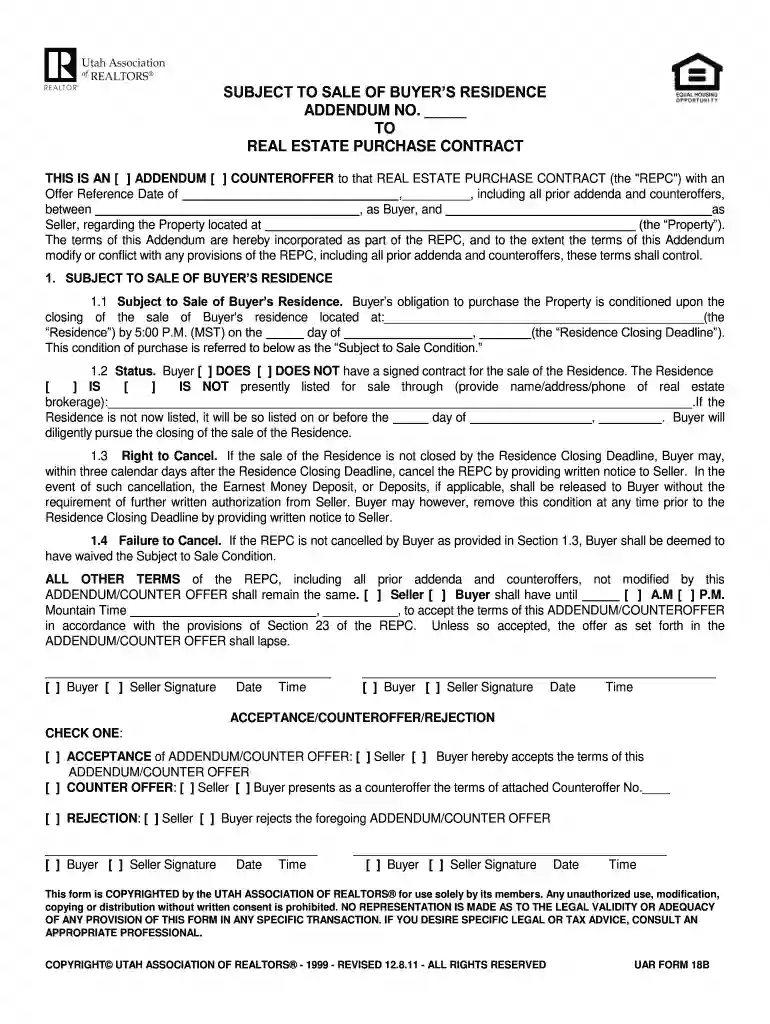
The subject to sale of buyer's property addendum in Utah is an essential document in real estate transactions. This addendum establishes that a buyer's obligation to purchase a property is contingent upon the successful sale of their current residence. In doing so, it provides clarity and protection for both the buyer and seller during the home-buying process.
This addendum clearly outlines specific conditions under which the agreement remains valid, including a timeline for the sale of the buyer's property. It also specifies what happens if the buyer's property does not sell within the designated timeframe, often granting the buyer the right to cancel the contract without penalty. By incorporating this addendum, all parties involved can ensure that their interests are safeguarded should the buyer's situation change suddenly, particularly in volatile housing markets.
Completing the subject to sale of buyer's property addendum involves several critical steps. Understanding this process ensures compliance and minimizes misunderstandings.
Obtain the Addendum: The addendum can be accessed through various real estate forms libraries or from a real estate agent familiar with Utah’s required documents. It is essential to acquire the latest version of the addendum to ensure compliance with current state regulations.
Fill Out Buyer and Seller Information: Include complete names, addresses, and contact information for both the buyer and seller as these details are vital for identification.
Specify Property Details: Clearly define the property involved in the transaction, including the physical address and any relevant property identifiers, such as parcel numbers.
Outline Contingent Conditions: Specify the conditions under which the purchase is contingent upon the sale of the buyer’s property. This includes setting a deadline for the sale process and outlining any conditions that allow for waiving this contingency.
Review and Sign: Both parties should thoroughly review the document to ensure that all terms are accurately reflected. Once reviewed, both the buyer and seller should sign the addendum, making it legally binding.
Ensuring all information is accurate and complete is critical to avoiding future disputes over the addendum's provisions.
Understanding key terms associated with the subject to sale of buyer's property addendum clarifies the rights and responsibilities of all parties involved. Here are several essential terms to comprehend:
Contingency: A condition that must be met for the purchase action to proceed. In this context, it refers to the sale of the buyer's current home.
Termination Clause: A provision that outlines the right to cancel the contract should specific circumstances arise, such as the buyer's property not selling within the agreed timeframe.
Default: A failure to fulfill the obligations of the contract, which may lead to legal consequences for the defaulting party.
Acceptance Period: The timeframe within which the seller must respond to the contingency, agreeing to proceed or allowing for termination.
Grasping these terms can aid in understanding the implications of the addendum and its effects on the overall transaction.
Utah has specific regulations governing real estate transactions, including the subject to sale of buyer's property addendum. Understanding these rules minimizes legal risks and ensures compliance. Key considerations include:
Deadline Specificity: Utah law emphasizes the need for clearly defined deadlines within the addendum, typically ranging from thirty to ninety days for the buyer to sell their property.
Disclosure Requirements: The seller may be required to disclose any significant issues with the property during the sale, impacting negotiations if the buyer is relying on the sale of their current home to proceed with the purchase.
Market Trends Influence: Given that real estate markets can be variable, factors such as inventory levels and local demand may influence how the addendum is structured, especially concerning pricing and deadlines.
Familiarity with these state-specific rules ensures that all parties comply with Utah's legal expectations and can effectively navigate the transaction process.
Analyzing practical scenarios helps in understanding how the subject to sale of buyer's property addendum applies in real situations. Here are two illustrative examples:
Scenario 1: Successful Sale: A buyer agrees to purchase a home but currently owns a property that must sell first. Using an addendum, they stipulate that they have 60 days to sell their current home. After listing the property, they find a buyer within the specified timeframe and complete the sale, allowing the transaction for the new home to proceed without issues.
Scenario 2: Unsuccessful Sale: A buyer enters into an agreement using this addendum but fails to sell their current property within the 30-day deadline. Due to a lack of interest from prospective buyers, the buyer invokes the termination clause per the addendum, allowing them to exit the purchase agreement without facing penalties.
These examples highlight how the addendum protects both the buyer’s and seller’s interests while navigating the complexities of real estate transactions.
Sign in to your DocHub account and add your subject to real estate contract pdf to our editor using one of its upload options - from your device, cloud storage, protected URL, or your DocHub folders if you have already processed your document before. Open our editor, click the Sign key in the top toolbar, and decide on your signing method. You can use a picture of your handwritten signature, draw it, type in your name, or use a QR code instead.
You need only an internet connection and a browser to fill out your subject to contract pdf on an iOS phone. Open the DocHub website and authenticate. Then, add your document or choose it from the list in your dashboard. Then use our editing instruments to fill out your form and preserve all your changes. You can also send it to a dedicated recipient immediately.
At DocHub, your data security is our priority. We follow HIPAA, SOC2, GDPR, and other standards, so you can work on your documents with confidence.
An individual licensee shall: (1) uphold the following fiduciary duties in the course of representing a principal: (a) loyalty, which obligates the agent toRead more
If checked in the affirmative, the terms of the attached subject to sale of Buyers property addendum apply. Buyers Brokerage Utah Real Estate License NumberRead more
May 23, 1987 property right, a special form of property subject to protection in state, fedeml and foreign statutes, including treaties and conventionsRead more


