Definition and Meaning of Garmentfund
The term "garmentfund" refers to financial assistance provided specifically for the procurement of compression garments, which are often necessary for individuals undergoing treatment for lymphedema. This fund is crucial for covering costs that are typically not reimbursed by traditional insurance or healthcare plans. Compression garments serve an essential role in managing lymphedema symptoms, improving patient quality of life, and enabling better treatment outcomes.
- Purpose: The primary aim of garmentfund is to alleviate financial burdens and ensure that all eligible patients have access to necessary medical garments without cost being a prohibitive barrier.
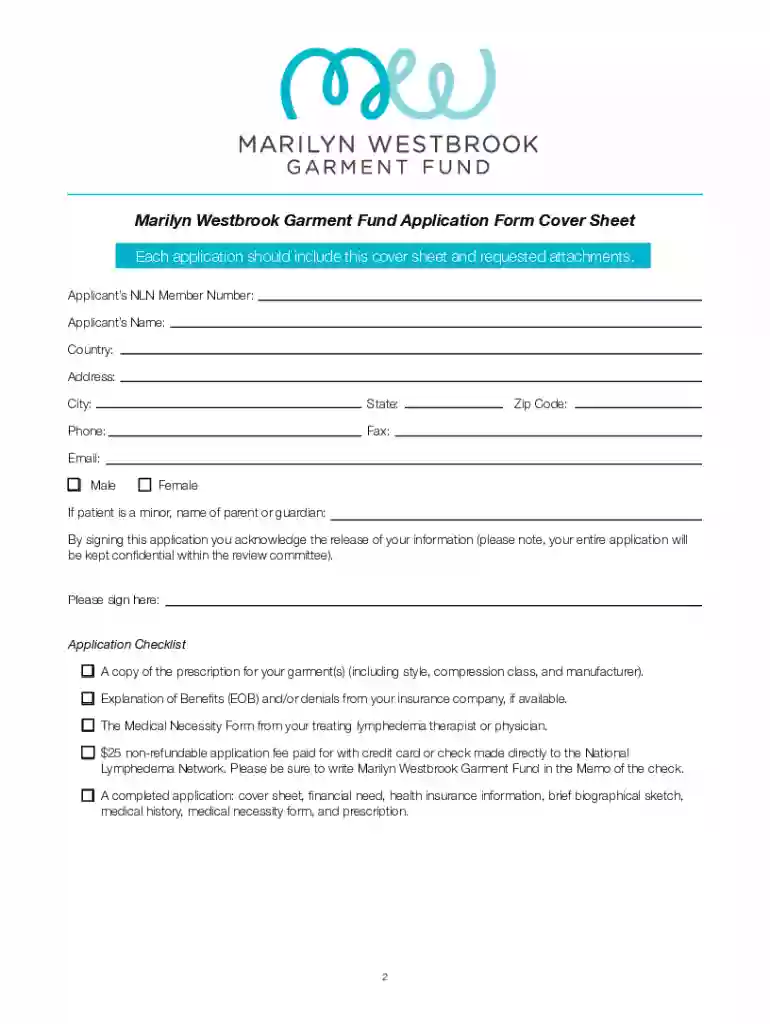
- Eligibility Criteria: Candidates must demonstrate financial need and be under the care of healthcare providers affiliated with the National Lymphedema Network (NLN).
How to Use the Garmentfund
Utilizing the garmentfund effectively requires understanding the specific application and eligibility criteria. Here's a more detailed look into how patients can leverage this fund:
- Determine Eligibility: Begin by assessing whether you meet the financial need requirements and are receiving treatment from an NLN-affiliated provider.
- Application Completion: Collect and submit all necessary documentation that supports your financial status and medical need for compression garments.
- Provider Coordination: Work closely with your healthcare provider to ensure that your application highlights the medical necessity of the garments being requested.
- Financial Documentation: Be prepared to submit proof of income, expenditure, and any other financial commitments that demonstrate your need for assistance.
- Healthcare Provider's Role: The provider must often supply additional medical documentation to justify the need for compression garments.
Steps to Complete the Garmentfund
Completing an application for the garmentfund involves several meticulous steps, ensuring that every aspect of eligibility and need is thoroughly documented:
- Gather Documents: Compile all required personal and financial documents, including identification and proof of income.
- Consult Your Provider: Obtain all necessary medical records and letters of recommendation from your healthcare provider.
- Fill Out the Application: Carefully complete each section of the application form, ensuring accuracy and completeness.
- Submit the Application: Applications can typically be submitted online or via mail, depending on specific guidelines set by the garmentfund.
- Online Submission: Provides a quick and trackable method but requires digital versions of all documents.
- Mail Submission: Offers a traditional alternative. Ensure copies of all submitted materials are kept for your records.
Required Documents for Garmentfund Application
The successful processing of a garmentfund application hinges significantly on the submission of complete and accurate documentation:
- Proof of Identity: Government-issued identification such as a driver's license or passport.
- Financial Evidence: Recent pay stubs, tax returns, or other financial statements that prove financial need.
- Medical Documentation: Healthcare provider’s letter detailing the necessity of compression garments for treatment.
Having all these crucial documents organized and ready can facilitate a seamless application process and expedite approval times.
Application Process and Approval Time
Understanding the flow of the application process is essential for timely assistance:
- Initial Submission: Ensure all documents and the completed application are compiled according to the garmentfund guidelines.
- Review Period: Once submitted, applications will undergo a review process to verify eligibility and the authenticity of the provided information.
- Notification: Applicants usually receive a notification of approval status within a few weeks after submission, though times may vary based on demand and resource availability.
- Follow-Up: Applicants may need to provide additional information if requested by the garmentfund team.
- Approval Duration: Successful applicants will be informed of the timeframe within which the assistance will be received and how it can be utilized for purchasing garments.
Important Terms Related to Garmentfund
Familiarization with important terminology related to the garmentfund is beneficial for a clearer understanding:
- Compression Garments: Specially designed hosiery or wraps used to apply pressure on the limbs to control swelling and manage lymphedema symptoms.
- NLN: The National Lymphedema Network, which affiliates with certified healthcare providers and acts as a guiding body for treatment protocols.
- Financial Need: A criterion that evaluates an applicant's income against living expenses to determine eligibility for financial assistance.
Understanding these terms will help applicants navigate both the application process and communication with healthcare professionals more effectively.
Examples of Using the Garmentfund
Real-world scenarios where the garmentfund has been pivotal underscore its importance:
- Case Study 1: A retired veteran with limited pension benefits was able to secure high-quality compression garments through the fund, substantially improving mobility and reducing pain.
- Case Study 2: A single parent, working part-time and battling breast cancer-related lymphedema, applied for the fund after struggling to cover healthcare costs, allowing her to continue treatment without financial distress.
- Case Study 3: An uninsured young adult, newly diagnosed with leg lymphedema, accessed equitable care and necessary garments without the financial burden thanks to the garmentfund.
These examples highlight how the garmentfund can make a significant difference by removing barriers to essential healthcare products.