




01. Edit your 1040 pr 2023 online
Type text, add images, blackout confidential details, add comments, highlights and more.

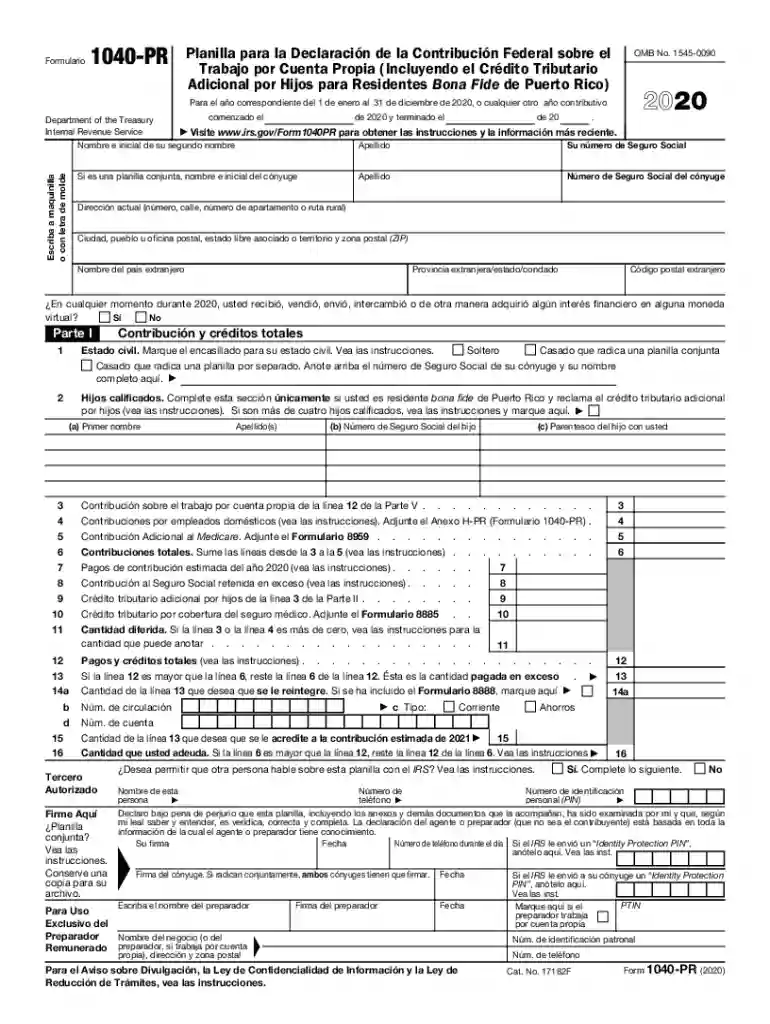
Type text, add images, blackout confidential details, add comments, highlights and more.

Draw your signature, type it, upload its image, or use your mobile device as a signature pad.

Send 1040 pr 2023 form via email, link, or fax. You can also download it, export it or print it out.
The PR form serves as a critical document specifically tailored for residents of Puerto Rico who need to report various financial activities. It facilitates the declaration of self-employment tax for those working independently within Puerto Rico. This form is structured to capture pertinent income data, applicable credits, and contributions towards Social Security and Medicare. Designed predominantly for bona fide residents who are eligible for additional child tax credits, the PR form requires careful completion to ensure compliance with tax regulations.
Gathering all necessary documents is essential for accurately completing the PR form. These typically include:
Having these documents ready ensures that you can fill out the form completely and accurately, minimizing the risk of errors or omissions.
Completing the PR form involves several detailed steps:
Each step requires careful attention to detail, and double-checking your work can prevent potential complications.
Accurate completion of the PR form is vital to comply with federal tax obligations and to maximize potential tax benefits. Proper filing helps residents of Puerto Rico claim applicable credits, reducing their tax liability and ensuring fair contributions to federal programs. Errors in the filing process can lead to audits or penalties, making accuracy crucial for both compliance and financial optimization.
Eligibility to complete the PR form generally includes:
Understanding these criteria is essential to ensure you are using the correct form and adhering to tax regulations.


There are multiple submission methods available for the PR form:
Each method has its benefits, and the choice largely depends on personal preference and access to necessary resources.
The PR form is legally mandated for qualifying individuals to ensure proper reporting of self-employment income and compliance with federal tax requirements. The form abides by specific provisions pertaining to residents of Puerto Rico, aligning with federal guidelines while accommodating territorial tax differences. Legal compliance through accurate and timely filing is essential to avoid potential penalties.
Failure to accurately complete and submit the PR form on time can result in significant penalties, including:
Understanding these potential penalties underscores the importance of adhering to all form requirements and deadlines.
We've got more versions of the 1040 pr 2023 form. Select the right 1040 pr 2023 version from the list and start editing it straight away!
| Versions | Form popularity | Fillable & printable |
|---|---|---|
| 2022 | 4.4 Satisfied (40 Votes) | |
| 2021 | 4.7 Satisfied (33 Votes) | |
| 2020 | 4.8 Satisfied (179 Votes) | |
| 2019 | 4.4 Satisfied (70 Votes) | |
| 2018 | 4.4 Satisfied (72 Votes) | |
| 2017 | 4.2 Satisfied (66 Votes) | |
| 2016 | 4.4 Satisfied (120 Votes) | |
| 2015 | 4 Satisfied (45 Votes) | |
| 2014 | 4 Satisfied (33 Votes) | |
| 2013 | 4 Satisfied (31 Votes) | |
| 2012 | 4 Satisfied (37 Votes) | |
| 2010 | 4.3 Satisfied (35 Votes) | |
| 2007 | 3.9 Satisfied (41 Votes) |
Yes, and it’s really straightforward! DocHub is an online PDF editor with advanced document management features that allow you quickly adjust your forms, fill out blank fields and drop new ones for other people to fill out, and create electronic signatures in several ways. Import your 1040pr2023, provide information as requested, and choose how you want to eSign your document - by typing your name, drawing your signature, uploading its image, or utilizing a QR code.
If you edit your 1040 pr 2023 pdf with DocHub, you merely need a stable internet connection and virtually any browser installed on your device. No need to install any third-party software or study tutorials. Just open a tab with DocHub, drag and drop your file, and modify it on the spot.
At DocHub, your data security is our priority. We follow HIPAA, SOC2, GDPR, and other standards, so you can work on your documents with confidence.
Mar 4, 2025 Public relations (PR) specialists shape and maintain a positive image for their clients through strategic communication, branding and crisis management.Read more
The Department of State is responsible for administering the public registry of legal entities in Puerto Rico or authorized to do business in Puerto Rico.Read more


