






Definition & Meaning
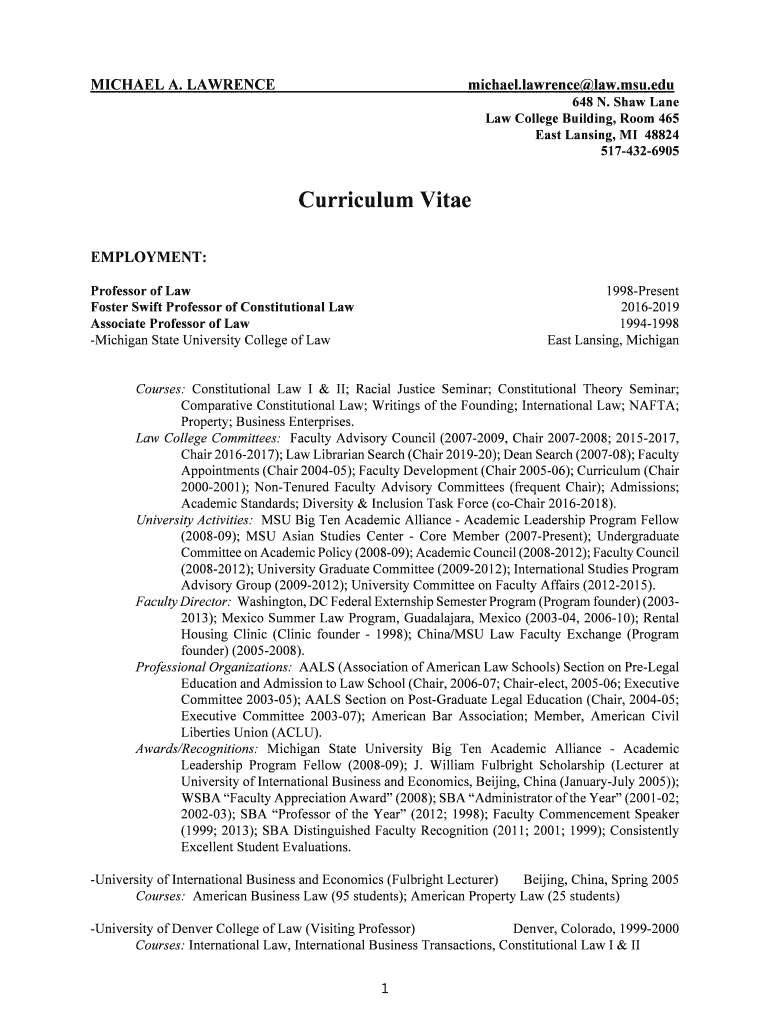
The curriculum vitae (CV) for Michigan State University College of Law is a detailed document that outlines an individual's academic and professional history, emphasizing legal studies and related accomplishments. Typically used within academic and legal contexts, a CV provides a comprehensive overview of one's qualifications, including education, teaching experience, publications, and professional service. Unlike a resume, which is generally concise, a CV is more detailed and expansive, making it ideal for showcasing thorough expertise and long-term career achievements in law.
Key Elements of the Curriculum Vitae - the Michigan State University College of Law
A CV tailored for Michigan State University College of Law includes several key elements:
- Personal Information: Full name, contact information, and professional affiliations.
- Educational Background: Detailed academic history, including degrees, dissertations, and any honors received.
- Professional Experience: Roles such as teaching positions, administrative roles, and legal practice.
- Publications and Research: Books, articles, law reviews, and notable case analyses.
- Awards and Honors: Recognitions and scholarships pertinent to law and academia.
- Professional Memberships: Membership in law associations and other relevant professional organizations.
- Conferences and Presentations: Participation in panels, lectures, and speaking engagements specific to legal themes.
Steps to Complete the Curriculum Vitae - the Michigan State University College of Law
- Gather Information: Collect data on academic qualifications, work experience, and other relevant activities.
- Organize Content: Structure information under appropriate headings such as education, experience, and publications.
- Detail Education and Experience: List degrees first, followed by specific teaching or professional roles in reverse chronological order.
- List Publications: Include all pertinent publications, using the citation style common in law, such as Bluebook.
- Include Additional Achievements: Add sections on honors, memberships, and other relevant professional activities.
- Proofread and Revise: Ensure accuracy, consistency, and clarity across all content before finalizing.
How to Use the Curriculum Vitae - the Michigan State University College of Law
A CV for Michigan State University College of Law can be used in several ways:
- Academic Applications: Essential for faculty positions, conferences, or academic promotions.
- Legal Careers: Supports job applications within law firms, corporations, or government entities.
- Professional Recognition: Helps showcase expertise and background in conferences or publications.
- Educational Opportunities: Useful for applying to advanced degree programs or fellowships.
Who Typically Uses the Curriculum Vitae - the Michigan State University College of Law
This specific CV is primarily used by:
- Law Professors and Academics: Engaged in teaching or research roles who need to detail academic achievements.
- Legal Practitioners: Lawyers aiming for academic positions or looking to publish in legal journals.
- Students and Graduates: Recent graduates of the College of Law applying for academic or professional roles.
- Researchers in Law: Individuals engaged in research requiring detailed documentation of their expertise and background.


Important Terms Related to Curriculum Vitae - the Michigan State University College of Law
- Bluebook Citation: A style guide used for citing sources in legal documents.
- Juris Doctor (JD): A professional graduate degree in law.
- Associate Dean: A senior administrative position within the law college.
- Law Review: A scholarly journal focusing on legal issues, often run by students.
Examples of Using the Curriculum Vitae - the Michigan State University College of Law
- Academic Job Applications: A candidate applying for a faculty position at Michigan State University would submit their CV detailing their educational qualifications, teaching experience, and publications.
- Conference Participation: When submitting proposals for speaking at legal conferences, presenters include their CVs to establish their expertise on the topic.
- Grant Applications: Academics seeking research funding provide a CV to demonstrate their qualifications and past research success.
Legal Use of the Curriculum Vitae - the Michigan State University College of Law
The legal use of a CV is comprehensive documentation for:
- Academic and Professional Accountability: Ensuring transparency in an individual’s credentials.
- Legal Proceedings and Consultancies: Used by expert witnesses or consultants to establish credibility in legal cases.
- Regulatory Compliance: Meeting specific regulatory requirements in academic and professional settings.
Software Compatibility
Creating and managing a CV can be done using various digital tools. DocHub supports formats like DOC and PDF, enabling easy editing and sharing. It integrates seamlessly with cloud services such as Google Drive, allowing users to update and maintain their CVs online efficiently. This enables law professionals to access and modify their documents as needed, whether they are using DocHub tools or other software like MS Word or Google Docs.