
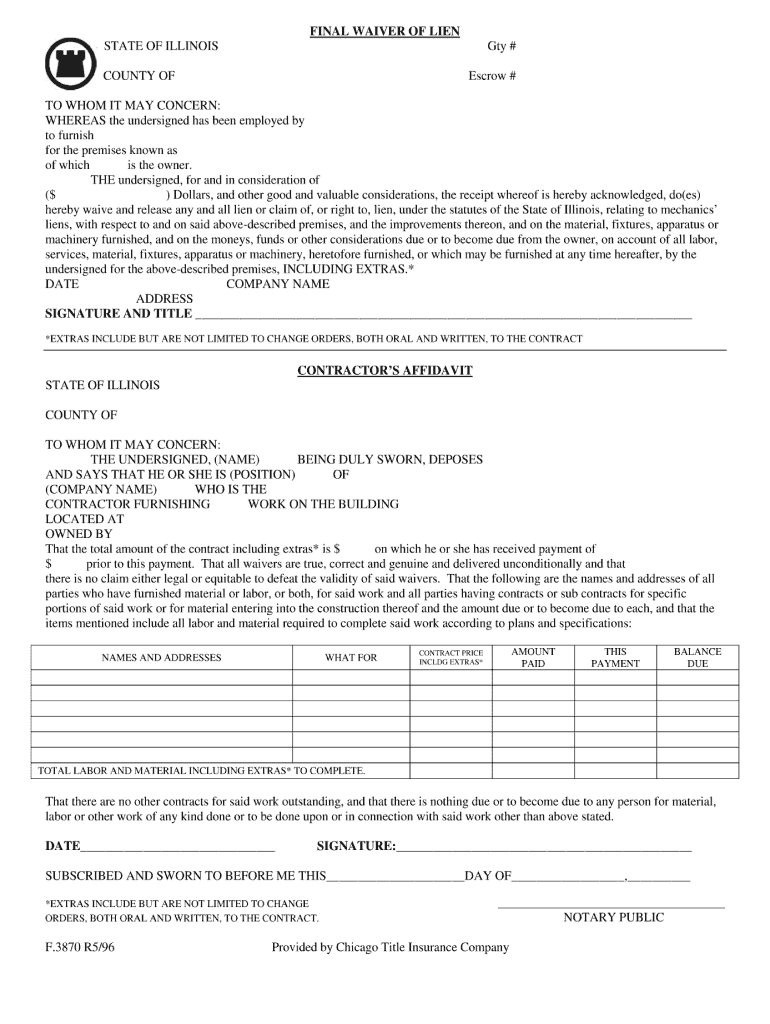







Definition and Meaning of Final Waiver of Lien
A final waiver of lien is a legally binding document used in the construction industry to release a contractor's right to claim a lien on property once payment has been received in full. When a contractor, subcontractor, or supplier provides labor or materials for a project, they hold the right to file a lien against the property if they do not receive payment. The final waiver of lien confirms that payment has been settled and relinquishes the claimant's right to file any future liens. This document ensures that all parties involved are clear of any financial obligations related to the project.
How to Use the Final Waiver of Lien
To effectively use a final waiver of lien, follow these steps:
-
Preparation: Ensure that all payments associated with the project have been fulfilled. Gather evidence, such as receipts or transaction records, to solidify this claim.
-
Fill Out the Form: Accurately complete the final waiver of lien form. Include details such as the property owner's name, project description, and payment amount received.
-
Signature and Notarization: Sign the document in the presence of a notary public if required by state law. This adds an additional layer of authenticity and legal validation.
-
Distribution: Provide the property owner and any other relevant parties with copies of the signed waiver to confirm the release of lien rights.
By following this process, contractors can assure property owners that they have relinquished their rights to claim liens, fostering trust and assurance in the business relationship.
Steps to Complete the Final Waiver of Lien
Completing a final waiver of lien involves several detailed steps:
-
Date the Document: Enter the date on which the waiver is executed.
-
Identify Parties: Clearly state the names and contact information of all involved parties—typically the contractor, property owner, and possibly subcontractors or suppliers.
-
Reference Project Details: Include a detailed description of the construction project, referencing contract numbers or job sites as needed.
-
Declare Payment Information: Indicate the amount paid along with the payment method. If partially paid, note the remaining balance that necessitates additional liens or waivers.
-
Legal Language: Ensure the use of proper legal terminology that accurately reflects the relinquishment of lien rights.
-
Signatures: Obtain signatures from necessary parties, followed by notarization if required.
By adhering to these instructions, the final waiver of lien is completed accurately and lawfully.
Key Elements of the Final Waiver of Lien
Understanding the key elements of a final waiver of lien ensures its proper execution and acceptance:
-
Parties Involved: Name all identities involved in the transaction, such as the property owner, contractor, and any subcontractors.
-
Project Description: Provide an in-depth explanation of the project, including job site and nature of work performed.
-
Payment Amount: Clearly outline the total amount received, highlighting the sum related to the waiver.
-
Waiver Clause: Include a clause that explicitly states the contractor’s intent to waive future lien rights on the project.
-
Signature Lines: Allocate space for signatures of relevant parties, especially those with authorities linked to the project.
The inclusion of these elements ensures that the form is accurate, comprehensive, and legally enforceable.
Legal Use of the Final Waiver of Lien
The final waiver of lien is a powerful tool in the construction sector due to its legal implications. It must be used with a clear understanding of:
-
Completion of Payment: Only suitable after all payments have been completely settled.
-
Lien Rights Relinquishment: By signing, contractors formally release their rights to claim liens against the property.
-
State Laws: Adherence to individual state requirements is necessary, as regulations surrounding waivers may vary significantly.
Legal use of the document prevents complications, disputes, and misunderstandings, ensuring a smooth conclusion to the project.
State-Specific Rules for the Final Waiver of Lien
Each U.S. state has unique regulations regarding the application and enforcement of a final waiver of lien. Be aware of:
-
Notarization Requirements: Some states, like Florida, mandate notarization of lien waivers, adding a level of verification.
-
Timing Restrictions: States like Texas require specific time frames within which the waiver should be executed following payment.
-
Language Specifications: States such as California have mandated language that must be included in the waiver to ensure its validity.
Understanding these varied requirements helps prevent legal disputes and safeguard all parties from potential fiscal risks.
Who Typically Uses the Final Waiver of Lien
The final waiver of lien is primarily used by:
-
Contractors: To confirm receipt of payment and release lien rights.
-
Property Owners: As assurance that they are free from future lien claims once payments are made.
-
Suppliers and Subcontractors: To relinquish their own claims under direct contracts with the general contractor.
All these participants must use the waiver to establish trust and finality in the construction project’s financial dealings.


Examples of Using the Final Waiver of Lien
Consider real-world scenarios where the final waiver of lien is applicable:
-
Residential Construction: A homeowner completes payment for a new roof installation. The roofing contractor provides a final waiver of lien, ensuring no future claims can disrupt the owner's property use.
-
Commercial Projects: A business development pays its subcontractors for a new mall. Subcontractors execute lien waivers, allowing the project to progress without hurdles from unsettled claims.
These examples highlight the document's role in reinforcing professional relationships and resolving potential disputes.
Important Terms Related to Final Waiver of Lien
Understanding terminology surrounding the final waiver of lien enhances comprehension:
-
Mechanic’s Lien: A security interest in the title of property for the benefit of those who have supplied labor or materials.
-
Partial Waiver: Waiver utilized when only a portion of the payment has been made.
-
Conditional Waiver: Utilized when the waiver takes effect only once payment clears the bank.
Recognizing these terms aids in better navigating legal and financial processes within construction projects.




