01. Edit your form online
Type text, add images, blackout confidential details, add comments, highlights and more.

Type text, add images, blackout confidential details, add comments, highlights and more.

Draw your signature, type it, upload its image, or use your mobile device as a signature pad.

Send it via email, link, or fax. You can also download it, export it or print it out.
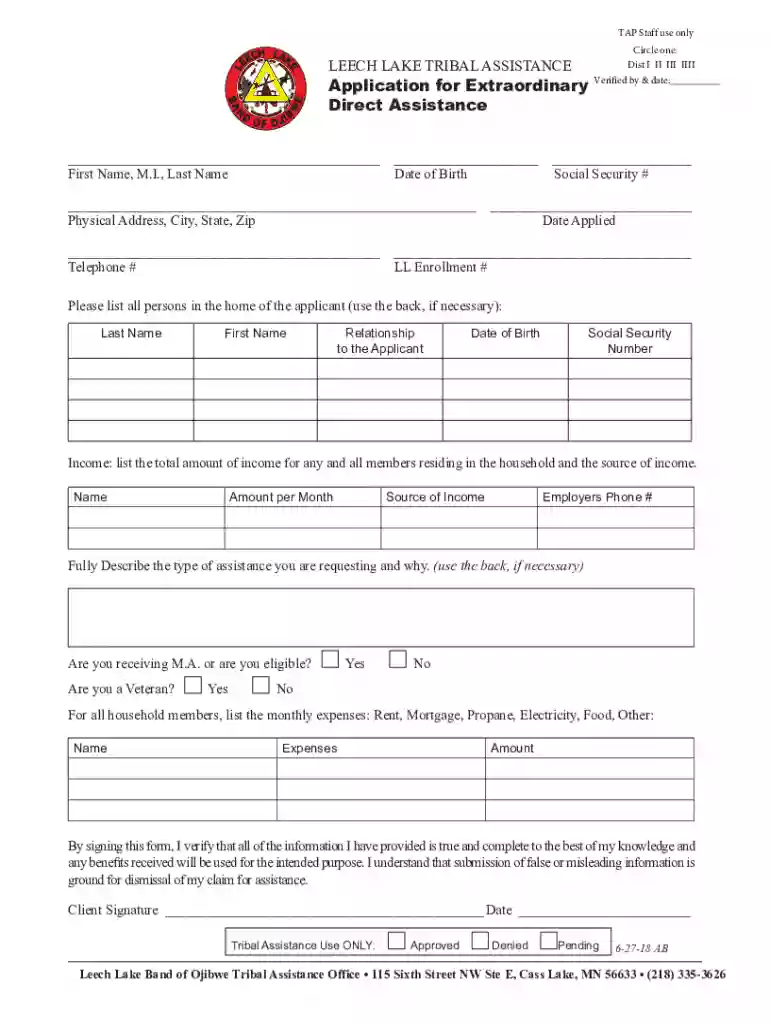
The Application for Extraordinary Direct Assistance is a form designed to provide financial assistance to individuals who require additional support due to unique circumstances. This form, typically utilized by organizations like the Leech Lake Band of Ojibwe Tribal Assistance Office, collects essential data about the applicant and their household to assess eligibility and the type of assistance needed. The application process involves gathering information on personal and household demographics, income sources, monthly expenses, and the specific request for aid.
To use the Application for Extraordinary Direct Assistance effectively, applicants must complete the form carefully and thoroughly. This process ensures that all pertinent information is accurately provided, which is crucial for qualifying for assistance. Applicants should:
Completing the Application for Extraordinary Direct Assistance involves a systematic process to ensure all information is correct and submitted on time. The general steps include:
Review the Form:
Fill Out Personal Information:
Income and Expense Documentation:
Request for Assistance:
Verification and Signature:
Submission:
Submitting the correct documents is crucial when applying for Extraordinary Direct Assistance. Applicants need to:
Understanding the eligibility criteria can help applicants determine their qualification for assistance. These criteria often include:


Applying for Extraordinary Direct Assistance can provide critical financial aid to individuals facing unexpected financial difficulties. Reasons to apply include:
There are multiple avenues for submitting the Application for Extraordinary Direct Assistance, catering to different preferences and access levels:
Online Submission: Most efficient for those with internet access, allowing for easy uploading of documents and immediate form processing.
Mail-in Submission: Suitable for individuals without internet access or those who prefer physical copies, ensuring that all documents are securely sent to the agency.
In-person Submission: Useful for applicants who require assistance filling out the form or need immediate confirmation of submission, typically available at local offices.
Several scenarios illustrate the effective use of this form:
These examples underscore the significance of the Application for Extraordinary Direct Assistance in helping individuals manage unforeseen financial burdens.
We've got more versions of the Application for Extraordinary Direct Assistance form. Select the right Application for Extraordinary Direct Assistance version from the list and start editing it straight away!
At DocHub, your data security is our priority. We follow HIPAA, SOC2, GDPR, and other standards, so you can work on your documents with confidence.