




01. Edit your form online
Type text, add images, blackout confidential details, add comments, highlights and more.

Type text, add images, blackout confidential details, add comments, highlights and more.

Draw your signature, type it, upload its image, or use your mobile device as a signature pad.

Send it via email, link, or fax. You can also download it, export it or print it out.
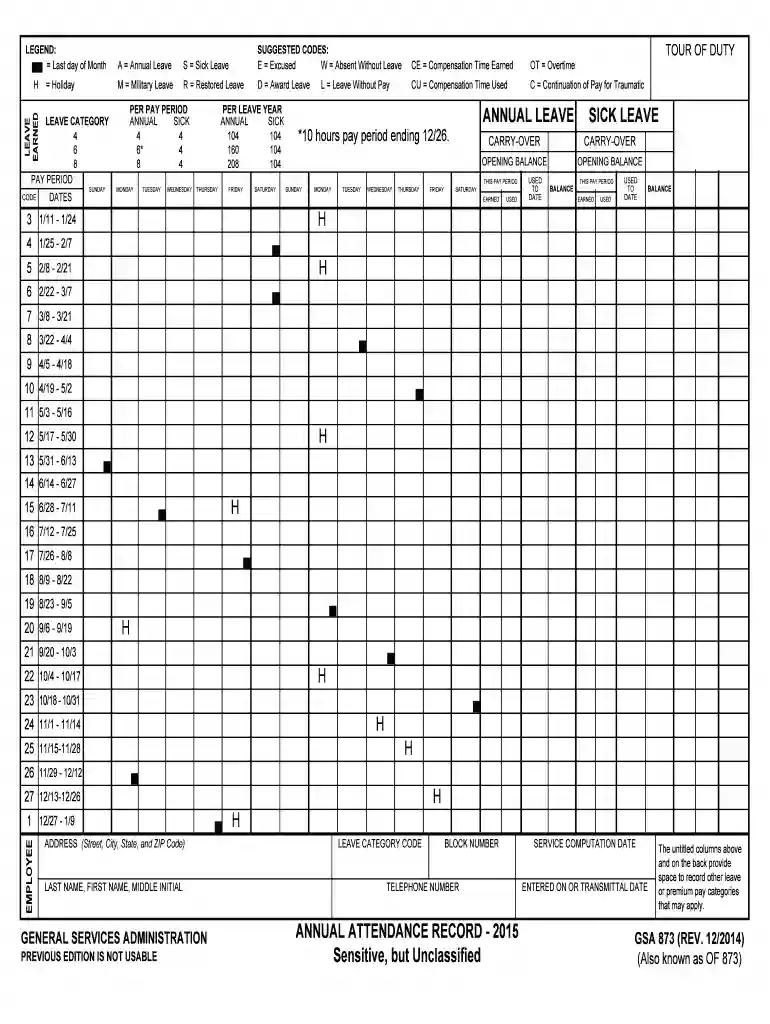
The "AAnnual Leave" form is a critical tool for employees and employers to officially document and manage vacation or leave requests within a workplace. It serves as a record of an employee’s entitlement to annual leave, capturing the accrual and usage of leave days. The form tracks the balance of leave, ensuring transparent communication between staff and management regarding time away from work. The documentation facilitates alignment with company policies and provides a standardized mechanism to avoid disputes or mismanagement of leave entitlements.
To effectively use the AAnnual Leave form, employees should follow their organization's procedure for requesting time off. Typically, this involves:
Completing the Form: Fill out the necessary details such as full name, employee identification, and the dates for which leave is requested.
Submission Process: Submit the completed form for supervisor approval. Depending on company policy, this might be done electronically or via paper form.
Approval Workflow: Once submitted, the form proceeds through a defined workflow where managers or HR personnel review and approve the leave request, ensuring that it aligns with team schedules and policies.
Official Record: After approval, the AAnnual Leave request becomes part of the employee's official HR records, and adjustments to leave balances are made accordingly.
To complete the AAnnual Leave form accurately, follow this step-by-step guide:
Personal Information: Enter personal details such as name, employee ID, and contact information.
Request Details: Specify the start and end dates of the leave, including the total number of workdays off.
Reason for Leave: Provide a brief explanation of the leave purpose, ensuring it falls within acceptable reasons per company policy.
Authorization Section: Leave adequate space for supervisor’s signature and any additional comments or conditions related to the leave.
Confirmation: Ensure to retain a copy of the submitted form for personal records, and await confirmation from the HR department regarding the status of your request.
The AAnnual Leave form consists of several key elements that streamline the documentation process:
Employee Information: Captures essential employee identifiers such as name, department, and employee ID.
Leave Dates: Fields to indicate the requested leave's start and end date, as well as the total duration.
Reason for Leave: Free-text area for specifying the reason for taking leave, which could range from vacation to personal matters.
Authorized Signatures: Spaces for approval signatures from necessary authorizing figures within the company, often involving immediate supervisors and HR personnel.
The AAnnual Leave form must adhere to legal requirements, ensuring that it reflects any applicable labor laws and company policy standards. It is essential:
Compliance with Employment Contracts: Ensures leave requests do not violate any terms outlined in the employment contract.
Adherence to Legal Leave Entitlements: Aligns with local, state, and federal laws governing mandatory leave entitlements and employer obligations.
Confidentiality and Data Protection: Protects sensitive employee information in compliance with data protection regulations.
Understanding the terminology associated with the AAnnual Leave can clarify the process:
Accrual: The rate at which employees earn leave over a specified period.
Carryover: The condition under which unused leave can be transferred to the next period.
Entitlement: Total days of leave granted to an employee as per company policy or legal standards.
While the AAnnual Leave form itself is standardized, rules can vary significantly across different states:
State Laws on Leave Accrual: Some states may have unique regulations regarding how leave is accrued and entitled.
Carryover Limits: State-specific conditions may apply to how much leave can be carried over to the subsequent year.
Paid vs. Unpaid Leave Provisions: Variability in whether the leave is paid or unpaid depending on state mandates and company policies.
The AAnnual Leave form can be submitted through multiple channels, each offering distinct advantages:
Online Submission: Electronic systems facilitate easier tracking, management, and faster processing.
Mail Submission: Ensures formal documentation, although it may involve a longer processing time.
In-Person Submission: Direct submission to a supervisor or HR personnel underscores the personal nature of the request and allows for immediate acknowledgment.
Consider these scenarios illustrating practical applications of the AAnnual Leave:
Vacation Planning: An employee uses the form to plan and request leave well in advance of an anticipated family vacation.
Medical Leave: When an employee needs extended time off for medical reasons, this form documents the duration and purpose of the leave accurately.
Personal Reasons: Employees might submit a request for personal time, facilitating work-life balance through transparent communication with employers.
Organizations may use either digital or paper versions of the AAnnual Leave form, each presenting distinct advantages:
Digital Version: Promotes efficiency with automation, real-time updates, and easier integration with HR systems for tracking and audit purposes.
Paper Version: Offers a traditional approach that may be preferred in environments where paper trails are crucial, or digital adoption is less prevalent.
We've got more versions of the AAnnual Leave form. Select the right AAnnual Leave version from the list and start editing it straight away!
At DocHub, your data security is our priority. We follow HIPAA, SOC2, GDPR, and other standards, so you can work on your documents with confidence.
You are entitled to receive sick leave if you work 500 or more hours in a fiscal year. You will be credited with one hour of sick leave for every 20 hours
Regular schedules of less than 40 hours will receive pro-rated AL in the same manner as a PTR and for paid hours in excess of their scheduled amount, up to the
An employee may use annual leave for vacations, rest and relaxation, and personal business or emergencies.


