




01. Edit your da form 7801 online
Type text, add images, blackout confidential details, add comments, highlights and more.

Type text, add images, blackout confidential details, add comments, highlights and more.

Draw your signature, type it, upload its image, or use your mobile device as a signature pad.

Send da 7801 via email, link, or fax. You can also download it, export it or print it out.
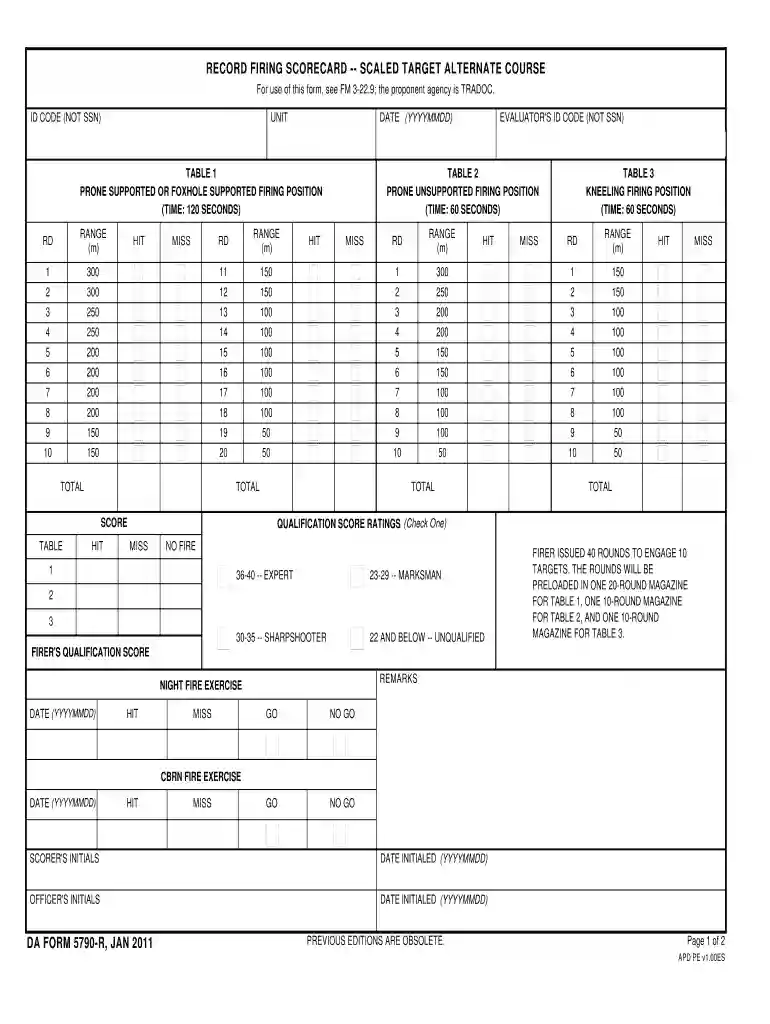
The Army weapons qualification card is an essential document utilized by service members to record their proficiency with various firearms. This card, often referred to by its official designation DA Form 7801, outlines the qualifications achieved by soldiers during firing exercises. It serves multiple functional purposes, ranging from official records to training evaluations, and is critical in determining an individual’s readiness for combat situations.
Preparation for Qualification:
Firing Exercises:
Documentation:
As military operations increasingly employ technology, digital platforms have emerged for storing and managing weapons qualification information. Electronic records can facilitate easier access for training coordinators and streamline the documentation process for soldiers undergoing qualification, enhancing the overall efficiency of the administrative workflow.
The Army weapons qualification card, encapsulated in DA Form 7801 and its variants, is a critical element in the training and operational framework of the U.S. Army. By providing a systematic approach to documenting firearm proficiency, it plays an indispensable role in reinforcing the preparedness and qualifications of soldiers on duty. Understanding its components, processes, and implications can enhance all stakeholders’ engagement within the military training ecosystem.
We've got more versions of the da form 7801 form. Select the right da form 7801 version from the list and start editing it straight away!
At DocHub, your data security is our priority. We follow HIPAA, SOC2, GDPR, and other standards, so you can work on your documents with confidence.





Weapons Qualification Report. 1. 2. Page 20. Weapons Qualification Report Example. LastName. MiddleName. FirstName. RankShort QualificationDate WeaponType.Read more
An Army weapons qualification card typically contains the following key sections: Soldier Information: Name, rank, unit, and identification number. WeaponRead more
Aug 12, 2008 This publication prescribes DA Form 3595-R (Record Fire Scorecard), DA Form 3601-R (Single TargetField. Fire I Scorecard), DA Form 5239-R (100-Read more


