




01. Edit your dmv placard form online
Type text, add images, blackout confidential details, add comments, highlights and more.

Type text, add images, blackout confidential details, add comments, highlights and more.

Draw your signature, type it, upload its image, or use your mobile device as a signature pad.

Send dmv handicap placard form via email, link, or fax. You can also download it, export it or print it out.
The DMV California disabled placard is an official document provided by the California Department of Motor Vehicles that allows individuals with disabilities to park in designated accessible parking spaces. It is intended to aid those who have mobility challenges, ensuring they have easier access to public places. The placard can be displayed in a vehicle, and it helps officials identify vehicles belonging to individuals with qualifying disabilities.
There are different types of placards issued, including temporary and permanent options. A temporary placard is typically issued for conditions that are expected to improve over time, while a permanent placard is for those with long-lasting disabilities. As defined by California law, the eligibility for these placards includes a range of disabilities that significantly impair mobility, as assessed by a qualified healthcare provider.
The legal use of the disabled placard extends to designated areas only, which include accessible parking spaces and certain curb areas. Misuse can result in penalties, so understanding the proper application of the placard is crucial for users.
Using the disabled placard correctly is essential as it promotes accessibility for those who genuinely need it, while also protecting the integrity of parking regulations.
To obtain a DMV California disabled placard, applicants must complete a specific application process that includes several steps. The process can be initiated by visiting a DMV office, completing the required form, and providing medical certification of the disability. This medical certification must be completed by a licensed healthcare professional who can attest to the individual's condition.
Applying online tends to be quicker and may offer more streamlined communication regarding any required documentation or follow-up steps.
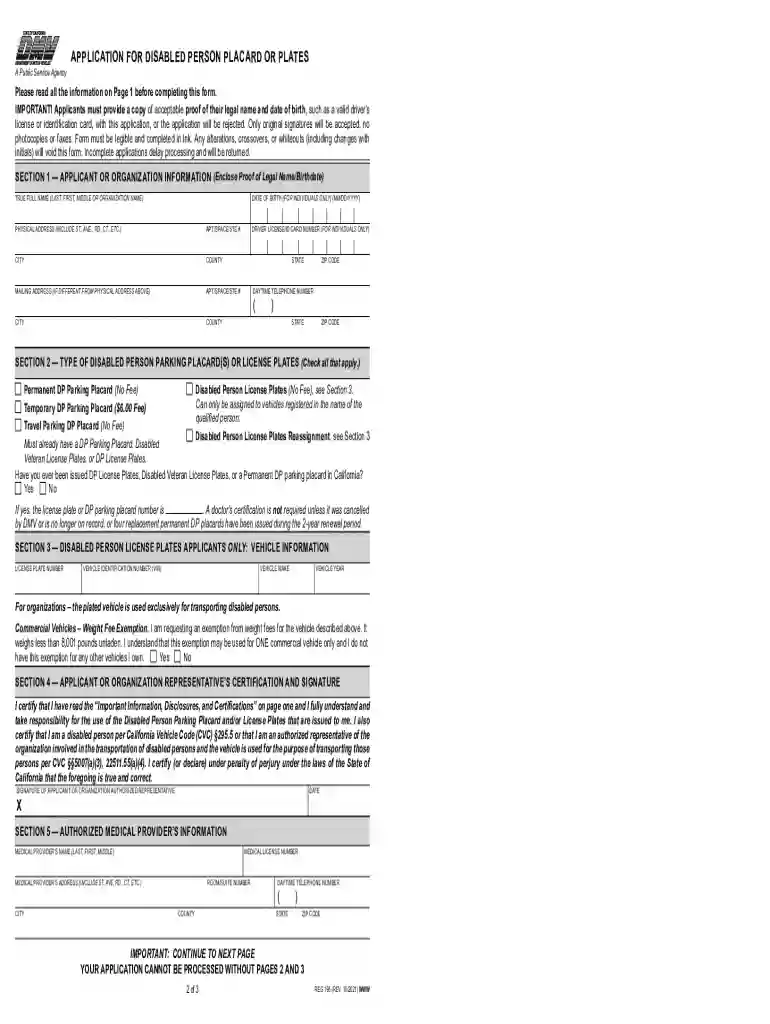
Completing the DMV California disabled placard involves a structured process that requires gathering the necessary documentation and filling out the required forms accurately. The primary form used is typically known as the DMV disabled placard form.
Ensuring all signatures are in place and all required fields are filled out completely can prevent delays in processing. Following up with the DMV after submission could also expedite the processing time.
The legal use of the DMV California disabled placard is critical in ensuring that individuals with disabilities can access necessary resources and locations. Misusing the placard, such as using it for vehicles not registered to the individual or parking in non-designated areas, can lead to fines and other legal penalties.
Violations of the laws surrounding the use of the placard can lead to hefty fines, and repeated offenses may result in suspension of the disabled parking privileges.
Eligibility for obtaining a DMV California disabled placard is established based on recognized disabilities that substantially impair mobility. Understanding the specific criteria is essential for those interested in applying for the placard.


These evaluations must be conducted and verified through a licensed healthcare provider to initiate the application process successfully. Each case is assessed individually, so applicants should present all relevant medical documentation when seeking approval.
We've got more versions of the dmv placard form form. Select the right dmv placard form version from the list and start editing it straight away!
At DocHub, your data security is our priority. We follow HIPAA, SOC2, GDPR, and other standards, so you can work on your documents with confidence.
Applicants for a disabled person placard or plates shall complete and submit an Application for Disabled Person Placard or Plates form.Read more
Disabled Person (DP) placard or DP License Plates for all of their vehicles, for no additional fee. Find out if you are eligible and learn how to apply.


