01. Edit your dmv handicap form online
Type text, add images, blackout confidential details, add comments, highlights and more.

Type text, add images, blackout confidential details, add comments, highlights and more.

Draw your signature, type it, upload its image, or use your mobile device as a signature pad.

Send disabled person placard via email, link, or fax. You can also download it, export it or print it out.
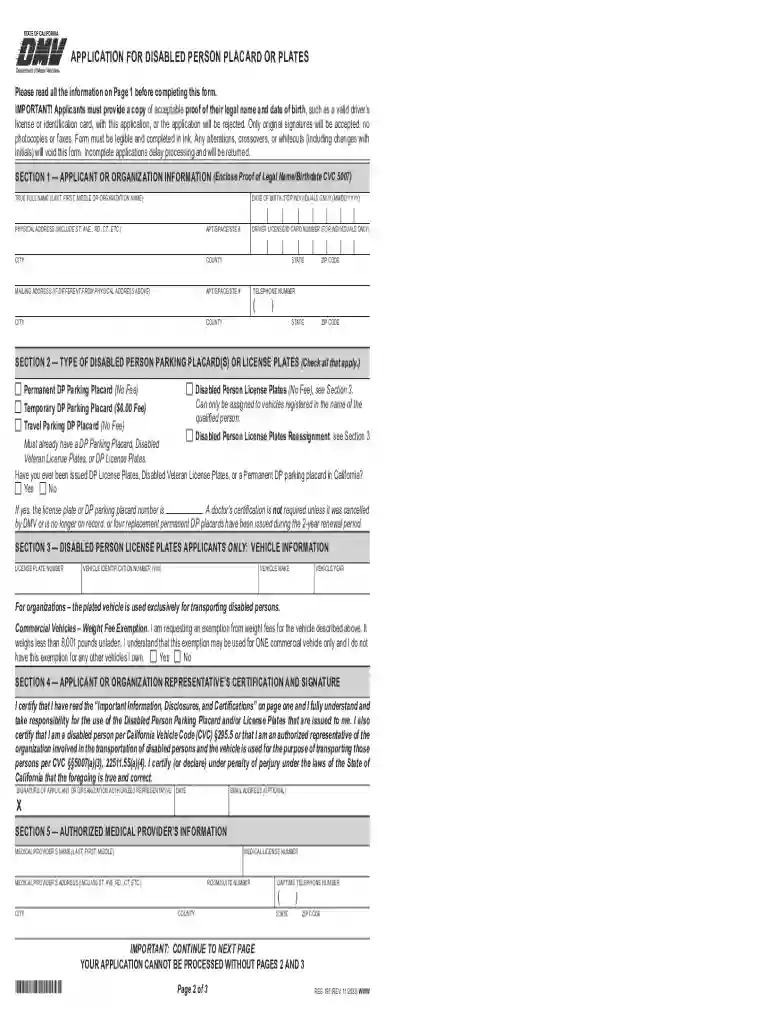
The DMV Application for Disabled Person Placard or Plates, commonly referred to as the DP placard or plates form, serves as an official request for individuals with disabilities to obtain parking privileges under the Americans with Disabilities Act (ADA). This form ensures that eligible applicants can access designated parking spaces that accommodate their needs, promoting accessibility and independence.
The DP placard or plates offer several types of parking accommodations, including temporary and permanent placards, as well as special license plates. The form caters to different durations of need based on the individual's condition, allowing applicants to select the most appropriate option. By obtaining this form, individuals are granted the legal right to park in ADA-compliant spaces, facilitating better mobility in public and private parking areas.
To acquire the DMV Application for Disabled Person Placard or Plates, individuals may download the form directly from the official DMV website of their respective state. Alternatively, a physical copy can be obtained by visiting a local DMV office. Some states may offer an option to request the form by mail.
Each state may have slightly different versions of the form, tailored to align with specific local regulations and requirements. It is important for applicants to ensure they are using the correct state-specific form to avoid processing delays. Some states may provide a digital version that can be filled out online, enhancing accessibility for those who prefer a paperless process.
Gather Necessary Documents:
Personal Information:
Medical Certification:
Select Placard or Plate Type:
Sign and Date:
Submit the Form:
Eligibility for a disabled person placard or plates requires applicants to meet specific disability conditions that either limit mobility or require assistive devices. Common qualifying conditions include but are not limited to:
Applicants must provide medical verification from a licensed healthcare provider to substantiate their eligibility. This documentation is crucial to ensure that the placard or plates are issued only to those who genuinely need them for mobility assistance.


Once issued, the disabled person placard or plates should be used strictly in accordance with the legal guidelines to avoid penalties. The placard must be displayed visibly inside the vehicle when parked in designated spaces. It cannot be loaned to others, except when the placard holder is being transported in the vehicle.
Misuse of the placard or plates by parking in spaces without valid need, or using another individual’s placard, is subject to fines and possible revocation of the privilege. Compliance with state and local parking rules is mandatory for continued eligibility.
Understanding the key components of the form ensures that applicants provide complete and accurate information, reducing the risk of application rejection or delays.
The regulations and requirements for obtaining and using disabled person placards or plates may vary from state to state. It's essential to be familiar with your state's specific rules to ensure compliance. Some states may have unique eligibility criteria or additional forms required during the application process.
Applicants should consult their state's DMV resources or speak with a DMV representative to clarify any state-specific rules, which may affect application procedures, renewal processes, or other essential guidelines.
Failure to adhere to the rules governing the use of disabled person placards or plates can lead to significant penalties. These may include:
Compliance is crucial to maintaining parking privileges under the disabled parking program, ensuring spaces are available for those truly in need.
Submission options for the application vary depending on the state. Applicants can typically submit their forms:
Each submission method has its advantages, and applicants should choose the one that best suits their situation while consulting their state’s DMV guidelines for specific instructions.
We've got more versions of the dmv handicap form form. Select the right dmv handicap form version from the list and start editing it straight away!
At DocHub, your data security is our priority. We follow HIPAA, SOC2, GDPR, and other standards, so you can work on your documents with confidence.