




01. Edit your form online
Type text, add images, blackout confidential details, add comments, highlights and more.

Type text, add images, blackout confidential details, add comments, highlights and more.

Draw your signature, type it, upload its image, or use your mobile device as a signature pad.

Send it via email, link, or fax. You can also download it, export it or print it out.
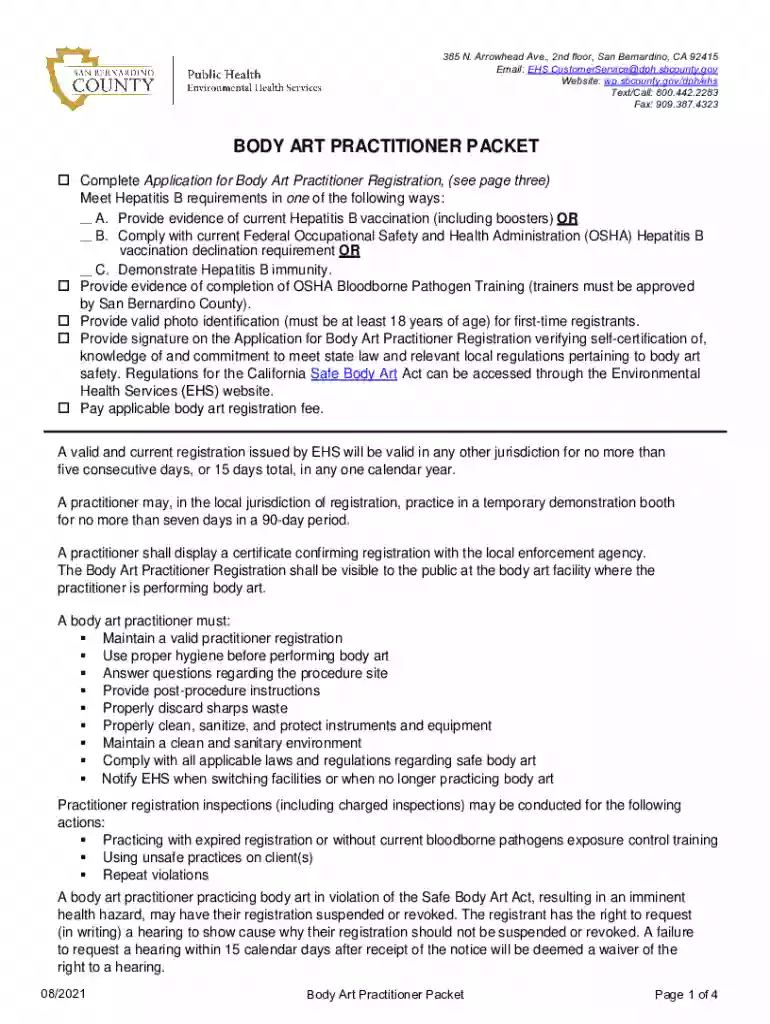
The Body Art Practitioner Packet is a critical document designed for individuals seeking to become registered body art practitioners in San Bernardino County. This packet includes essential forms and information that guide applicants through the registration process. It covers necessary health and safety regulations specific to body art, such as tattooing and piercing, ensuring compliance with local laws. Understanding the packet's contents is integral for applicants to meet all legal and health requirements set forth by the county.
Applicants must thoroughly review the Body Art Practitioner Packet to understand the registration process for body art practices in San Bernardino County. The packet serves as a blueprint, providing detailed steps and criteria for successfully submitting a complete application. Users should pay particular attention to the sections detailing health certifications, necessary vaccinations, and procedural guidelines to avoid delays or rejections in the registration process.
The packet is a vital resource for ensuring that body art practitioners are properly educated and authorized to operate within the county. It serves not only as a procedural guide but also as a means to uphold public health and safety standards in the body art industry. By requiring proper documentation and adherence to infection control guidelines, the packet helps mitigate health risks associated with body art practices.
This packet is primarily utilized by aspiring and current professionals in the body art industry, including tattoo artists, piercers, and cosmetic tattooists, who wish to practice legally within San Bernardino County. In addition to new applicants, previous registrants may also use the packet for renewals or to update their credentials with the county.


The packet ensures applicants comply with San Bernardino County's legal requirements for operating as a body art practitioner. This compliance is crucial to avoid legal penalties and maintain the integrity of public health standards. The included legal agreements and consent forms help enforce these standards by having practitioners attest to their understanding and willingness to adhere to county regulations.
While the packet is tailored specifically for San Bernardino County, it is aligned with California state laws governing body art practices. It's essential for applicants to be aware of any additional regulations that may exist at the state level, such as specific licensing requirements or health codes, to ensure full compliance beyond the county's jurisdiction.
We've got more versions of the fill.ioBODY-ART-PRACTITIONER-PACKETFill - Free fillable BODY ART PRACTITIONER PACKET (County of ... form. Select the right fill.ioBODY-ART-PRACTITIONER-PACKETFill - Free fillable BODY ART PRACTITIONER PACKET (County of ... version from the list and start editing it straight away!
You should use only reliable software solutions with strong data protection compliance to sign your paperwork electronically. DocHub is just the type of editor you need! It stores data on Amazon Web Servers and complies with all necessary security standards and eSignature regulations, so it’s a trustworthy way to eSign your fill.ioBODY-ART-PRACTITIONER-PACKETFill - Free fillable BODY ART PRACTITIONER PACKET (County of ... or other forms using this tool.
With DocHub, you have several convenient methods to edit your fill.ioBODY-ART-PRACTITIONER-PACKETFill - Free fillable BODY ART PRACTITIONER PACKET (County of ... online. You can drag and drop the form and modify it directly at the DocHub website or use our browser extension to fill out your form immediately. Additionally, you can modify your PDF on your smartphone, as DocHub works with all the available mobile platforms.
At DocHub, your data security is our priority. We follow HIPAA, SOC2, GDPR, and other standards, so you can work on your documents with confidence.


