






Definition & Meaning
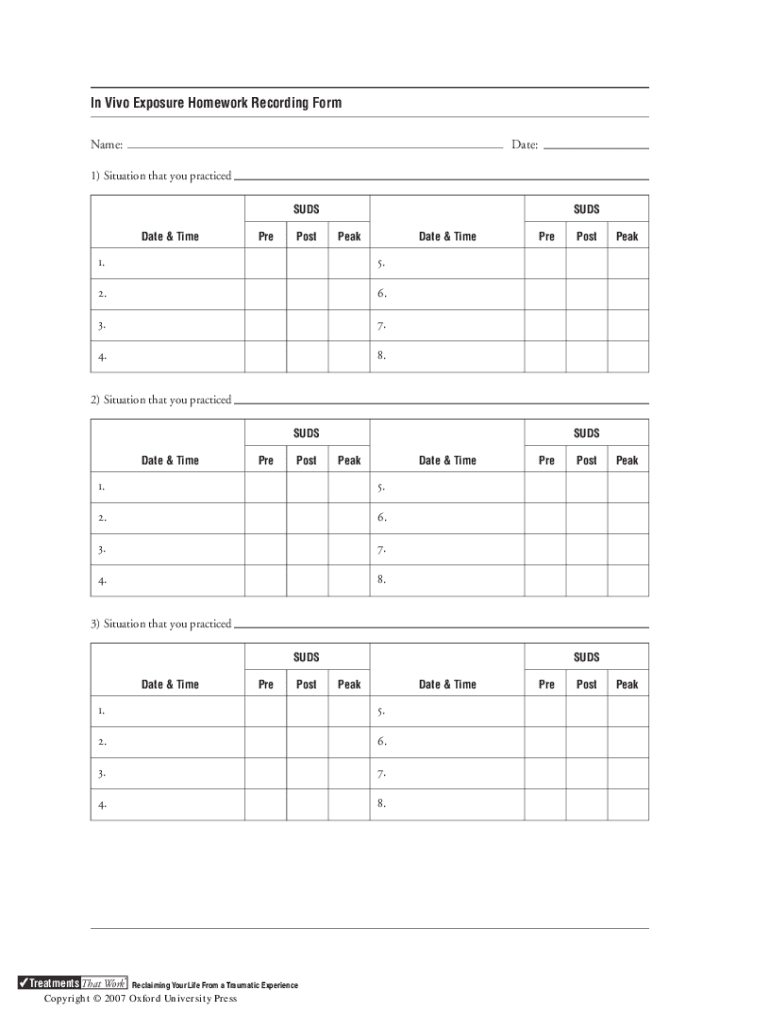
The "In Vivo Exposure Homework Recording Form" is a critical tool used in cognitive-behavioral therapy, particularly for individuals undergoing exposure therapy for anxiety disorders. This form is designed to help patients systematically record their exposure activities in real-life settings (in vivo), keep track of their responses, and monitor progress over time. In vivo exposure involves confronting feared stimuli in a controlled and safe manner, aiming to reduce anxiety through repeated exposure. This form acts as a structured means for clients to capture these experiences, record any symptoms or thoughts they encounter, and reflect on their emotional responses.
Key Features
- Activity Recording: Patients log specific exposure tasks they engaged in, such as speaking in public or visiting crowded places, detailing the exact situation and their actions.
- Symptoms Tracking: Space for documenting feelings, physical sensations, and other psychological reactions during and after the exposure activities.
- Progress Monitoring: Over time, the form provides a visual representation of improvements, helping therapists and clients adjust treatment plans accordingly.
How to use the In Vivo Exposure Homework Recording Form
The In Vivo Exposure Homework Recording Form plays a vital role in guiding therapy and enhancing self-awareness in patients. It necessitates disciplined and consistent use to be effective.
Step-by-Step Instructions
- Identify Situations: Work with your therapist to identify specific situations or activities that trigger anxiety.
- Define Goals: Clearly define what the exposure should achieve, such as reducing avoidance behavior or decreasing anxiety levels.
- Record Experiences: After each exposure, immediately fill in the form with details about the situation, your actions, and any physical or emotional reactions.
- Reflect and Review: Discuss these entries with your therapist at each session to identify patterns and refine exposure strategies.
Practical Application
- Frequency: Use the form daily or weekly, based on your therapy schedule.
- Consistency: Encourage clients to fill out the form regularly to ensure accuracy and depth in monitoring.
Steps to complete the In Vivo Exposure Homework Recording Form
Completing the form accurately is crucial for effective therapy outcomes. Here’s how patients can go through the process:
- Set the Stage: Before exposure, comprehensively plan what the exposure will entail and note it on the form.
- Carry Out Exposure: Engage in the identified activity, staying mindful of thoughts and feelings.
- Log Experiences Immediately: After the exposure, sit down with the form and document all notable experiences and thoughts that occurred during the exposure.
- Review: At the end of the week, review all entries to gauge progress and areas needing attention.
In-depth Insight
- Preparation: Proper planning before exposure can enhance the quality of your log entries.
- Comprehensive Entry: Encourage the inclusion of contextual details, such as environmental factors, that might have influenced the reaction.
Who typically uses the In Vivo Exposure Homework Recording Form
These forms are primarily utilized by patients undergoing cognitive-behavioral therapy for anxiety disorders, often facilitated by therapists specializing in exposure treatment methods.


User Profiles
- Patients: Individuals with anxiety disorders, including phobias, PTSD, and OCD.
- Therapists: Mental health professionals specializing in evidence-based therapeutic interventions.
- Clinical Researchers: To analyze data collected from patient experiments and assess therapy effectiveness.
Case Studies
- Phobia Management: Patients with specific phobias, such as agoraphobia, can use this form to gradually desensitize their fear responses over time.
- PTSD Treatment: This form helps monitor symptom-trigger relationship patterns in PTSD therapy.
Key elements of the In Vivo Exposure Homework Recording Form
Several essential components make up the form, allowing for organized and meaningful documentation.
Core Elements
- Exposure Scenario Description: Detailed depiction of the situation, including location, time, and specific actions taken.
- Emotional Response Log: A section to capture immediate feelings and thoughts during exposure.
- Symptoms Checklist: For noting physical and mental symptoms, such as heart rates and anxiety levels.
- Progress Assessment: Space for therapist-patient reflection on progress made and aspects needing adjustment.
Examples
- Scenario: Walking alone in a busy street.
- Emotions: Anxiety, fear
- Symptoms: Racing heart, sweating
- Outcome: Reduced anxiety over successive attempts.
Legal use of the In Vivo Exposure Homework Recording Form
The form is an integral part of therapeutic practices that adhere to medical and psychological guidelines, thus ensuring a client’s privacy and confidentiality. As a tool in therapy, it aligns with legal standards for healthcare documentation within the United States.
Legal Standards
- Confidentiality Compliance: Ensuring the information recorded in the form is kept private and used solely for therapeutic purposes.
- Data Protection: Compliance with local and federal laws, including HIPAA, to safeguard patient information.
Examples of using the In Vivo Exposure Homework Recording Form
Practical illustrations of the form's application offer valuable insight into its role in diverse therapeutic scenarios.
Example Scenarios
- Social Anxiety Exposure: Documenting experiences of speaking in front of small groups, noting body sensations and mental narrative shifts.
- OCD Treatment: Tracking exposure to anxiety-inducing stimuli like touching objects seen as contaminated, with a focus on anxiety decrease through repeated exposure.
Real-World Outcomes
- Patient A: Initially high anxiety about traveling on public transport, with the form showing gradual desensitization.
- Patient B: Reduction in OCD compulsions after following a structured exposure plan documented on the form.
Versions or alternatives to the In Vivo Exposure Homework Recording Form
While the core structure of the In Vivo Exposure Homework Recording Form remains standardized, variations do exist to meet diverse therapeutic approaches.
Common Alternatives
- Digital Versions: Apps providing real-time logging and feedback.
- Customized Templates: Therapists may adapt forms to suit specific patient needs, like including additional symptom categories.
Adaptability
- Tailored Forms: Based on specific disorder requirements, such as unique phobia categorizations or PTSD-related entries.
- Integration with Therapy Software: Compatibility with platforms like DocHub for secure digital entry and sharing.