




01. Edit your holder lien home online
Type text, add images, blackout confidential details, add comments, highlights and more.

Type text, add images, blackout confidential details, add comments, highlights and more.

Draw your signature, type it, upload its image, or use your mobile device as a signature pad.

Send motion relief stay via email, link, or fax. You can also download it, export it or print it out.
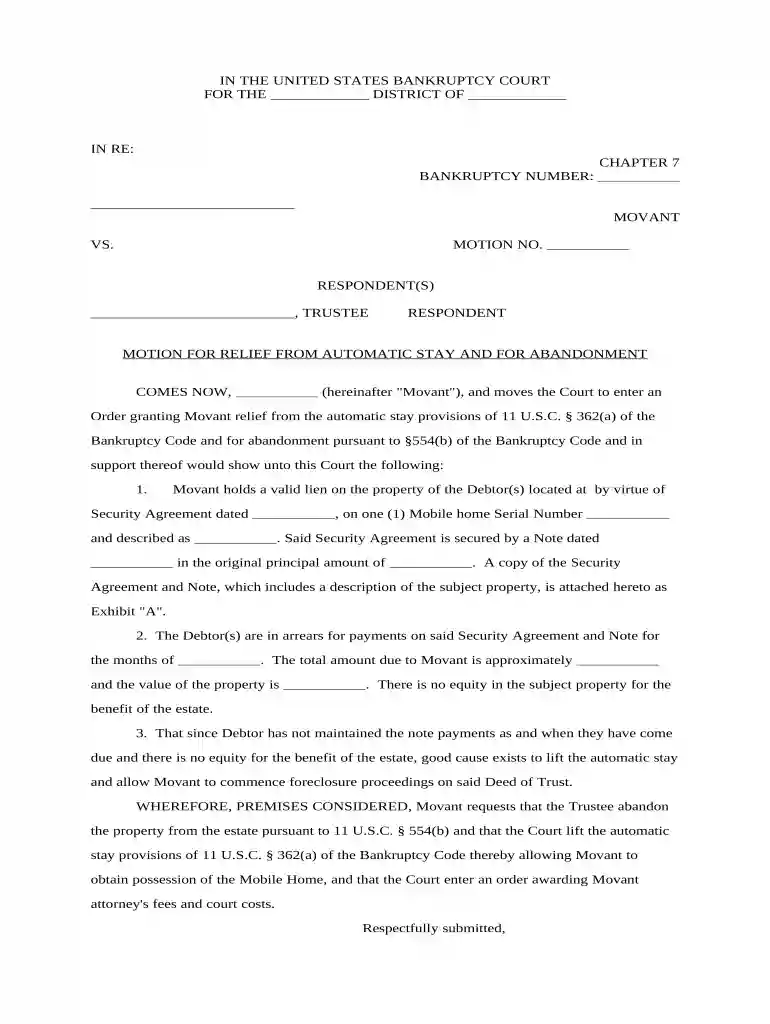
The "Motion for Relief from Automatic Stay" is a legal document typically filed in United States bankruptcy courts. This motion seeks permission from the court to lift the "automatic stay" that is often enacted when a bankruptcy petition is filed. The automatic stay halts most collection actions against the debtor, providing them with relief from creditors while the bankruptcy process unfolds. However, creditors or other parties interested in the debtor's property might file a motion to gain permission to proceed with specific actions or claims against the debtor’s assets.
Using this motion involves several precise legal steps. Typically, the creditor prepares the motion and submits it to the bankruptcy court where the debtor’s case is filed. The document must outline the reasons for requesting relief from the stay, often including proof of secured interest in the property at stake or showing that the asset’s depreciation makes continued delay unfairly burdensome. Creditors need to adhere to legal requirements and timelines, serving a copy of the motion to the debtor and their attorney, and potentially other parties involved.
This motion is usually employed by creditors or parties with an interest in a debtor's assets during a bankruptcy proceeding. Secured creditors, such as mortgage lenders, car loan companies, or any entity holding a lien on the debtor’s property, are typical users. These parties might seek relief to foreclose a property or repossess an asset secured by their loan.


The legal use of this motion is to gain approval for actions typically halted by the automatic stay. For instance, it may be necessary for actions like foreclosure, repossession of vehicles, or litigation involving the debtor. Courts require clear, factual, and lawful justifications for granting such relief, ensuring that the rights provided to debtors under bankruptcy law are not unjustly overridden.
While bankruptcy procedures are largely governed by federal law, certain aspects may vary slightly by state. Variations include the procedural rules related to filing and deadlines, service requirements, and local rules on hearings. It's crucial for creditors or their representatives to familiarize themselves with the specific rules of the jurisdiction where the debtor filed for bankruptcy.
At DocHub, your data security is our priority. We follow HIPAA, SOC2, GDPR, and other standards, so you can work on your documents with confidence.





This motion is filed with the Court to ask for an exception to the automatic stay, which is automatically entered when a person files bankruptcy.Read more
on the motion of a party in interest for continuation of the automatic stay and upon notice and a hearing, the court may extend the stay in particular casesRead more
An automatic pressure relief valve to prevent excessive pressure from damaging the manifold or fracturing the aquifer in the event of a system blockage. InRead more


