
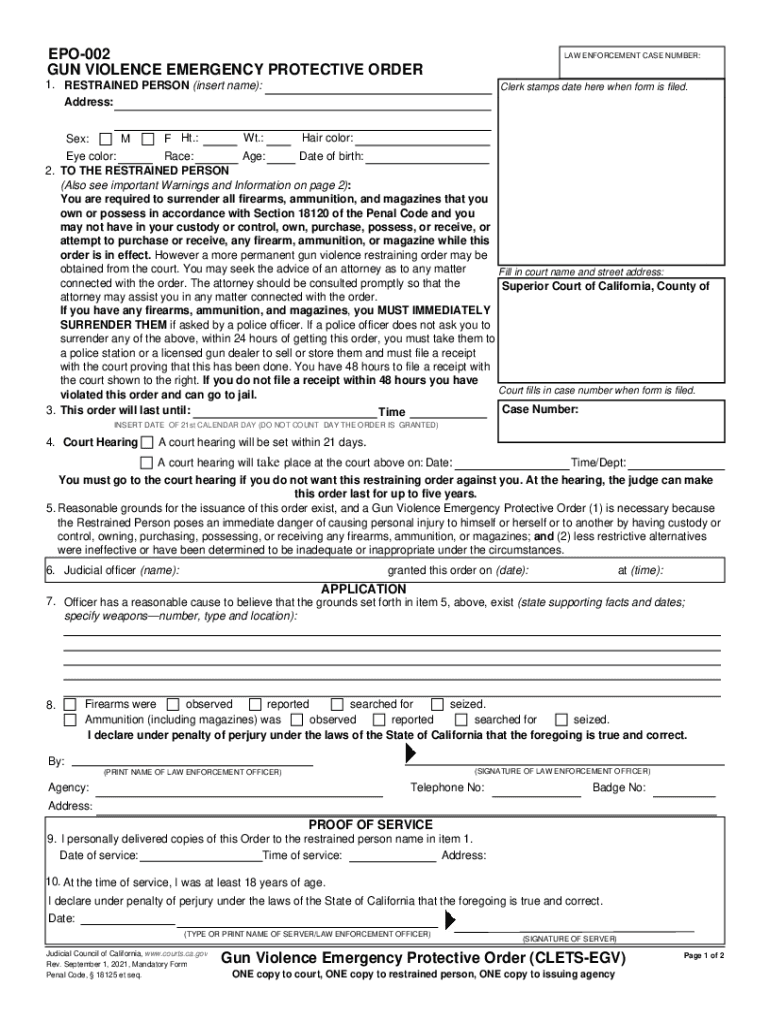







Definition and Meaning of EPO-002
The Emergency Protective Order, abbreviated as EPO-002, is a temporary legal measure designed to protect individuals from immediate danger or harm. Commonly issued in domestic violence cases, this order legally mandates the restrained individual to cease any contact or specific actions that could pose a threat to the protected person. Enforced by legal authorities, it aims to provide a rapid response to situations where safety is at risk.
How to Use the EPO-002
To effectively utilize the EPO-002, understanding its application is crucial. When a situation demands immediate intervention, such as cases of domestic abuse or credible threats of violence, the EPO-002 acts as a legal shield. Filing this order typically involves contacting law enforcement or a legal representative who can assess the situation's severity and determine the necessity of protective measures. Once the order is in place, understanding its terms—such as the distance the restrained person must maintain or other behavioral restrictions—is vital for compliance and enforcement.
Practical Scenarios
- Domestic Disputes: An EPO-002 is commonly used in domestic disputes where one party's safety is compromised.
- Workplace Threats: In cases where an employee faces threats from a colleague, this order can provide immediate relief.
- Stalking: Victims of stalking can seek an EPO-002 to halt unwanted pursuit or harassment.
Steps to Complete the EPO-002
Completing an EPO-002 involves several methodical steps to ensure accuracy and compliance with legal standards.
- Assessment of Necessity: Determine if the situation requires an emergency order; consult with law enforcement or legal professionals.
- Complete the Application: Fill out the necessary information, detailing incidents that necessitate the order.
- Submission: Submit the form to the appropriate legal authority or through official channels.
- Review and Decision: The form is reviewed; if approved, the order can be served to the restrained party.
Key Considerations
- Provide Comprehensive Details: Accurate descriptions of incidents and behaviors leading to the need for an EPO-002 are essential.
- Timeliness: Given the nature of emergencies, swift action from filing to enforcement is crucial.
Legal Use of the EPO-002
The legality of an EPO-002 involves understanding its role within the judicial system. It serves as an instrument to temporarily restrict certain freedoms of the alleged perpetrator to ensure the safety of others. Its enforcement is supported by law enforcement agencies, and repercussions for violations can be severe, including arrest and fines.
Duration and Enforcement
- Temporary Validity: Typically valid for a short period; long-term orders might follow.
- Immediate Enforcement: Once issued, the order is enforceable by peace officers.
Important Terms Related to EPO-002
Understanding specific terminology associated with EPO-002 enhances clarity in legal proceedings.
- Restrained Person: The individual against whom the order is issued.
- Protected Party: The individual(s) the order is designed to protect.
- Temporary Restraining Order (TRO): A potential step before a long-term restraining order.
Penalties for Non-Compliance
Non-compliance with an EPO-002 can lead to serious legal repercussions. Violations may result in arrest, fines, or additional charges. It’s paramount for the restrained individual to adhere strictly to the order's conditions to avoid further legal consequences.
Who Typically Uses the EPO-002
EPO-002 orders are predominantly utilized by individuals in vulnerable positions requiring immediate protection. This often includes domestic violence victims, individuals facing harassment, and those experiencing stalking. Law enforcement officers, when responding to distress calls, might prompt individuals to seek such orders for immediate protection.


Filing Deadlines and Important Dates for EPO-002
While the EPO-002 is designed for immediacy, there are crucial timelines to observe for effectiveness and legal standing. Filing should occur as soon as possible following an incident warranting protection. Additionally, respondents are notified swiftly to ensure the order is effective without delay.
Expiration and Renewal
- Emergency Nature: Typically valid for only a few days until further legal action is taken.
- Renewal Process: To extend protection, individuals must engage in court procedures to seek a longer duration order.




