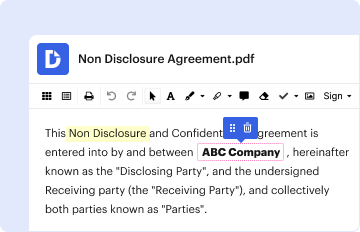
Type text, add images, blackout confidential details, add comments, highlights and more.
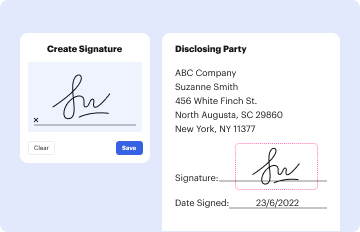
02. Sign it in a few clicks
Draw your signature, type it, upload its image, or use your mobile device as a signature pad.
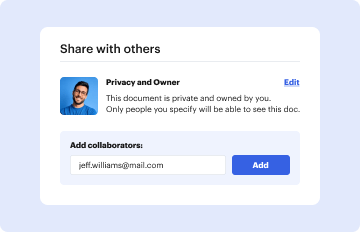
03. Share your form with others
Send it via email, link, or fax. You can also download it, export it or print it out.
How to use or fill out JV-680 FINDINGS AND ORDERS FOR CHILD ... - California Courts with our platform
Ease of Setup
DocHub User Ratings on G2
Ease of Use
DocHub User Ratings on G2
Click ‘Get Form’ to open the JV-680 document in the editor.
Begin by filling in your details as the attorney or party without an attorney, including your name, State Bar number, address, telephone number, and email address.
Enter the court information such as the Superior Court of California, County of, street address, mailing address, city and zip code.
Provide the child's name and case number at the top of the form.
Proceed to complete each section regarding findings and orders. Carefully read each statement and select the appropriate options based on the child's situation.
Ensure all necessary evidence is documented in support of your findings. Use our platform's features to add notes or comments if needed.
Review all entries for accuracy before saving or printing. Utilize our platform’s tools for easy editing and signing.
Start using our platform today to streamline your document editing process for free!
Fill out JV-680 FINDINGS AND ORDERS FOR CHILD ... - California Courts online It's free
See more JV-680 FINDINGS AND ORDERS FOR CHILD ... - California Courts versions
We've got more versions of the JV-680 FINDINGS AND ORDERS FOR CHILD ... - California Courts form. Select the right JV-680 FINDINGS AND ORDERS FOR CHILD ... - California Courts version from the list and start editing it straight away!
What is the rule of court rule 3.400 in California?
Once the judge makes a decision, the judge will need to sign a court order. In some courts, court staff will do this. In other courts, one of you (or a lawyer, if either of you have one) will have to prepare the order.
How to find court cases online in California?
Go to the courts website where the case is filed. Most courts have a section on their website called online services or something similar. There you will find information about whether you can look up a court case online and what type of records you can see. Not all types of records are available online.
What are the findings and order after hearing in California?
This is used as the first page to list the decisions (orders) that a court made after a hearing. The orders are generally attached to this page.
What is the rule of court for findings and order after hearing in California?
California Rule of Court 5.125 requires that the prevailing party provide the other party with a copy of the PROPOSED ORDER before submitting it to the Court. If the other party appeared in court, you must serve them with a proposed Findings and Order After Hearing within 10 days of the hearing date.
What happens after a CA order hearing?
For purposes of this rule: (1) A trial day is defined as a period no less than two and a half hours of a single court day. (2) A long-cause hearing is defined as a hearing on a request for order that extends more than a single court day.
Security and compliance
At DocHub, your data security is our priority. We follow HIPAA, SOC2, GDPR, and other standards, so you can work on your documents with confidence.
Findings and Orders for Child Approaching Majority
Findings and Orders for Child Approaching MajorityDelinquency (JV-680). States the courts decisions (orders) at the hearing before the child turns 18 yearsRead more
Cookie consent notice
This site uses cookies to enhance site navigation and personalize your experience.
By using this site you agree to our use of cookies as described in our Privacy Notice.
You can modify your selections by visiting our Cookie and Advertising Notice.