Type text, add images, blackout confidential details, add comments, highlights and more.
02. Sign it in a few clicks
Draw your signature, type it, upload its image, or use your mobile device as a signature pad.
03. Share your form with others
Send it via email, link, or fax. You can also download it, export it or print it out.
How to use or fill out JV-680 FINDINGS AND ORDERS FOR CHILD APPROACHING. Judicial Council forms - courts ca with our platform
Ease of Setup
DocHub User Ratings on G2
Ease of Use
DocHub User Ratings on G2
Click ‘Get Form’ to open the JV-680 document in the editor.
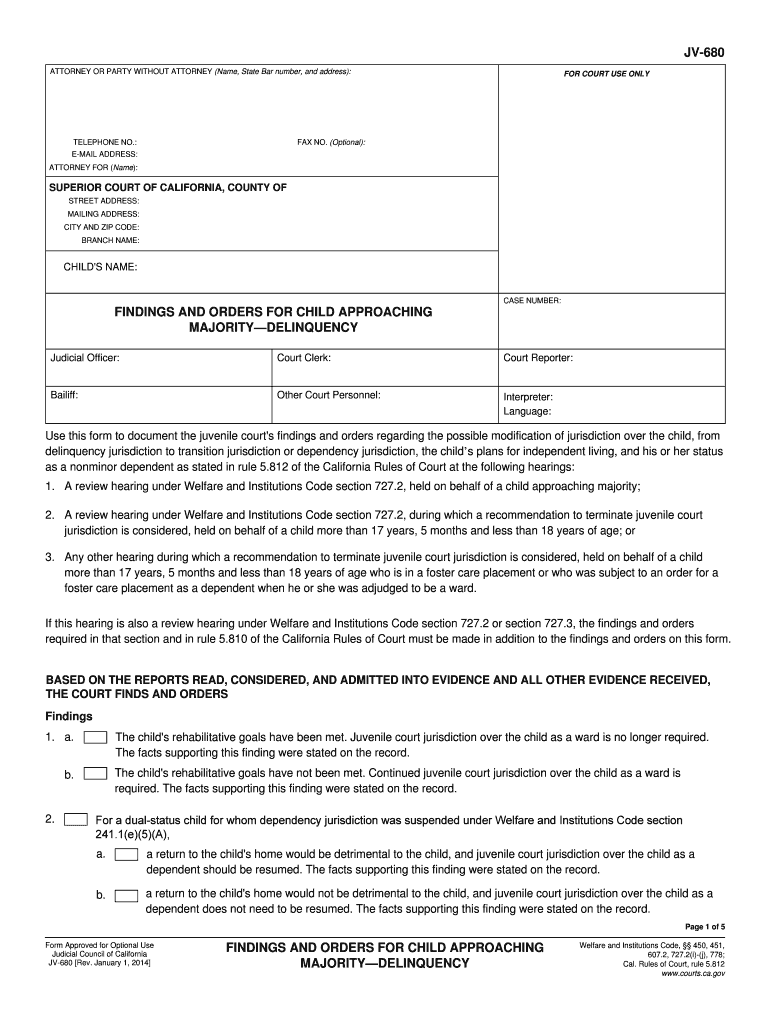
Begin by entering your contact information in the 'ATTORNEY OR PARTY WITHOUT ATTORNEY' section, including your name, state bar number, and address.
Fill in the 'FOR COURT USE ONLY' section with relevant court details such as case number and child's name.
In the 'FINDINGS' section, carefully select the appropriate findings regarding the child's rehabilitative goals and jurisdiction status based on evidence presented.
Proceed to complete the 'ORDERS' section by indicating any necessary orders related to dependency or delinquency jurisdiction as applicable.
Review all entries for accuracy and completeness before saving your changes. Utilize our platform's features to sign and distribute the document if needed.
Start using our platform today to easily fill out and manage your JV-680 form for free!
Fill out JV-680 FINDINGS AND ORDERS FOR CHILD APPROACHING. Judicial Council forms - courts ca online It's free
See more JV-680 FINDINGS AND ORDERS FOR CHILD APPROACHING. Judicial Council forms - courts ca versions
We've got more versions of the JV-680 FINDINGS AND ORDERS FOR CHILD APPROACHING. Judicial Council forms - courts ca form. Select the right JV-680 FINDINGS AND ORDERS FOR CHILD APPROACHING. Judicial Council forms - courts ca version from the list and start editing it straight away!
Findings and Orders for Child Approaching Majority
Findings and Orders for Child Approaching MajorityDelinquency (JV-680). States the courts decisions (orders) at the hearing before the child turns 18 yearsRead more
Cookie consent notice
This site uses cookies to enhance site navigation and personalize your experience.
By using this site you agree to our use of cookies as described in our Privacy Notice.
You can modify your selections by visiting our Cookie and Advertising Notice.