
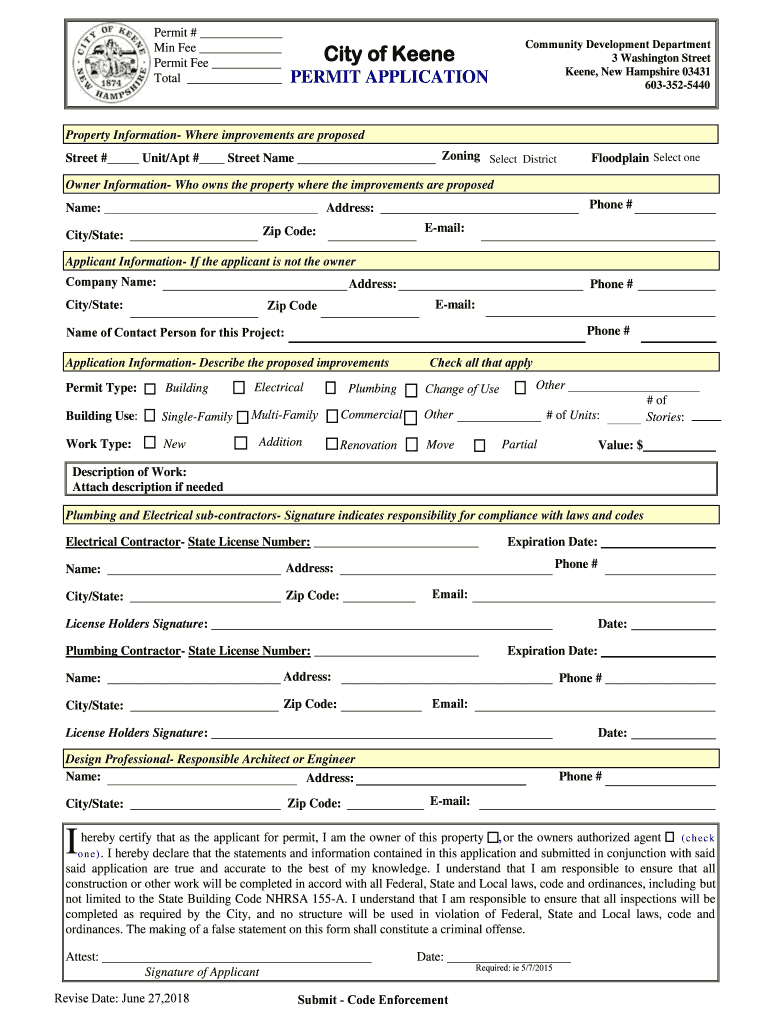







Definition and Meaning of the New Hampshire Permit
The New Hampshire permit refers to a specific document that grants legal authorization for certain activities, primarily related to property improvements and development within the state. This permit serves as an essential tool for residents, businesses, and developers to ensure that their projects comply with state and local regulations, contributing to orderly and safe development practices. The permit outlines the necessary steps and requirements that must be complied with before commencing any project, acting as a legal safeguard for both the property owner and the community.
Key Elements of the New Hampshire Permit
- Property Details: Includes the address and specific location where the proposed work is to take place. This section ensures that all improvements and developments are accurately recorded within the municipal database.
- Owner Information: Requires the property owner's name and contact information. This is crucial for accountability and future correspondence related to the permit.
- Applicant Details: Lists the individual or company applying for the permit, their contact information, and their relationship to the property (owner, contractor, or developer).
- Project Description: A detailed explanation of the proposed work, including the type of development or improvement, expected duration, and end goals. It helps identify the scope and scale of the project.
- Contractor Information: Includes the name and license number of the contractor responsible for the work, ensuring they are licensed and insured to perform the necessary tasks.
- Compliance and Codes: Highlights the relevant state and local building codes and regulations that the project must adhere to, ensuring safety and legality.
How to Use the New Hampshire Permit
Using the New Hampshire permit involves a clear understanding of its purpose and requirements. This document is integral to ensuring compliance with local development laws, so it must be completed accurately and submitted on time.
-
Review the Project Requirements: Before applying, understand the local zoning laws and building codes that your project must meet. This includes understanding the scope of work and necessary documentation needed for submission.
-
Gather Required Information: Collect information regarding your property, including ownership documents, contractor credentials, and project specifics. Having these ready ensures a smoother application process.
-
Complete the Application: Fill out each section of the permit application thoroughly. This might involve collaborating with a contractor or architect to provide detailed project plans and descriptions.
-
Submit the Application: Depending on your local municipality, submit the permit application online, by mail, or in person. Be sure to follow any specific submission guidelines provided by the city or town offices.
-
Await Approval: Once submitted, the application will be reviewed. In some cases, additional information may be requested. Follow up regularly to track the status of your permit approval.
-
Permit Compliance: Upon approval, ensure that all work adheres to the stated terms and conditions of the permit. Displaying the permit on-site is typically required during the execution of the project.
How to Obtain the New Hampshire Permit
Obtaining the New Hampshire permit is a systematic process that involves several steps to ensure thoroughness and compliance with local regulations. Here’s a comprehensive guide:
Steps to Obtain the Permit
-
Pre-Application Research: Conduct research to understand the zoning laws, land use regulations, and building codes applicable to your project. This will help identify any potential hurdles before applying.
-
Consult with Professionals: Engage architects, engineers, or contractors early to assist in drawing up plans that meet the regulatory requirements. Their expertise is invaluable to ensuring compliance with structural and safety standards.
-
Application Preparation: Organize all necessary documents, such as site plans, project descriptions, and contractor information. Be as comprehensive as possible to avoid delays in application processing.
-
Fee Payment: Understand and pay any required permit application fees. These fees can vary based on the size and scope of the project.
-
Form Submission: Submit the completed application form and related documents to the appropriate municipal office. Confirm submission guidelines specific to your locality to ensure everything is filed correctly.
-
Inspection Scheduling: After submission, your project may require inspection before approval, scheduling these inspections promptly can help speed up the process.
-
Receive the Permit: Once your application is approved, the permit will be issued. Carefully review it to ensure all information is accurate and keep it accessible throughout the project’s duration.
Important Terms Related to the New Hampshire Permit
Familiarizing yourself with specific terminology associated with the New Hampshire permit can help improve understanding and facilitate smoother interactions with local authorities:
- Zoning Laws: Regulations dictating how land within certain areas can be used, often categorized as residential, commercial, or industrial.
- Building Codes: Standards set by regulatory bodies to ensure the safety and health of occupants within a built structure.
- Variance: A request to deviate from current zoning requirements, often required when the proposed use or structure is not entirely compliant with existing laws.
- Site Plan: A detailed drawing of the project that shows its layout on the property, including dimensions, topography, and land use.
- Easement: A legal right to use another person's land for a specific purpose, such as utility lines or access roads.
Legal Use of the New Hampshire Permit
To ensure ethical and lawful use of the New Hampshire permit, it’s important to understand its legal implications:
Legal Considerations
- Permit Validity: Ensure that all work is begun and completed within the validity period specified by the permit.
- Adherence to Submitted Plans: Projects must align precisely with the applications submitted; deviations may require a new permit or amendments to the existing one.
- Inspections and Compliance: Regular inspections may be required throughout the project to ensure ongoing compliance with permit conditions.
- Renewals and Extensions: If a project requires additional time beyond the permit expiration, an extension or renewal must be applied for well in advance of the permit's expiry.
Enforcing these legal considerations not only safeguards the integrity of the development project but also fortifies community trust in development processes.




