




01. Edit your affidavit of parentage online
Type text, add images, blackout confidential details, add comments, highlights and more.

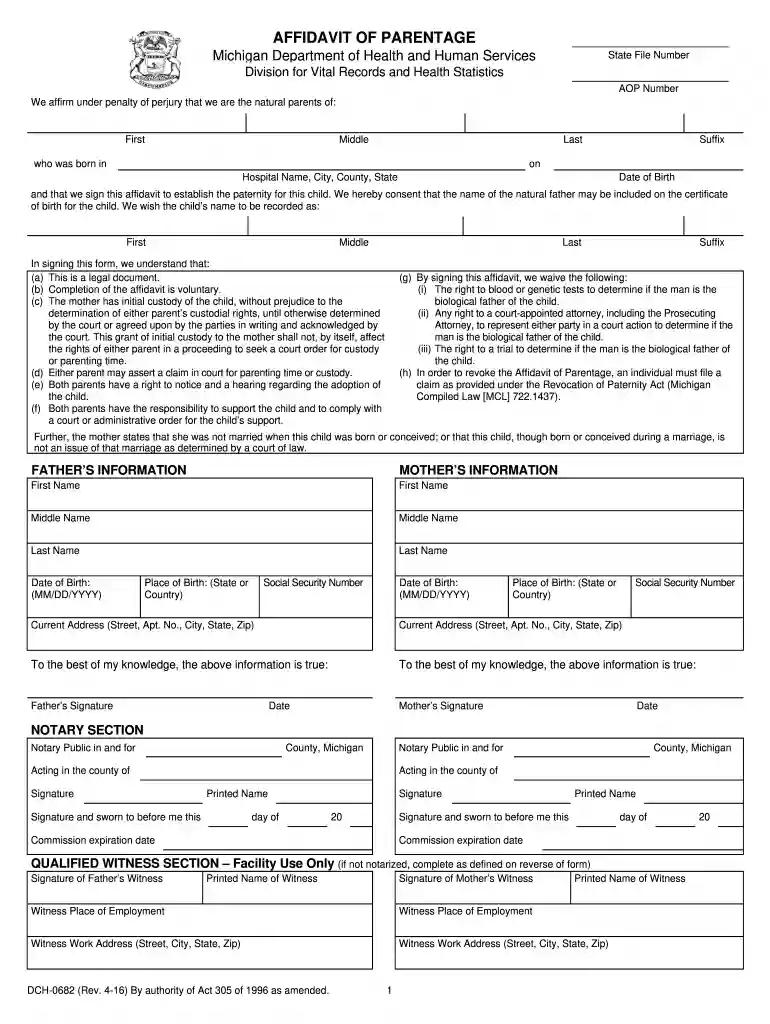
Type text, add images, blackout confidential details, add comments, highlights and more.

Draw your signature, type it, upload its image, or use your mobile device as a signature pad.

Send michigan state via email, link, or fax. You can also download it, export it or print it out.
The Michigan affidavit of parentage form serves as a legal document that establishes the parental rights and obligations between both parents of a child born outside of marriage. This form is crucial in defining paternity for numerous legal purposes, including child custody, child support, and inheritance rights. It officially affirms that both parents are recognized as the natural guardians of their child, thereby enabling them to access legal protections and responsibilities that come with parenthood.
An affidavit of parentage can be completed at the time of a child's birth or afterward. When filled out, it can be filed with the Michigan Department of Health and Human Services, which will subsequently facilitate the inclusion of the father's name on the child's birth certificate. This document aligns with the state’s legal framework and is essential for anyone wishing to formalize paternity rights under Michigan law.
Establishing paternity through this affidavit not only secures a father’s rights to his child but also affords the child critical benefits, such as:
Completing the Michigan affidavit of parentage form is a detailed process that requires accuracy to ensure that all necessary information is correctly conveyed. Here is a step-by-step guide to help individuals through this important task:
Obtain the Form: Access the Michigan affidavit of parentage form, which is commonly designated as DCH-0682, from the Michigan Department of Health and Human Services or other authorized locations.
Fill in Parental Information: Complete sections that require details about both parents, including:
Child's Information: Specify the child’s name, date of birth, and other pertinent details necessary for identification.
Signatures: Both parents must sign the affidavit in the presence of a Notary Public or a qualified witness to validate the document. This step is critical as it provides legal authority to the claims made within.
Submission: After notarization, submit the completed affidavit to the Michigan Department of Health and Human Services. Alternatively, present it to the hospital at the time of the child's birth.
The Michigan affidavit of parentage form is commonly utilized by various parties involved in child custody and parentage matters. Typical users include:


The Michigan affidavit of parentage form holds substantial legal significance once completed and filed appropriately. It serves multiple purposes within the legal framework, which include:
Understanding the critical components of the Michigan affidavit of parentage form is essential for successfully completing and utilizing it. The main elements of the form include:
The Michigan affidavit of parentage form involves various legal terms and concepts essential for understanding its implications and usage. Key terms include:
Michigan has specific guidelines regarding the utilization and completion of the affidavit of parentage form that applicants must adhere to, ensuring compliance with state laws:
We've got more versions of the affidavit of parentage form. Select the right affidavit of parentage version from the list and start editing it straight away!
At DocHub, your data security is our priority. We follow HIPAA, SOC2, GDPR, and other standards, so you can work on your documents with confidence.
a. This is a legal document, and completion of this form is voluntary. b. Either parent may ask a court for parenting time or custody.Read more
Web use this tool to draft forms to start a custody case if you are not married to the other parent of your child or children and paternity was established byRead more
No! I am not Prince Hamlet, nor was meant to be;Am an attendant lord, one that will doTo swell a progress, start a scene or two,Advise the prince;Read more


