
DocHub and GDPR
How DocHub satisfies the GDPR's security compliance standards
Legal Measures
Technical Measures
Organizational Measures
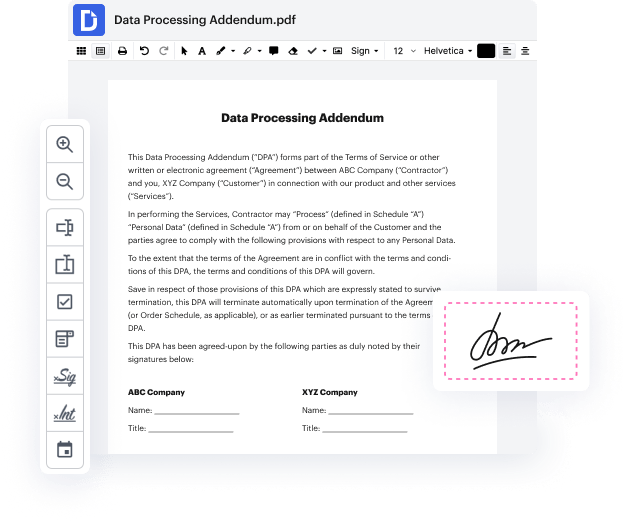
Data Processing Addendum
A data processing addendum (DPA) is a GDPR agreement between a data controller (a data owner) and a data processor (a third-party service provider). It defines the roles and obligations of both parties when processing data. Businesses that handle and transfer personal data to a third-party processor are required to sign a DPA with that third party.
According to the data processing addendum, DocHub acts as a data processor while its customers act as data controllers. DocHub provides an up-to-date DPA that outlines the scope of the data that is processed, including the types of data processed, the purpose of the data processing, the data protection measures, and the roles and responsibilities of the controller and processor.
Sign your DPAOver 100 million users around the globe trust DocHub









Connect DocHub with the apps you use and love
Get your documents done with ease, no matter your location. DocHub connects to popular web applications so you can edit, sign, and share documents right from your favorite apps.
See all integrationsIndustry-leading security and compliance
DocHub complies with industry-leading standards, regulations, and certifications so you can securely edit, fill out, sign, and send documents and forms.


What is GDPR?
GDPR stands for General Data Protection Regulation. It is a privacy and security law passed by the European Union on May 25th, 2018. GDPR replaced an outdated data protection directive from 1995 and is considered the most wide-reaching change to personal data protection for the last 20 years. It aims to protect EU citizens from data privacy breaches and misuse. The GDPR lays out rules governing how companies should collect, store, transmit, and secure personal information.
GDPR applies to all organizations within the EU and outside of the EU that offer goods or services to customers or businesses within the EU.
The GDPR outlines seven key principles of personal data processing:
- Lawfulness, fairness, and transparency
- Purpose limitations
- Data minimization
- Accuracy
- Storage limitations
- Integrity and confidentiality (security)
- Accountability
Customer rights
The GDPR grants data subjects greater control over their data by giving them certain rights. DocHub is ready to accommodate customer requests based on their rights under GDPR law.
- Right to be informed: Our Terms of Service and Privacy Notice detail what data we collect, process, and store. Be sure to read the Terms of Service and Privacy Notice before signing up with DocHub.
- Right to access: Our Privacy Notice outlines what data we collect and how we use it. If you have any questions regarding data, you can contact us via Privacy Request Portal for further information.
- Right to rectification: You may request that your personal information be updated if you find it inaccurate or incomplete. You may also access and update your DocHub account settings at any time or contact DocHub to access, correct, amend, or delete the information we store about you.
- Right to be forgotten: You may request to delete your DocHub account at any time and we will permanently delete it alongside all data associated with it.
- Right to restriction of processing: You may submit a request to restrict or pause your personal data processing.
- Right to data portability: You may obtain and reuse your personal data across third-party services.
- Right to object: You may object to the processing of your personal data for marketing, communication, and research purposes.
- Right to avoid automated decision-making: DocHub respects your right to challenge automated decision-making.