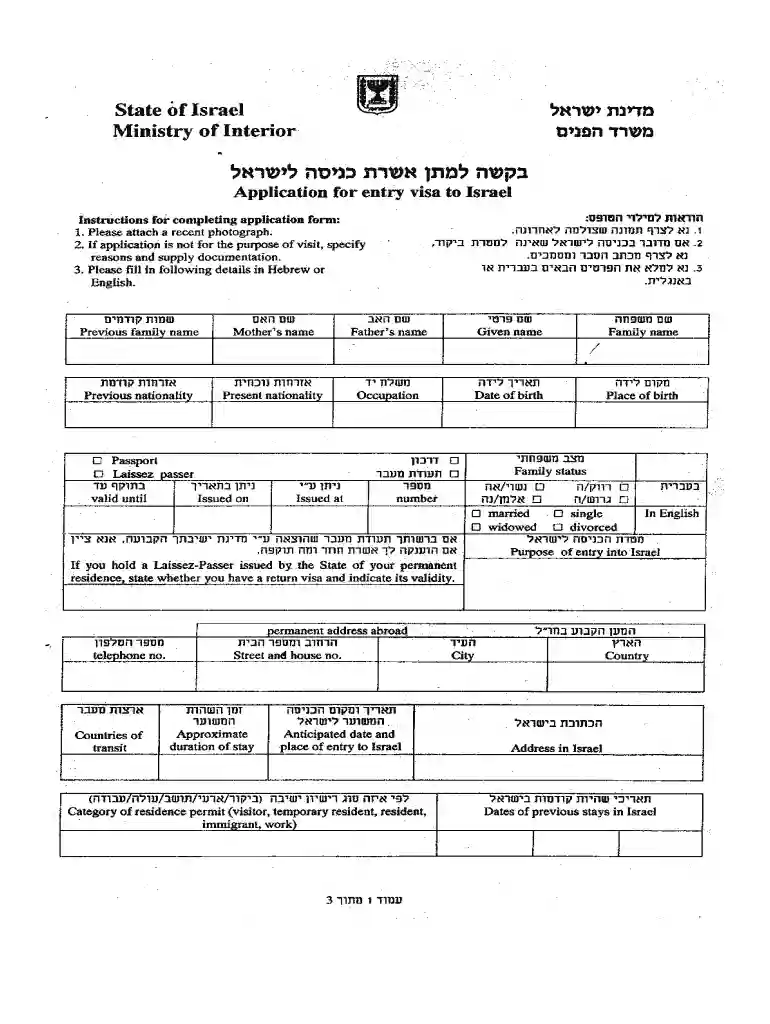
Definition and Purpose of the Israel Entry Form
The Israel entry form is an official document required by travelers seeking to enter the country for various purposes, including tourism, business, family reunification, and education. It serves several key functions:
- Information Gathering: The form collects essential information about the traveler, including personal details, travel dates, and the intended purpose of the visit.
- Security Measure: By requiring travelers to complete this form, Israeli authorities can assess the eligibility and background of individuals entering the country. This ensures safety and compliance with immigration laws.
- Legal Requirement: Completion of the Israel entry form is typically mandatory for travelers, and failure to properly submit it can lead to delays upon arrival or even refusal of entry.
Understanding the nuances of the Israel entry form is vital for a smooth travel experience, ensuring compliance with local regulations and avoiding unforeseen complications.
How to Use the Israel Entry Form
Using the Israel entry form involves several steps that must be carefully followed to ensure that all necessary information is accurately provided. Here’s a detailed guide on how to properly utilize the form:
- Access the Form: You can typically find the Israel entry form online through official government websites or consulate services. Ensure you download the most current version.
- Review Requirements: Familiarize yourself with any specific requirements associated with your entry type. For instance, tourists may need to provide different information compared to business travelers.
- Fill Out the Form: Complete the form with accurate details. Key sections often include:
- Personal information (name, nationality, date of birth)
- Travel details (arrival date, intended length of stay)
- Purpose of visit (tourism, business, etc.)
- Submit the Form: Depending on the specific requirements, you may submit the form online, in person at a consulate, or upon arrival at the airport. Be mindful of any specific submission guidelines.
Steps to Complete the Israel Entry Form
Completing the Israel entry form can be simplified by following these structured steps:
- Gather Required Information: Before starting the form, ensure you have all necessary personal information, including:
- Passport number
- Nationality
- Travel itinerary
- Access the Official Form: Visit an authorized website to download the most updated version of the Israel entry form.
- Fill in Personal Details: Carefully input your name, contact information, and passport details as stated on your passport. Double-check for accuracy.
- Specify Travel Details: Indicate your arrival date, flight number, and the duration of your stay. Be specific about your accommodation arrangements, if applicable.
- Declare the Purpose of Visit: Clearly outline the reason for your travel, such as tourist activities, business engagements, or visiting family.
- Review and Sign the Form: Once the form is completed, review it thoroughly for any errors or incomplete sections. Sign and date the document as required.
- Submit the Completed Form: Depending on the instructions provided with the form, either submit it electronically or carry a printed copy for submission upon arrival.
Required Documents for the Israel Entry Form
When preparing to complete the Israel entry form, it is critical to have the following documents ready:
- Valid Passport: Your passport must be valid for a minimum period, typically six months beyond your planned departure from Israel.
- Flight Itinerary: Proof of your travel arrangements, including round-trip or onward flight tickets.
- Accommodation Details: Information about where you will be staying during your visit, including hotel confirmation or an invitation from a host.
- Proof of Financial Means: Evidence demonstrating your ability to cover the cost of your stay, which may include bank statements or employment letters.
- Health Documents: In certain cases, particularly during health crises, additional health-related documentation may be necessary.
Ensuring you have these documents readily available not only streamlines the completion of the Israel entry form but also facilitates any checks or additional requirements that may be enforced by border control.
Legal Use of the Israel Entry Form
The Israel entry form holds legal significance, as it is a key document in the immigration process. Here are important aspects to consider regarding its legal use:
- Compliance with Immigration Laws: Completion of the form is a legal requirement, and providing false or misleading information can result in penalties, including denial of entry.
- Legitimate Purpose Declaration: Travelers must declare their purpose for visiting Israel truthfully. Misrepresentation can lead to serious legal repercussions.
- Record Keeping: The information provided in the entry form is retained by immigration authorities for security purposes, highlighting the need for accuracy and honesty in all submissions.
Understanding the legal implications associated with the Israel entry form can help travelers navigate immigration processes smoothly and avoid potential issues.
Examples of Using the Israel Entry Form
Real-world scenarios can help illustrate how the Israel entry form is utilized in practice:
- Tourist Travel: A family from the United States plans a two-week vacation in Israel. They access the entry form online, fill it out with their travel and accommodation details, and submit it electronically prior to their departure. Upon arrival, their paperwork is reviewed, facilitating a quick passage through customs.
- Business Travel: An executive traveling for a conference in Tel Aviv needs to complete the Israel entry form. They specify the purpose of their visit and include details about their itinerary and accommodation arrangements planned for the duration of the stay, ensuring compliance with business entry requirements.
- Family Reunification: An individual visiting family in Israel must state this on the entry form. They include supporting documentation such as an invitation letter from their family member in Israel to demonstrate the purpose of their visit, which aids the approval process.
These examples highlight the practical application of the form across diverse travel scenarios, emphasizing the importance of accuracy and preparedness.