






Comprehensive Fire Door Inspection Checklist
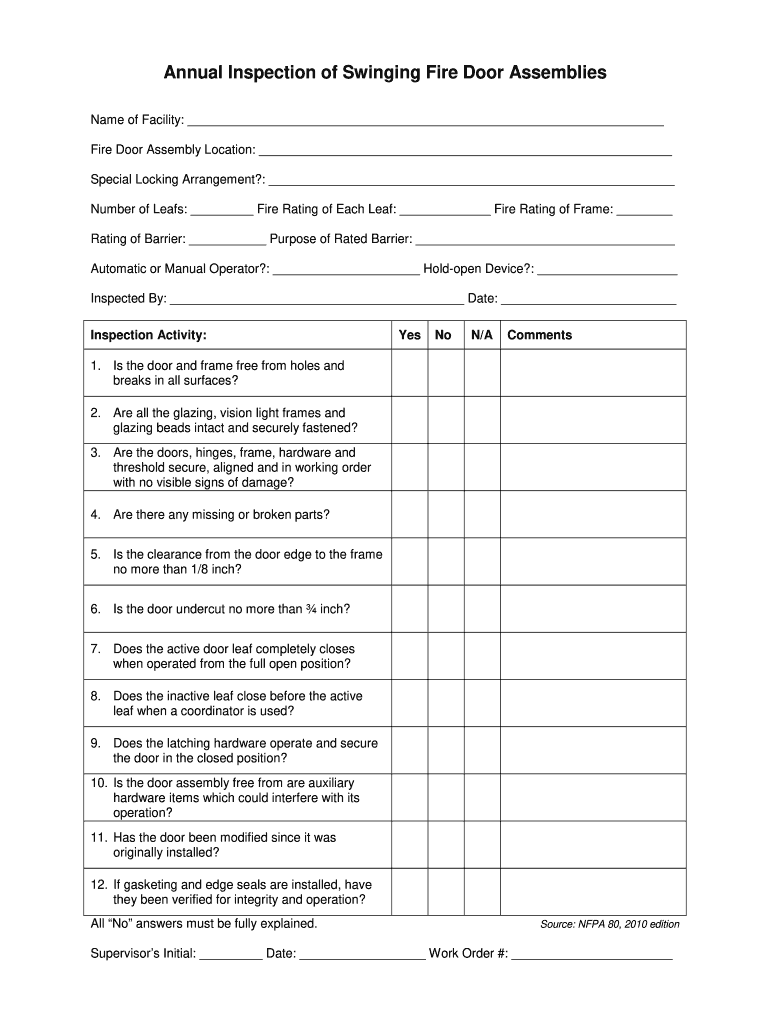
A fire door inspection checklist is a critical tool designed to ensure that fire doors are properly assessed and maintained, following guidelines defined by safety regulations. This checklist aids building managers and safety officers in verifying compliance with standards that protect life and property.
Understanding the Fire Door Inspection Checklist
The fire door inspection checklist serves to confirm the operational integrity of fire doors within a building. Each checklist typically includes an array of items that assess both the physical condition of the door and its hardware. Compliance with the National Fire Protection Association (NFPA) standards is essential, particularly NFPA 80, which outlines the maintenance and inspection protocols for fire door assemblies.
- Purpose of Inspection: The main goal is to verify that each fire door can effectively prevent the spread of smoke and fire.
- Frequency of Inspections: Regular inspections should ideally take place annually, but they may also be required bi-annually or quarterly depending on local regulations or the specific use of the building.
- Documentation: Proper documentation of inspections is vital. Completed checklists should be filed and retained for future reference and compliance audits.
Key Components of a Fire Door Inspection Checklist
Each checklist should encompass several essential components to maintain comprehensive safety standards.
-
Integrity of Door and Frame:
- Check for signs of damage, such as dents, cracks, or other deformities.
- Ensure that the door fit is appropriate within the frame.
-
Hardware Functionality:
- Inspect hinges for rust or damage.
- Verify that latching mechanisms work properly and engage completely when closed.
-
Proper Operation:
- Test doors for swift, unobstructed opening and closing.
- Confirm they close fully without assistance and latch securely.
-
Clearance Between Door and Frame:
- Measure the gap between the door and frame. NFPA guidelines recommend specifications for allowable gaps.
-
Installation of Fire Ratings:
- Ensure that the door is appropriately labeled with the correct fire rating, indicating its duration of protection in accordance with local codes.
Important Steps for Conducting the Fire Door Inspection
Conducting a fire door inspection requires a methodical approach to ensure that all necessary aspects are covered.
-
Preparation: Gather all appropriate materials, including the fire door inspection checklist form, a measuring tape, and any necessary tools for minor adjustments or repairs.
-
Execution:
- Systematically go through the checklist.
- Take notes on any deficiencies and photograph the current status for records.
-
Reporting:
- Fill out the fire door inspection report template post-inspection, detailing any issues found and subsequent actions needed to rectify them.
- Maintain copies of both the checklist and the report in a secure, organized location.
Importance of Compliance with NFPA Standards
Compliance with NFPA standards, such as NFPA 80, is crucial for public safety and liability protection.
- Legal Requirements: Many jurisdictions enforce codes that demand regular inspections to meet local fire and building safety regulations.
- Insurance Implications: Failure to comply with established standards may result in increased insurance premiums or claims being denied after a fire-related incident.
Common Challenges in Fire Door Inspections
While performing fire door inspections can be straightforward, various challenges may arise that necessitate special attention.
- Inaccessible Doors: Some doors may be obstructed by furniture or equipment, complicating thorough inspections.
- Mislabeling: Sometimes, doors may not be accurately labeled, leading to confusion in fire ratings and inspection validity.
- Inconsistent Maintenance: Historical lack of maintenance can compound issues, making it difficult to gauge whether a door is compliant without extensive repairs.
Final Considerations for Fire Door Maintenance
In addition to regular inspections, routine maintenance is essential to uphold fire door integrity and functionality.
- Repairs: Address any identified issues promptly to prevent further deterioration.
- Training: Ensure that staff involved in safety and maintenance are well-trained regarding the importance of fire door functionalities and inspections.
- Regular Review: Periodically review and update the fire door inspection checklist to incorporate any changes in regulatory standards or operational needs.
By adhering to these guidelines, organizations can fortify their fire safety protocols, ensuring not only compliance with legal requirements but also enhancing the overall safety of occupants.