
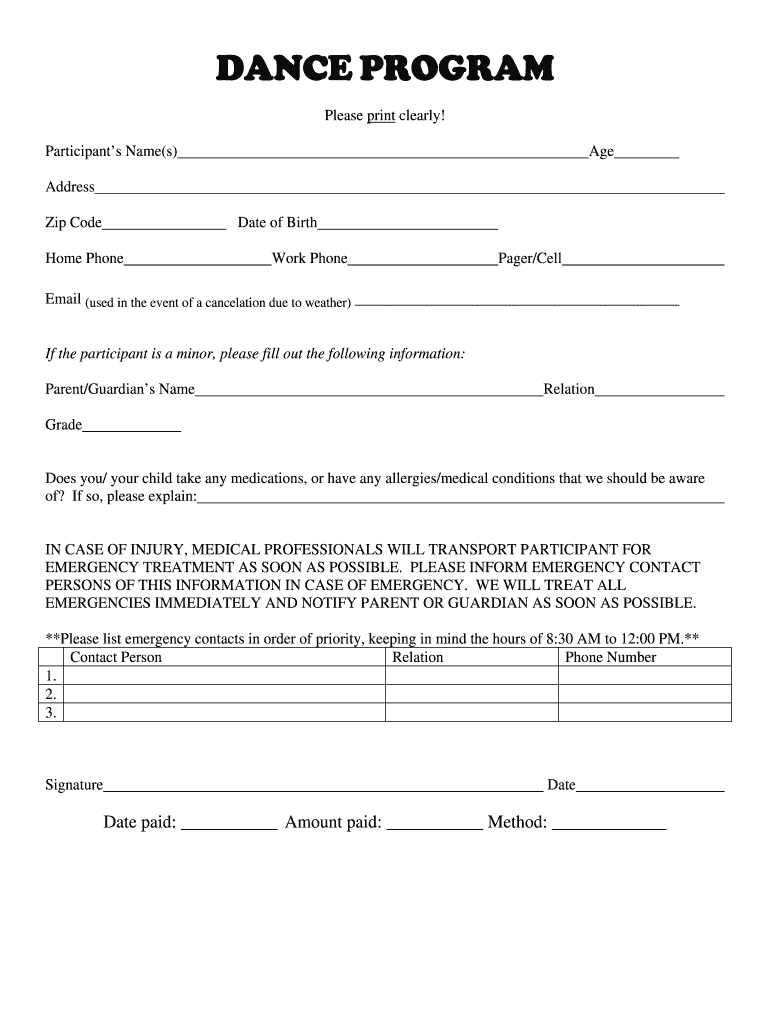







Definition and Purpose of the Dance Admission Form
The dance admission form is a comprehensive document used by dance schools and studios to collect essential information from individuals who wish to enroll in dance programs. This form serves multiple purposes, including registration, data collection, and ensuring that the school has the necessary details to provide a safe and organized dancing environment.
Key reasons for utilizing the dance admission form include:
- Participant Information: Collects vital details such as the participant's name, age, contact information, and emergency contacts.
- Medical and Safety Considerations: Ensures that the school is aware of any medical conditions or special needs that may affect participation, allowing for a safer experience.
- Consent for Treatment: Includes a consent section for emergency medical treatment, affirming that parents or guardians agree to necessary actions in case of an injury or health issue.
The dance admission form not only streamlines the enrollment process but also protects both the organization and the participants by ensuring all relevant information is gathered prior to participation.
How to Obtain the Dance Admission Form
Accessing the dance admission form can vary depending on the dance school or studio. Below are common methods to obtain the form:
- Online Downloads: Most dance studios provide downloadable PDF versions of the dance admission form on their websites. This allows prospective students to fill out the form at their convenience and submit it digitally or print it for in-person submission.
- In-Person Request: Interested individuals can visit the dance school to request a physical copy of the form directly from the staff. This method allows potential students to ask any questions they may have about the enrollment process.
- Email Request: Some studios may also allow you to request the admission form via email. This method works well for those who prefer digital communication and instant access.
After obtaining the dance admission form, ensure that all sections are completed accurately to facilitate a smooth registration process.
Steps to Complete the Dance Admission Form
Filling out the dance admission form requires careful attention to detail. Here’s a step-by-step guide:
-
Personal Information:
- Enter the participant's full name, date of birth, and age.
- Provide contact information, including addresses, phone numbers, and email.
-
Emergency Contacts:
- List names and phone numbers of individuals who can be contacted in case of an emergency during classes.
-
Medical History:
- Complete the section regarding any medical conditions, allergies, or medications that instructors should be aware of. This information is critical for catering to the safety of participants.
-
Consent for Treatment:
- A parent or guardian should review and sign the consent section, which gives permission for emergency medical treatment if necessary.
-
Payment Information (if applicable):
- Some forms may require information related to tuition or fees. This can be included on the form itself or as a separate attachment.
-
Sign and Date:
- Ensure that the form is signed and dated by the responsible party or participant.
Following these steps carefully can help ensure that the dance admission form is filled out correctly and completely.
Key Elements of the Dance Admission Form
The dance admission form contains several critical sections that serve to protect both the participant and the dance school. Below are the key elements typically included:
- Participant Information: Basic details such as name, age, and contact information.
- Emergency Contact Information: Additional contacts available in case of emergencies.
- Medical History Section: Information on allergies, existing medical conditions, and medications.
- Parental or Guardian Consent: Signature section for consent related to medical treatment.
- Program Preferences: Options for different classes, sessions, or styles of dance.
- Payment Information: Details regarding tuition and payment methods.
Each element is crucial in ensuring that all necessary information is collected, allowing for effective management of the dance program and ensuring participant safety.
Examples of Using the Dance Admission Form
The dance admission form can be utilized in various scenarios. Here are examples showcasing its application:
-
Child Enrolling in Dance Classes: A parent fills out the admission form for their child to join a beginner ballet class. The form collects relevant details, including medical history, ensuring that the dance staff can accommodate the child's needs.
-
Adult Dance Program Registration: An adult interested in fitness through dance completes a registration form to join a contemporary dance class. The information helps instructors tailor classes to the specific fitness levels of participants.
-
Community Dance Programs: A local community center uses the dance admission form to sign up participants for a seasonal dance competition. The collected data ensures proper planning and execution of the event.
These examples illustrate the form's adaptability to different contexts and age groups within dance education and practice.
Digital vs. Paper Version of the Dance Admission Form
In today’s digital age, both digital and paper versions of the dance admission form are commonly used. Below are comparisons of each format:
Digital Version
- Convenience: Forms can be filled out from any device, allowing participants to register at their convenience without needing to be physically present.
- Immediate Submission: Participants can submit forms electronically, enhancing the speed of the registration process.
- Environmental Benefits: Reduces paper usage, aligning with sustainable practices.
Paper Version
- Familiarity: Some individuals may prefer physical forms as they are easier to review and complete without requiring technology.
- Signature Authenticity: Physical forms allow for handwritten signatures, which some may view as more authentic, especially in consent sections.
- No Technical Barriers: Accessible for those who may not have reliable internet access or are not comfortable using digital tools.
Based on individual preferences and circumstances, participants can choose the version that best fits their needs while ensuring the registration process remains effective.




