



Definition and Meaning of RF FVDB-01 Application
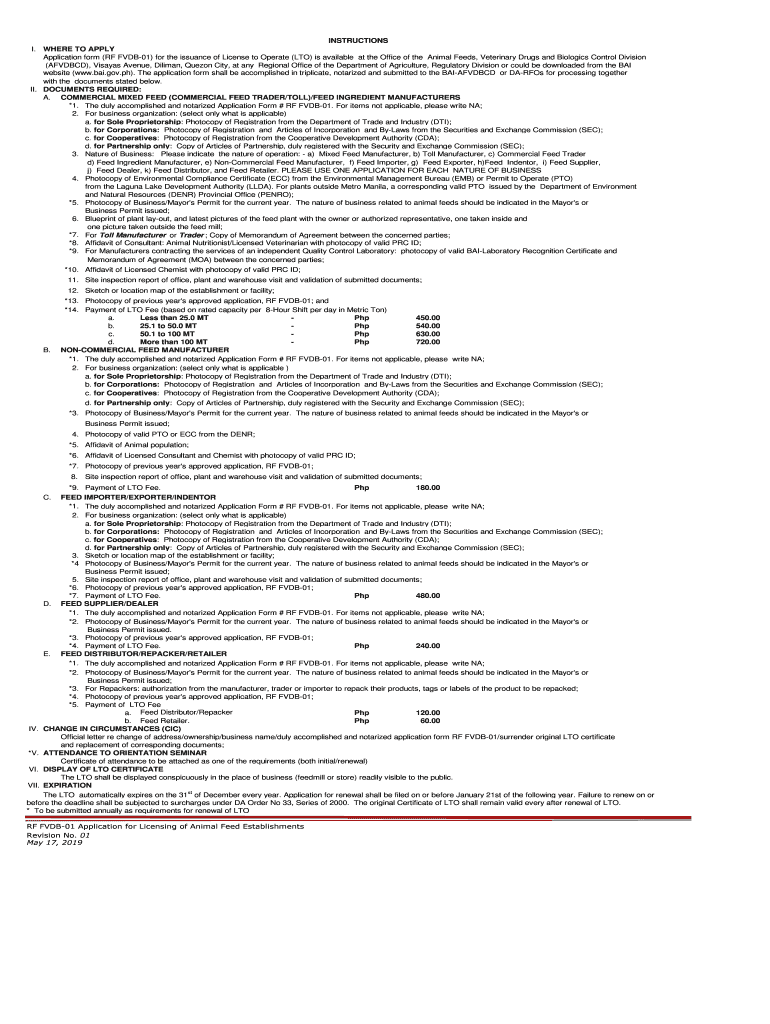
The RF FVDB-01 Application for Licensing of Animal Feed Establishments is a mandatory form used by businesses involved in the production, distribution, or sale of animal feed. It is designed to ensure that establishments comply with industry regulations and maintain the standards required for safe and effective animal feed production. This application helps governmental authorities oversee and regulate the safety and quality of animal feed products entering the market.
Key Components of the Form
- Applicant Details: Includes business name, address, and contact information.
- Business Type: Identifies whether the applicant is a producer, distributor, or retailer of animal feed.
- Product Information: Lists the types of animal feed products the establishment handles.
- Compliance Statements: Confirms adherence to relevant health and safety standards.
- Historical Data: Requires information on past compliance and any previous licenses.
How to Use the RF FVDB-01 Application
To effectively use the RF FVDB-01 form, businesses must accurately complete each section to ensure full compliance and prevent processing delays. It's crucial to gather all required documents and verify their accuracy before submission.
Steps for Usage
- Download or Obtain the Form: The form can be downloaded from relevant regulatory websites or requested from government offices responsible for agriculture and animal feed regulation.
- Fill in Personal and Business Details: Provide detailed information about the establishment and the nature of the business.
- Product Specifications: Clearly define the types of products you handle and any specific feed ingredients used.
- Attach Supporting Documents: Include any mandatory certifications or documentation of compliance with regulatory standards.
- Review and Submit: Double-check all information for accuracy before sending it for approval.
How to Obtain the RF FVDB-01 Application
Obtaining the RF FVDB-01 application can be straightforward if the right channels are used. Businesses can acquire the form through several official means to ensure it is the current and correct version.
Acquisition Methods
- Online Platforms: Government regulatory agency websites often provide downloadable versions of the form.
- In-Person Requests: Forms can be picked up from local offices of the Department of Agriculture or similar entities.
- Mail: Some agencies offer to mail the form upon request to businesses or individuals.
Steps to Complete the RF FVDB-01 Application
Completing the RF FVDB-01 application necessitates attention to detail and an understanding of the requirements outlined in the form.
Detailed Completion Process
- Prepare Necessary Information: Gather all needed business licenses, past compliance reports, and any relevant employee certifications.
- Fill Out Business Details: Ensure that all entered data, such as business registration numbers, is current and complete.
- Indicate Product Lines: Clearly specify what products will be produced, stored, or distributed, including any novel feed components.
- Compliance Verification: Provide evidence of compliance with federal and state safety standards.
- Submit with Proper Channels: Follow instructions about where and how to submit the application whether online or through physical delivery.
Examples of Common Errors
- Omitted Information: Missing fields can lead to application rejection.
- Incorrect Data Entry: Mismatched information with registered business data.
- Inadequate Documentation: Failure to attach required certificates may delay processing.
Why You Should Use the RF FVDB-01 Application
Using the RF FVDB-01 application can offer several benefits and ensures compliance with legal obligations for animal feed establishments.
Compliance and Operational Benefits
- Regulatory Compliance: Satisfies federal and state regulations governing animal feed safety.
- Market Access: Enables legal operations and distribution within regulated jurisdictions.
- Consumer Trust: Builds confidence among consumers and partners regarding product safety and quality.
Required Documents for RF FVDB-01 Application
Submitting the RF FVDB-01 application requires careful documentation. Proper submission ensures compliance and expedites the approval process.
Document Checklist
- Business Registration Proof: Valid business registration certificates or articles of incorporation.
- Compliance Certifications: Safety and quality compliance reports.
- Previous Licenses: Copies of any past licenses or related permits.
Form Submission Methods: Online, Mail, and In-Person
There are various methods for submitting the RF FVDB-01 application, offering flexibility based on the applicant's preferences and resource availability.
Submission Options
- Online: Many authorities provide portals for digital submission.
- Mail: Physical forms can be sent via postal services to designated government addresses.
- In-Person: Direct delivery to government offices is available for those who prefer face-to-face interactions.
Pros and Cons of Each Method
- Online: Fast, with immediate confirmation but may require digital proficiency.
- Mail: Reliable tracking through postal services but may take longer.
- In-Person: Allows for direct queries and instant corrections but requires travel.
Penalties for Non-Compliance
Understanding the consequences of non-compliance is crucial for businesses in the animal feed industry.
Types of Penalties
- Fines: Financial penalties imposed for operating without a license.
- Revocation of Licenses: Immediate halt to operations if found non-compliant.
- Legal Action: Potential for lawsuits or other legal proceedings.
Common Compliance Issues
- Unapproved Ingredients: Use of non-permitted substances or ingredients.
- Non-Submission: Failing to renew or submit necessary forms on time.
- Improper Labeling: Incorrect or misleading labels that do not meet regulatory standards.
By following these structured guidelines, businesses can ensure they meet all necessary requirements for the RF FVDB-01 Application for Licensing of Animal Feed Establishments, facilitating smooth operations and compliance with legal standards in the United States.