






Definition and Meaning
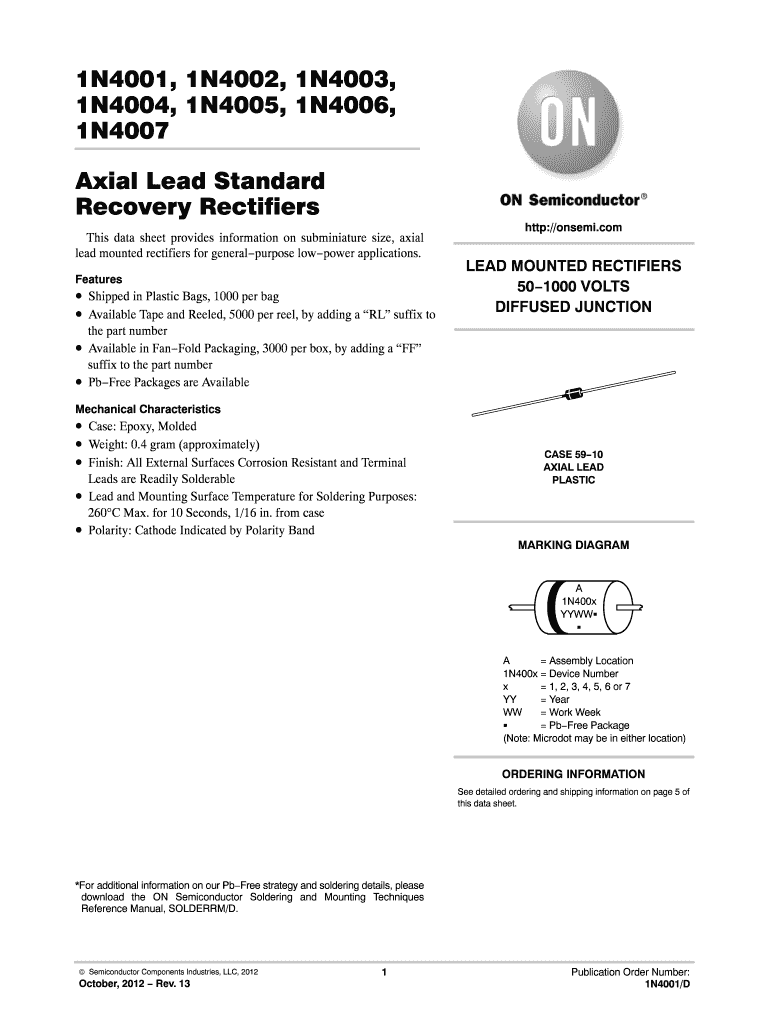
The 1N4001 through 1N4007 series are axial lead standard recovery rectifiers. These components are semiconductor devices designed to convert alternating current (AC) to direct current (DC). They efficiently block the flow of current in the reverse direction, which is essential for various electrical applications. Each model in this series caters to different voltage ratings, ranging from 50 volts for the 1N4001 to 1000 volts for the 1N4007, making them versatile for general-purpose low-power use in power supplies and electrical circuits.
Electrical Characteristics
- Voltage Ratings: Each rectifier in the 1N400x series features a distinct maximum repetitive reverse voltage (V_RRM). For example, the 1N4001 is rated at 50 volts, while the 1N4007 can handle up to 1000 volts. This range of voltage tolerance allows users to select the appropriate rectifier based on their specific circuit requirements.
- Current Capacity: The series typically supports a forward current up to 1 ampere, which suits many applications needing moderate power handling.
- Thermal Performance: Designed to withstand operational temperatures ranging from -55°C to +150°C, these rectifiers are suitable for a variety of environments.
How to Use the 1N400x Series Rectifiers
Using the 1N400x series involves connecting the rectifier in a circuit where AC needs conversion to DC. The rectifiers are often employed in power supply units. For instance, a user connects the anode to the AC voltage source and the cathode to the load across which DC is required. The performance of these rectifiers depends on their integration into the circuit and the specific electrical characteristics, like voltage and current demands.
Steps for Integration
- Select the Appropriate Model: Determine the peak inverse voltage (PIV) handling necessary for your circuit to choose between the 1N4001 and 1N4007 models.
- Circuit Positioning: Place the rectifier in the correct position within the circuit, ensuring the anode and cathode are oriented correctly.
- Test the Circuit: Power the circuit to test the effectiveness of the rectification, ensuring the output is the desired DC level.
Why You Should Use 1N400x Rectifiers
These rectifiers are crucial for converting AC to DC in countless applications, from consumer electronics to industrial equipment. Their reliability and range of voltage levels make them an indispensable tool in the development and functioning of electronic devices.
Key Benefits
- Versatility: Suitable for a range of devices and applications requiring low-power AC to DC conversion.
- Cost-Effective: These components are affordable, offering a great cost-to-performance ratio.
- Reliability: Known for durable performance over extensive cycles of use.
Important Terms Related to 1N400x Rectifiers
Understanding key terminology aids in effectively using these rectifiers:
- Reverse Recovery Time: The time it takes for the rectifier to switch from conducting to blocking current flow when the applied voltage switches from forward to reverse.
- Forward Voltage Drop: The voltage loss that occurs when the rectifier is conducting.
- Peak Inverse Voltage (PIV): The maximum reverse voltage the rectifier can withstand without breaking down.
Key Elements of the 1N400x Series
Comprehending the essential specifications ensures optimal usage and integration into various circuits.
Specifications Overview
- Diode Orientation: Ensure proper connection with the anode connected to the input and cathode to output.
- Packaging Options: Availability in different formats, such as bags or tape & reel, allowing for easy handling and automated assembly.
Practical Examples of Using 1N400x Rectifiers
Consider an example where these rectifiers are used in simple battery charger circuits. The rectifier modules convert AC to DC, enabling efficient charging by stabilizing the converted power flow. Additionally, in solar inverter systems, these rectifiers prevent backflow while delivering current to the grid or batteries.
Application Process & Approval Time
For those applying the 1N400x rectifiers in product designs or prototyping, understanding the procurement process is essential. Purchase primarily from authorized distributors or electronic component suppliers. The process typically involves selecting the specific rectifier model required for the task and ordering through the supplier's platform. Delivery times may vary based on supplier and demand.
Digital vs. Paper Version
While there is no digital or paper filing of components per se, understanding digital resources for specifications such as data sheets and online simulations can enhance efficiency in design and application. Access comprehensive datasheets digitally to evaluate performance parameters and implement proper application practices in your design.
These blocks provide a comprehensive view into the world of the 1N400x series rectifiers, from basic understanding to practical application.