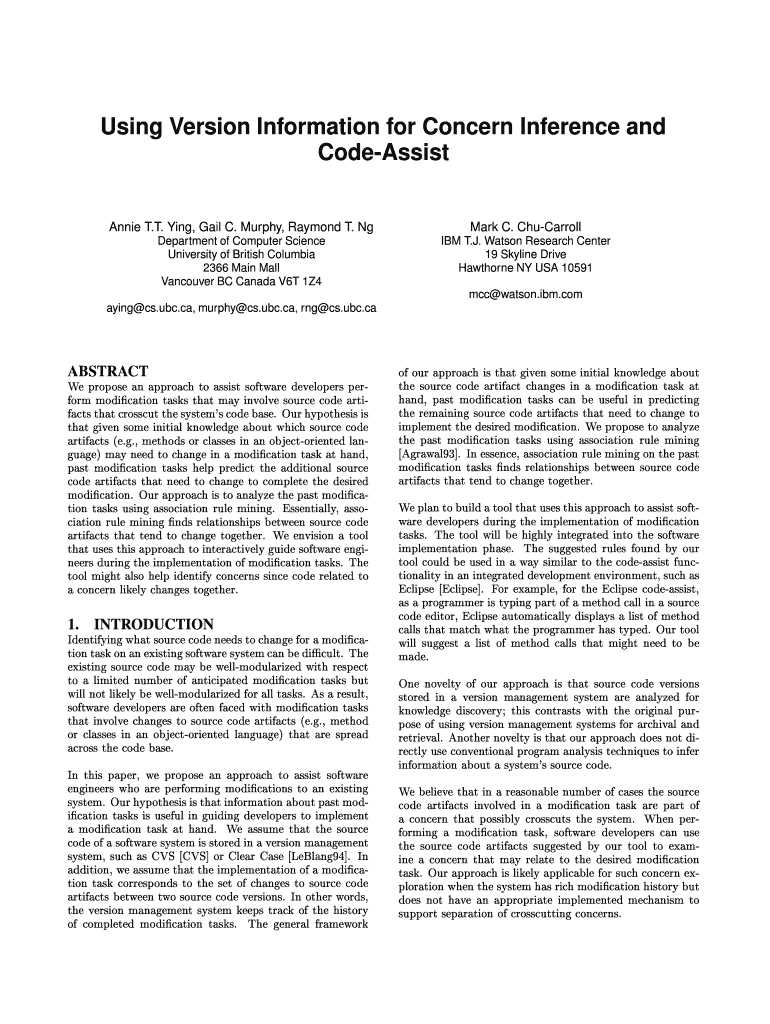







Understanding Version Information for Concern Inference
Documenting version information for concern inference allows developers and researchers to track changes in software and predict potential issues that might arise due to modifications. This practice involves analyzing code changes across versions to uncover concerns that may impact future developments or current operational stability. By systematically tracking these differences, developers can address quality concerns promptly and efficiently.
How to Use Version Information Effectively
Utilizing version information in software development involves a series of methodical steps:
- Version Comparison: Analyze changes between software versions to identify alterations in code structure, functionality, or performance.
- Association Rule Mining: Establish patterns and correlations among code modifications to predict areas susceptible to similar changes or issues.
- Concern Documentation: Document identified concerns to serve as a reference for future code revisions. This includes noting any anomalies or recurrent issues.
Steps to Implement Concern Inference
When employing concern inference using version information, follow these crucial steps:
- Data Collection: Aggregate version control data from platforms like Git or SVN.
- Pattern Analysis: Use software tools to mine association rules and detect patterns within the collected data.
- Inference Drawing: Deduce potential concerns from the identified patterns, such as predicting possible bugs or code inefficiencies.
- Recommendation Action: Propose actions to address the inferred concerns, ranging from revising code sections to implementing additional testing protocols.
Importance of Version Information for Inference
Version information is vital for several key reasons:
- Identifying Vulnerabilities: By analyzing changes across versions, developers can expose vulnerabilities before they impact the system.
- Enhancing Stability: Proactive concern inference supports maintaining software stability and performance consistency.
- Streamlining Development: Understanding past issues facilitates better planning and execution in future development cycles, reducing potential rework or delays.
Key Elements in Concern Inference Processes
Several elements are essential when documenting and utilizing version information for concern inference:
- Change Log Analysis: Evaluate logs to understand the nature and scope of changes.
- Metrics Evaluation: Assess code complexity metrics to quantify the impact of modifications.
- Feedback Gathering: Include user and developer feedback to enhance inference accuracy.
- Machine Learning Integration: Leverage AI tools for advanced pattern recognition and predictive analysis.
Common Use Cases for Concern Inference
Version information is used in a variety of contexts to improve software robustness:
- Database System Upgrades: Monitoring changes helps ensure data integrity and system compatibility during upgrades.
- Code Refactoring: Provides insight when enhancing code efficiency without altering its function.
- Feature Development: Ensures new features integrate smoothly by foreseeing potential conflicts.
Legal Considerations in Version Information Usage
Using version information for concern inference must comply with relevant legal and ethical frameworks:
- Data Privacy Laws: Ensure that any user data accessed during version comparisons is protected, following regulations like GDPR or CCPA.
- Intellectual Property Rights: Avoid unauthorized use of third-party code or data in the inference process.
- Audit Trails: Maintain clear documentation of all analytical procedures to support legal compliance and accountability.
Software and Tools for Concern Evaluation
Various software tools support the analysis and evaluation of version information:
- Version Control Systems: Platforms like Git and SVN are foundational for collecting relevant data.
- Analysis Tools: Software like SonarQube or CodeClimate can evaluate code quality and infer concerns.
- Machine Learning Suites: Tools like TensorFlow or Scikit-learn assist in developing models for predicting issues based on historical data.
Incorporating these approaches ensures a comprehensive understanding of using version information for concern inference, fostering efficient and proactive software development practices.