




Definition & Meaning
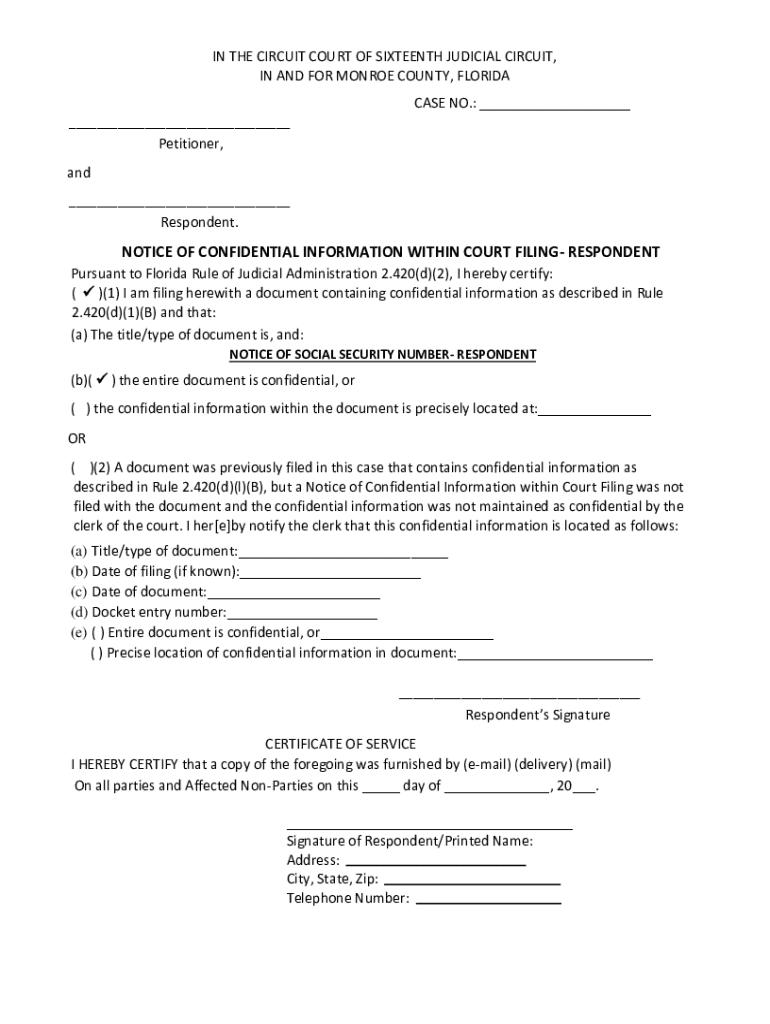
The "Notice of Confidential Information within Court Filing" is a formal document used to protect sensitive information included in court records. Often, litigants utilize this document to alert the court that particular details in a filing need to be shielded from public access. This confidentiality notice plays a crucial role in upholding privacy rights while maintaining the integrity of judicial proceedings. It is typically filed alongside the primary court documents, ensuring sensitive data such as social security numbers, financial account numbers, and other personal information are not disclosed unnecessarily.
How to Use the Notice of Confidential Information within Court Filing
To effectively use this notice, familiarize yourself with the specific requirements set by the court where the document will be filed. Generally, you need to review the main filing and identify any confidential information that requires protection. After identifying such data, fill out the Notice of Confidential Information form, listing each piece of information you consider confidential and its location within the document. Attach this notice to your primary court filing and submit both to the court clerk.
Steps for Usage:
- Identify sensitive information in your filing.
- Complete the Notice form with details about the confidential information.
- Attach the Notice to your primary court document.
- Submit the completed forms to the court.
Steps to Complete the Notice of Confidential Information within Court Filing
Filling out this notice is straightforward but requires attention to detail to ensure proper compliance:
- Heading Information: Include the name of the court and the case number.
- Parties Involved: Clearly specify the names of the petitioner and respondent.
- Confidential Details: List each piece of confidential information, detailing where it appears in the filing.
- Statement of Confidentiality: Affirm that the data listed is confidential under applicable laws.
By following these steps, you ensure that the court can effectively protect the sensitive information in your filings.
Why Use the Notice of Confidential Information within Court Filing
Using this notice is critical to safeguarding sensitive personal information. Legal documents often contain data that, if disclosed, can lead to identity theft, financial fraud, or unwarranted privacy invasions. By notifying the court of confidential information, you take proactive steps to prevent unauthorized access to such data. This measure is not only a statutory requirement in many jurisdictions but also a best practice for anyone involved in legal proceedings.
Important Terms Related to Notice of Confidential Information within Court Filing
Understanding key terms associated with this notice can enhance your comprehension and ensure accurate completion:
- Confidential Information: Data that is legally protected from public disclosure.
- Ex Parte: A legal proceeding or decision taken for the benefit of one party without notifying the other side.
- Redaction: The process of editing documents to obscure or remove confidential information.
Each term has specific implications within the legal context, particularly when filling out and submitting this form.
Legal Use of the Notice of Confidential Information within Court Filing
Legally, this notice must comply with court rules that dictate what types of information can be deemed confidential. Such rules vary by jurisdiction but generally prioritize the prevention of harm to individuals through unwanted disclosures. The legal framework supporting this notice includes privacy laws and judicial precedents that recognize the necessity of keeping sensitive information out of the public domain.
State-Specific Rules for the Notice of Confidential Information within Court Filing
Each state may have distinct rules about what constitutes confidential information and the procedures necessary to file this notice. For example, some states require a separate motion to accompany a notice, while others might offer standardized forms that simplify the process. Understanding these variations is essential to ensure compliance with localized legal mandates.
Examples of Using the Notice of Confidential Information within Court Filing
Consider a family law case where financial documents are filed that include social security numbers and bank account details. In such a scenario, you would:
- List the page number and line where each sensitive detail appears.
- Provide a brief description without revealing the actual content.
- File the notice with the attached main document, ensuring the clerk indexes it according to court procedures.
These examples underscore the utility of the notice in various legal contexts, from family law to civil litigation.