







Definition & Meaning
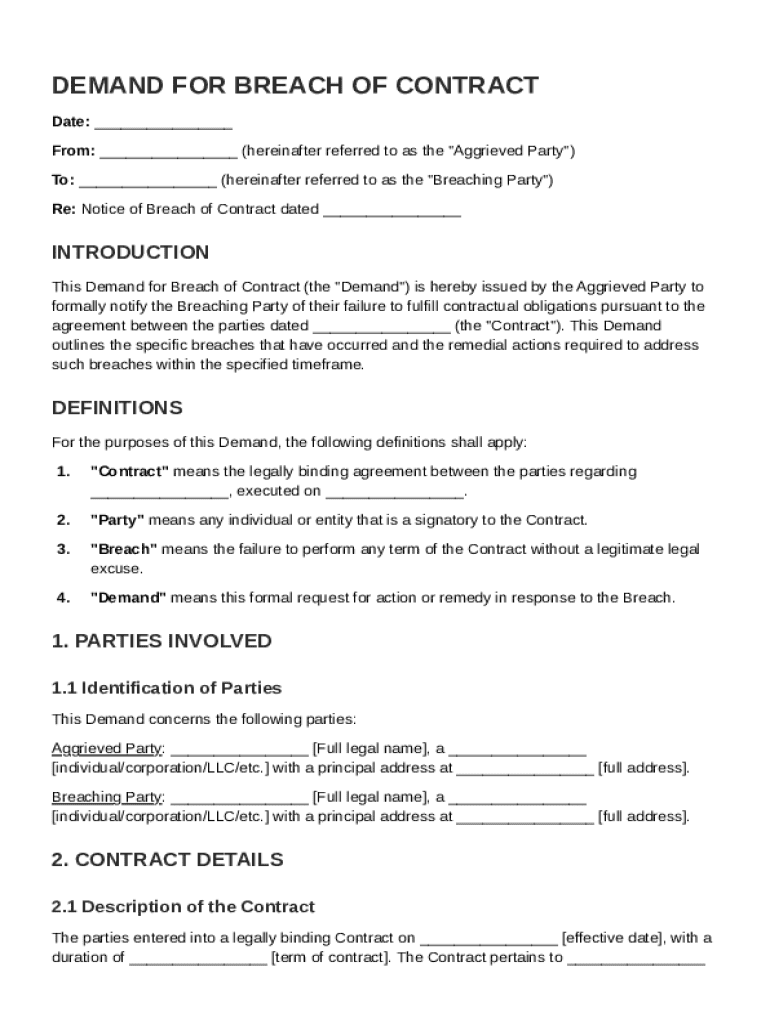
A Demand Breach of Contract Template is a formal document issued by an aggrieved party to notify the breaching party of their failure to fulfill contractual obligations. This document serves as an official request for the breaching party to take corrective action. It typically outlines the specific breaches, required remedial measures, and potential consequences if the breaches are not addressed. Understanding this template's significance is crucial for parties involved in contractual agreements, as it establishes a structured communication pathway for resolving disputes without immediate legal intervention.
Purpose of the Template
- Notification: Formally informs the breaching party of their specific breaches.
- Correction: Outlines steps the breacher must take to rectify the violations.
- Legal Action Warning: Highlights possible legal consequences if issues are not resolved promptly.
- Record Keeping: Provides a documented trail of communication for future reference or legal proceedings.
How to Use the Demand Breach of Contract Template
Utilizing the Demand Breach of Contract Template effectively requires attention to detail and an understanding of the contractual terms that were violated. Here’s how to use the template:
- Identify the Breach: Clearly outline which terms of the contract were not fulfilled. Use specific language from the contract.
- Detail Required Actions: Specify what the breaching party must do to remedy the situation.
- Set a Timeline: Provide a deadline by which corrective actions should be taken.
- Include Consequences: Clearly state the potential legal actions that will follow if the breach is not addressed.
Practical Example
For instance, if a supplier fails to deliver goods by the specified date in a contract, the demand template can be used to request immediate delivery and outline compensation for losses incurred due to the delay.
Steps to Complete the Demand Breach of Contract Template
Completing this template involves a methodological approach to ensure effectiveness and clarity. Follow these steps:
- Gather Contract Information: Have the original contract at hand to reference specific terms and conditions.
- Detail the Breach: Clearly articulate the nature of the breach with precise references.
- Outline Remedies: List all actions the breacher must undertake to comply with the original contract.
- State Consequences: Detail potential legal actions if remedial actions are not taken.
- Include Contact Information: Provide details for further correspondence or questions.
Key Elements of the Demand Breach of Contract Template
A comprehensive demand template must include several critical elements to be effective and legally sound:
- Party Information: Names and contact details of both parties.
- Contract Details: A summary of the original contract terms.
- Nature of Breach: A detailed explanation of how the terms were violated.
- Remedial Actions: Clear instructions on how to rectify the breach.
- Deadline: A specific date by which the breaching party must respond or take action.
- Legal Warning: An outline of potential legal steps if the breach is not resolved.
Sub-elements to Include
- Reference Number: If applicable, include a contract or case reference number.
- Signature Line: Space for the aggrieved party’s signature, validating the demand.
Legal Use of the Demand Breach of Contract Template
This template must be used in accordance with legal standards and practices. Its legal use involves:
- Compliance with Contract Law: Ensure that the demands made align with contractual obligations and legal norms.
- Consultation with Legal Professionals: Consider seeking legal advice when drafting the document to ensure completeness and enforceability.
- Use in Good Faith: The document should be seen as a tool for resolution, not as a first step toward litigation.
Examples of Using the Demand Breach of Contract Template
Various scenarios illustrate the practical use of this template. Common examples include:
- Construction Projects: When a subcontractor fails to adhere to deadlines or quality standards.
- Service Agreements: For service providers who do not meet terms outlined in their service level agreements.
- Purchase and Sale Agreements: When a buyer or seller defaults on the agreed terms of sale or payment schedules.
Case Studies
- Real Estate Transactions: A real estate agent uses the template to demand payment of a commission due after closing.
- Manufacturing Agreements: A manufacturer uses the template to demand delivery of raw materials that were not supplied on time.
Important Terms Related to Demand Breach of Contract Template
Understanding the terminology associated with this template enhances its use and effectiveness. Key terms include:
- Aggrieved Party: The party claiming the breach and seeking remedy.
- Breaching Party: The individual or entity alleged to have violated the contract terms.
- Remedial Actions: Steps required to correct the breach and fulfill contractual obligations.
- Legal Jurisdiction: The legal authority under which the demand is issued, which influences where disputes may be resolved.
Business Types That Benefit Most from Demand Breach of Contract Template
Various business entities can leverage this template to ensure compliance with contractual obligations, including:
- Small Businesses: Often utilize the template to handle contractual disputes without costly litigation.
- Corporations: Use the demand letter to maintain professional relationships while seeking resolution.
- Freelancers: Benefit from formalizing contract disputes, ensuring payment or fulfillment of services agreed upon.
Each heading should be followed by a standalone narrative or section that elaborates on specific points or steps, providing detailed examples or scenarios to clarify usage comprehension.




